Tag: books

  • 9 unmistakable epic fantasy artists

    9 unmistakable epic fantasy artists

    I love to track the work of epic fantasy artists almost as much as I love keeping up with epic fantasy itself. But there’s plenty of forgettable cover art in epic fantasy. It’s probably no one’s fault; there are plenty of forgettable books in the genre to begin with. It’s also typical that no one involved in making a book cover gets much time, context, or money for their work.

    Book publishing authorities sometimes put forward another theory: That publishers produce a bunch of drab covers to make amazing ones truly shine. Whether you buy this or not, you can definitely find amazing, standout covers parting the clamor of so many others.

    Here are a few epic fantasy artists whose work truly distinguishes itself:

    1. Magali Villeneuve
    2. Todd Lockwood
    3. Ivan Belikov
    4. Rovina Cai
    5. Michael Whelan
    6. Tommy Arnold
    7. Kinuko Y. Craft
    8. Richard Anderson
    9. Raymond Swanland

    1. Magali Villeneuve

    Book cover for The Witcher; cover by epic fantasy artist Magali Villeneuve

    Self-taught French artist Magali Villeneuve is probably best known for her Stormlight Archive paintings or her illustrated edition of Robin Hobb’s Farseer Trilogy. She has also done cover art for Mercedes Lackey, Trudi Canavan, Jon Skovron, and Andrzej Sapkowski.

    While Velleneuve’s work tends to be extremely character focused, it’s easy to recognize her expansive backdrops and epicly detailed backgrounds as well. As such, her art consistently stands out among the ranks of top-tier epic fantasy artists.

    2. Todd Lockwood

    The Gathering Storm Wheel of Time cover, created by epic fantasy artist Todd Lockwood

    If you’re an epic fantasy reader, you’ve probably seen a Todd Lockwood cover before. His work includes cover illustrations for The Wheel of Time, Malazan, many of R. A. Salvatore’s books, and his own novel The Summer Dragon.

    Lockwood has done work in quite a few styles, ranging from crisp and clear to more gritty, ethereal, or even minimalistic art. If there are any common threads throughout, it’s that Lockwood is known for his high magic types of scenes and his many, many distinctive dragons. Few epic fantasy artists have a catalog of work as expansive as his.


    Recommended reading: 10 Underrated Works of Epic Fantasy

    3. Ivan Belikov

    Book cover for The Priory of the Orange Tree, created by epic fantasy artist Ivan Belikov

    Speaking of dragons, here’s a bold one. Ivan Belikov’s fantastical artwork gained a lot of acclaim when he created the cover art for Samantha Shannon’s The Priory of the Orange Tree—which is a strong representation of Belikov’s overall style.

    Through just about all of Belikov’s work you’ll find audacious textures, vibrant color palettes, and huge, snarling critters. It’s not a style you’re likely to forget once you’ve seen it.

    Sign up for the newsletter

    Get the latest articles and updates on The Witherclaw Trilogy with Stephen’s monthly newsletter. Subscribing is free and you can opt out whenever you want.

    4. Rovina Cai

    Book cover for The Book of Dragons,  with art by epic fantasy artist Rovina Cai

    Like Belikov, Rovina Cai brings a style that seems completely unashamed to be illustrated. Her work is quickly recognizable for its clear, stark strokes, which Cai uses to draw the eye in an incredibly organic way. She also makes impressive use of negative space, disguising one element as another on the regular.

    Cai has provided art for authors like Darcie Little Badger, Naomi Novik, and Patrick Ness, along with numerous pieces for Tor.com’s short fiction. You’ll regularly find her work up for SFF’s top awards.

    5. Michael Whelan

    Book cover for The Dragonbone Chair, created by epic fantasy artist Michael Whelan.

    Few artists have worked as widely across the industry as Michael Whelan. Marion Zimmer Bradley, Michael Moorecock, Tad Williams, Ray Bradbury, Anne McCaffrey, Arthur Clarke, Barbara Hambly, Sean Russell and Stephen King are just a very few of the authors for whom Whelan has provided cover illustrations.

    Whelan has proven himself to be unbelievably adaptable, providing pulpy covers one moment and esoteric work the next. He seems to have traveled with the zeitgeist many times, almost reinventing his style as it would seem. Little wonder that he’s still covering (that’s a pun) the biggest names in SFF today. And little wonder that he stands out among so many epic fantasy artists.

    6. Tommy Arnold

    Harrow the Ninth book cover; art by Tommy Arnold.

    Robin Hobb, Joe Abercrombie, John Chu, and David Dalglish have all benefited from Tommy Arnold’s artwork, and he has provided covers across nearly every major U.S. publisher of science fiction or fantasy.

    Arnold has perhaps the most elevated modus operandi of any names on this list, with an obvious skill for near photorealistic depictions—though many of his illustrations are boldly stylized as well.

    7. Kinuko Y. Craft

    Od Magic book cover; art by Kinuko Y. Craft.

    Elevated might be the right term for Kinuko Y. Craft’s work as well. Craft’s knowledge of European art is apparent in her many covers for Tanith Lee, Patricia McKillip, and some bard called William Shakespeare. You’ll find in these covers a baroque sense of detail and an almost high renaissance style of composition, with musical instruments, fruit, doves, and other symbolic elements populating most of the work. Oh, and she literally did a series of Roman goddess artwork too.

    Most of all, Craft’s fantasy book covers are entirely distinct. Other than a few pieces of work that might pass for paintings by Botticelli or Dante Gabriel Rossetti, her imagery is quickly recognizable wherever it sits.

    8. Richard Anderson

    Book cover for The Dinosaur Princess, created by epic fantasy artist Richard Anderson.

    With any artist on this list, the fastest way to get the gist of their work is to go take a look. Richard Anderson’s book covers evoke a gritty, lived-in sense of setting that will stick with you quickly after seeing just a few of his works.

    Anderson has provided truly iconic covers for authors like Elizabeth Bear, Brian Staveley, Kameron Hurley, and Victor Milán. On that note, I can’t think of another artist who could so skillfully make knights on dinosaurs look 100% plausible. Technique like that deserves a place on the A-list of epic fantasy artists.

    9. Raymond Swanland

    Glen Cook book cover, with art by epic fantasy artist Raymond Swanland.

    Lockwood depicts dragons, Belikov paints colorful monsters, and Raymond Swanland’s portfolio is filled with interesting weaponry, especially unique swords or spears shown midstroke. Like Anderson, Swanland is on the grittiest edge of the artists listed here, typically employing a bleak palette across intensely energetic scenes. Little wonder that his work most often crops up for darker or military-focused fantasy.

    Swanland’s covers for The Black Company (Glen Cook) are among his most famous—and truly his style is ideal for a series about mercenaries and monsters. Swanland has also done awe-inspiring covers for Brent Weeks, Joe Abercrombie, L. E. Modesitt Jr, Robert Jordan, James Barclay, and R. A. Salvatore, as well as many other Forgotten Realms works.


    Get more nerdy content in your inbox.

    Sign me up

    * indicates required

    Intuit Mailchimp


    About the Author

    Headshot of epic fantasy author Stephen Taylor.

    Stephen Taylor is the author of The Witherclaw Trilogy as well as short fiction appearing in The Future Fire, MYTHIC Magazine, The Centropic Oracle, and other publications. His short story “Only an Ocean” won a Silver Honorable Mention in the L. Ron Hubbard Writers of the Future Contest. When he’s not writing, he’s often playing his violin or wandering in the woods.

  • There are many paths to tread (Part II): 6 different publishing paths for indie fantasy authors

    There are many paths to tread (Part II): 6 different publishing paths for indie fantasy authors

    What paths lead from an idea to getting that idea in front of an audience of appreciative readers? In last month’s blog post, I explored this topic with five authors who partnered with literary agents and traditional publishers. This month, I’m looking at the publishing paths of six indie fantasy authors.

    What publishing paths to indie fantasy authors take to launch and sell their books?

    The path is different here since indies can publish pretty much immediately. So, I’m showing the publishing paths of indie authors who have actually built meaningful audiences and established themselves as writers to watch.

    As with last month’s article, I want to emphasize that I see each of the authors as exceptional, not the default. I don’t expect anyone else to reap the same results they have simply by following the same steps. However, the evidence is that many authors are seeing similar success with the same kinds of steps. So there’s value to considering these publishing paths, even if those paths aren’t golden tickets to stardom.

    On with the examples.

    M. L. Wang: As indie as Indiana Jones

    Book cover for M. L. Wang's fantasy novel The Sword of Kaigen.

    M. L. Wang’s best-known work is The Sword of Kaigen, which she published in 2019. The Sword of Kaigen is a highly unconventional novel. It’s unique in terms of structure, pacing, and the organization of viewpoint characters. It’s difficult to describe or market in genre-wide terms. But reviewers and readers (including me) love it.

    Wang self published two books before The Sword of Kaigen, but neither of these took off in the same way this one did. Word really got out about Wang’s writing when she entered and won Mark Lawrence’s 2019 Self-Published Fantasy Blog-Off (SPFBO) contest. This win alone secured numerous reviews and lots of visibility for the novel even before new sales started coming in.

    Her journey to making the book available might look simple. Wang’s success with The Sword of Kaigen is a huge example of the distinctive strengths of independent publishing, however: Giving space for books that don’t fit cookie cutter formats preferred by large publishing houses. This is a novel with a singular shape. It’s hard to imagine where most bookstores would shelf the book or which audience a large press would target. Most publishing houses would not have taken a chance on The Sword of Kaigen in the first place.

    But Wang did, and it’s paying off for her.

    What I see as the takeaways: Like Rothfuss and Muir (see last month’s post), Wang benefited from the visibility of a well-known award. Few awards are likely to influence serious sales boosts like her book has experienced, however. In the end, it’s the strength of her writing that makes this book memorable and relatable. As with traditional publishing paths, writing a quality book is the best thing an indie author can do to create their own space.

    Michael R. Miller: Narrowing the audience

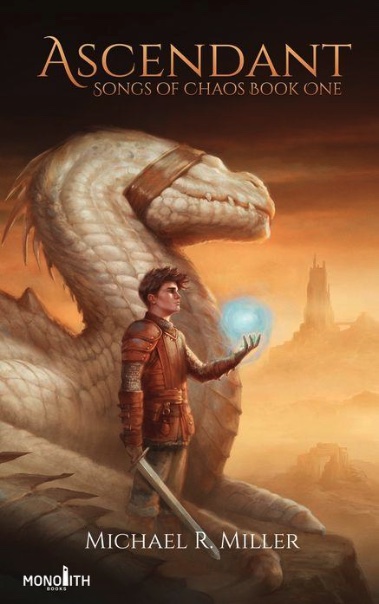
    Book cover for Michael R. Miller's epic fantasy novel Ascendant.

    Michael R. Miller has found considerable success with his first series, The Dragon’s Blade Trilogy, which has topped Amazon’s bestseller lists for epic fantasy, sword and sorcery, and YA fantasy among other categories. As if that isn’t impressive enough, his next series–currently in the works–has pushed him forward to an even bigger and more loyal audience.

    Here’s the pitch for Miller’s Songs of Chaos series: “A servant boy defies society to save a blind dragon from death and rises to become a dragonrider!” If it sounds familiar, it’s probably because it is. It’s strikingly similar to a) Christopher Paolini’s Inheritance Cycle, and b) book three of Anne McCaffrey’s Dragonriders of Pern trilogy. Oh, and there’s also a very clear progression fantasy play at work in this series, to add to the mix of clear influence.

    So, with such obvious and well-beloved influences, how did Miller go about marketing his new series? He does it obviously. Here’s some copy from the first book’s Amazon page: “…combining the best of Eragon and Pern with the hard magic of Brandon Sanderson and Will Wight.”

    Miller isn’t actually making an outlandish claim here. That’s what the books read like: Cradle + Eragon + Pern.

    What I see as the takeaways: Miller’s path to indie publishing is almost the opposite of Wang’s above. Miller entered the scene with some traditional publishing experience behind him. Then he found a space with hungry audiences and targeted those audiences narrowly, repeatedly, specifically. Whether Miller wrote his books intending to reach this existing audience or not, I don’t know, but his precision targeting (which really helps his landscape of advertisements) has helped him find a large and loyal audience.

    Daniel Greene: Writing from a strong platform

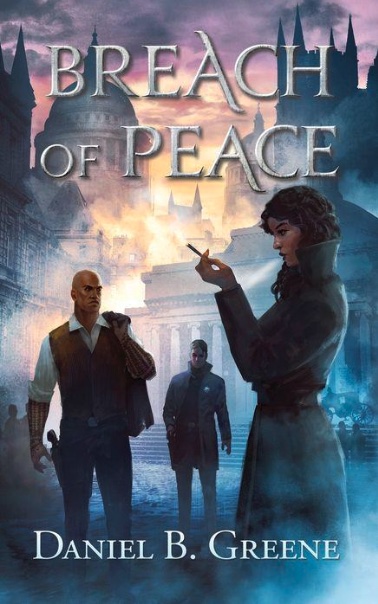
    Book cover for Daniel Greene's dark fantasy novella A Breach of Peace.

    Daniel Greene, aka your disheveled goblin host, is most well known as a YouTuber. He entered indie publishing last year with his debut novella, Breach of Peace, following this up with a short novel several months ago.

    Greene reported 30,000 sales of Breach of Peace within the first week of its publication. Based on its sales rankings since then, it has likely sold over 250,000 copies now, just 14 months since publication.

    For context, Brandon Sanderson just reported that he too reached 250,000 sales in the first year for one of his more widely anticipated releases. This figure isn’t terribly surprising, since Sanderson is a massive name in the genre, with 16 years of consistent bestsellerdom behind him. So, for Greene to come anywhere close to that figure is an astonishing win.

    In the end, though, Greene moved books in a really similar way to how Sanderson does it now: He’s a community player with a platform he has built carefully over time (over 300K YouTube followers when Breach of Peace came out, for instance, and now over 400K). He did a lot of leg work beforehand, not just to get the word out but in a way that other influential figures like reviewers and YouTubers would also get the word out.

    What I see as the takeaways: Plenty of authors publish and sell books without having an audience in place before the book is available. I think it’s fair to say this is the case for most people who write fiction. But in the end, having an audience from the date of publication definitely helps. Note that science fiction writer John Scalzi took a similar path with his very successful blog (through which he published his first novel).

    Evan Winter: Moving from indie to trad

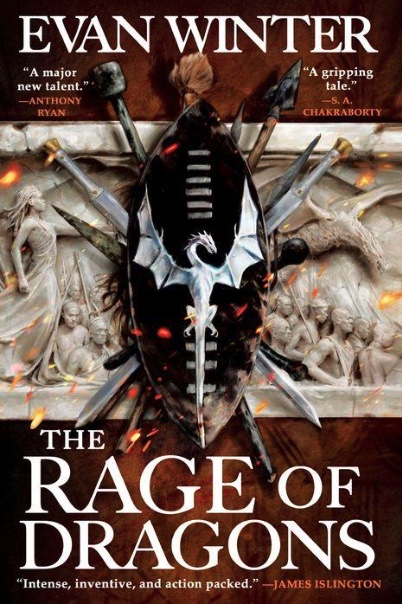
    Book cover for Evan Winter's epic fantasy novel The Rage of Dragons.

    Evan Winter made quite a splash with the publication of The Rage of Dragons. Fans pretty much love the following book as much as the first.

    Winter published his first novel through Amazon’s Kindle Direct Publishing (KDP). In his own words, he didn’t expect his writing to be more than a hobby. He found almost overnight success after sharing information about his book on r/Fantasy, a community he’d been a part of for some years by then. His debut quickly climbed to the top 250 books selling on Amazon that day. Soon thereafter, an editor from Orbit contacted Winter with interest in a book deal.

    After an initial phone conversation, Winter relates that “the editor got back in touch to say that Orbit was going to make an offer and that I should get an agent.” Shortly thereafter, Winter had both an agent and a deal to publish not one but four books. More importantly, perhaps, people just keep reading and loving what Winter writes.

    What I see as the takeaways: Like Greene, Winter was part of the community. When he wanted to find readers, he knew where they were and knew how to communicate with them. Also, when you write something people want to read, publishers tend to take notice.

    For additional examples of the indie to traditional path, take a look at:

    Michael J. Sullivan: Building a backlist

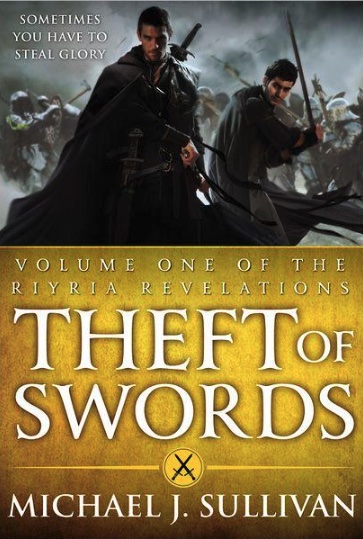
    Book cover for Michael J. Sullivan's epic fantasy novel Theft of Swords.

    Michael J. Sullivan is a particularly interesting case as a hybrid author. Like many others, he completed numerous manuscripts, sent them to agents and editors, and collected a list of rejections before ever publishing anything. He also worked with a small press which couldn’t deliver on the printing and distribution volumes Sullivan’s work evidently merited.

    Eventually, Sullivan regained publishing rights for The Riyria Revelations and began publishing them himself. His sales numbers grew as he expanded the series. He eventually began selling about 1000 books per month. He also got a six-figure book deal–his runway into traditional publishing with a big New York press. Before this deal was ever made public, Sullivan’s sales leaped up to 10-12K copies per month, earning him upward of $35,000 for each of those months.

    Perhaps because of this success, Sullivan has retained a close connection to the indie world, even after releasing quite a few volumes through traditional publishers. Sullivan has run multiple successful kickstarters to fund new books, for instance. He has worked closely with Grim Oak Press—a small publisher—as well.

    What I see as the takeaways: Sullivan is a great example of building an audience via multiple volumes. The majority of indie authors establish loyal audiences over time by releasing several, even many books. These writers (see Lindsay Buroker as another example) don’t often see large sales numbers until they have a backlist of books to their names, just as Sullivan did.

    One final example: Christopher Paolini

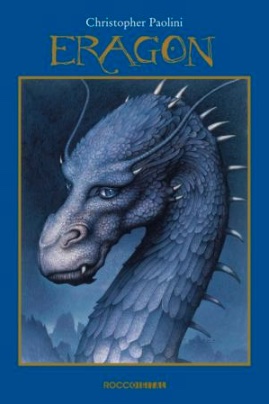
    Book cover for Christopher Paolini's high fantasy novel Eragon.

    Christopher Paolini’s indie publishing path might be even more exceptional than the rest I’ve mentioned. He was only 15 when, with the help of his family, he published Eragon. That said, it’s also one of the more illustrative examples out there.

    Paolini had the benefit of some in-family expertise. His family operated a small press that had previously published a few other books. He also emerged at a time of voracious interest in fantasy for middle grade and young adult audiences. This reader interest undoubtedly helped secure his eventual book deal with Knopf and his 121 consecutive weeks on The New York Times Best Seller list.

    What was not exceptional for Paolini was that he first grew his audience by going out and sharing his work. He attended over 135 in-person events to promote his first novel, making as many as 70 stops in a single year.

    What I see as the takeaways: People buy books that are recommended to them. This is true even when the author is the one going out to make the recommendation.


    Sign up for the newsletter to get more nerdy content like this in your inbox.

    Sign me up

    * indicates required

    Intuit Mailchimp


    About the Author

    Headshot of epic fantasy author Stephen Taylor.

    Stephen Taylor is the author of The Witherclaw Trilogy as well as short fiction appearing in The Future Fire, MYTHIC Magazine, The Centropic Oracle, and other publications. His short story “Only an Ocean” won a Silver Honorable Mention in the L. Ron Hubbard Writers of the Future Contest. When he’s not writing, he’s often playing his violin or wandering in the woods.
  • There are many paths to tread (Part I): 5 unique publishing journeys of fantasy authors

    There are many paths to tread (Part I): 5 unique publishing journeys of fantasy authors

    Though Peregrin Took usually gets the cinematic credit, it was Bilbo Baggins who penned the line “there are many paths to tread.”

    Peregrin Took singing an adapted version of Bilbo Baggins's "A Walking Song" in the film The Return of the King.

    In this month’s post, I’ll use Bilbo’s “A Walking Song” to dig into the many varied paths fantasy authors traverse from coming up with a story idea to getting that idea published.

    As a genre, fantasy has an interesting relationship with the world of publishing. Take the very circuitous journey of The Lord of the Rings in the USA as an example. It’s no surprise that authors face all sorts of difficulties when trying to break in, to get a book deal, to find an audience, etc. Likewise, I find a sort of solace in the fact that so many top tier authors take their own unique publishing journeys.

    So how do fantasy author get their books published?

    First note before digging in: I’ve limited my list to authors who published their first novel since the turn of the century. This is mostly to account for the internet as part of the road to publication. Also, most of the authors I’m talking about have large readerships and have sold quite a few books. I believe every author I’ll mention is exceptional. None of their paths to publishing should be viewed as straightforward, direct, or any kind of easy. Yet I find a lot of insight in how these different writers undertaken their professional publishing journeys.

    Second note: I’ve provided some visuals to help make these publishing journeys more digestible. The caveat is that these images are necessarily (and purposefully) reductive.

    Final note: In this month’s post I’m only looking at examples of authors entering the world of traditional publishing. Next month’s post will dig deep into author examples across indie publishing.

    N. K. Jemisin: Step-by-step among publishing journeys

    It’s hard to find a living writer more lauded than N. K. Jemisin–inside or outside speculative fiction. Some of her more recent accolades include a MacArthur Fellows “Genius Grant” in 2020 and winning the Hugo Award for best novel three times in a row (which has never happened before) for all three books in her Broken Earth trilogy.

    Book cover for N. K. Jemisin's debut fantasy novel, The Hundred Thousand Kingdoms.

    Jemisin found acclaim early on in her publishing career, but her path to get there was fairly incremental.

    After collecting rejections for two finished novels, Jemisin went to Viable Paradise, an intensive, one-week writing workshop focused on speculative fiction. Her experience there led her to start writing short stories. Those stories then found homes in semipro and professional publications such as Ideomancer, Escape Pod, Strange Horizons, Apex Magazine, and Clarkesworld.

    Meanwhile, Jemisin wrote a new, big idea novel. With some short stories to her name and a standout new manuscript, she secured a representation deal with her literary agent, Lucienne Diver. Diver shared the novel with a number of editors, but no one bit yet. It was only after Jemisin’s short fiction received both Hugo and Nebula nominations and she wrote another novel (which sold at auction in a six-figure deal) that her previous manuscript was published as well.

    This was still before she even got to her Broken Earth trilogy. That work really propelled her into wider recognition across epic fantasy, science fiction, and other genres.

    Steps N. K. Jemisin took to becoming a published fantasy author.

    What I see as the takeaways: Jemisin’s success was anything but overnight. She kept writing new stuff and seeking new ways to improve. I think it’s fair to say–from each of her works I’ve read–that she never stopped producing her own kind of stories, even when editors told her they weren’t marketable. Her path to publishing success built that uniquely Jemisin momentum up over a long time.

    Patrick Rothfuss: Taking a few big steps in the publishing journey

    Patrick Rothfuss hit the scene hard in 2007 with the debut of his first novel, The Name of the Wind. It was perhaps the most hyped fantasy debut I’ve ever observed, with a big auction for the publishing rights, rapid chatter throughout the ecosystem of blogs and forums (yep, forums were a big thing back then), and advance reviews and sky-high praise from dozens of authors I love.

    Book cover for Patrick Rothfuss's debut fantasy novel, The Name of the Wind.

    This early buzz was even more remarkable given that Scott Lynch, Joe Abercrombie, Brandon Sanderson and several other big names had just debuted as well, with additional books already hitting shelves in 2007.

    Rothfuss’s is one of the more linear publishing journeys out there. For starters, Rothfuss took longer to write his first novel than most writers do, working on the same story from 1994 until book one of the tale was finally published in 2007. Rothfuss’s main step toward getting an agent–who subsequently brokered his book deal–was submitting to the L. Ron Hubbard Writers of the Future contest. His submission, an excerpt from his then unfinished second novel, won him a quarterly prize in the contest and led him to meeting Tim Powers and then his agent, Matt Bialer.

    With Bialer’s help, Rothfuss continued polishing his manuscript a few more years and then secured a three-book contract with Daw.

    [image]

    Steps Patrick Rothfuss took to becoming a published fantasy author.

    It’s hard to overstate, however, that while this path doesn’t have many steps or tales of rejection letters, these were extraordinary steps. First off, Bialer was already one of the most recognized and connected agents in epic fantasy. Secondly, it still took several years to move from agent to book deal to published manuscript, and Rothfuss reports working through extensive phases of editing, writing new story threads, and revision at this time. Third, winning a quarterly prize in the Writers of the Future contest was no easy feat either. Last of all, Rothfuss’s debut novel was exceptionally strong. His journey paid off for readers, not just for himself, with a book that was well worth all the hype and excitement.

    The Name of the Wind and Rothfuss’s second book combined have sold well over 10 million copies worldwide.

    What I see as the takeaways: Although quality doesn’t always win out, it definitely can. Rothfuss’s success isn’t based on writing 100 solid novels. It’s based on writing and polishing and rewriting one really good book that got agents, editors, other writers, and readers really excited. This path looks to me like a particularly tough one to mirror, but it definitely worked for Rothfuss.

    Tamsyn Muir: Some of both

    Although Tamsyn Muir has been publishing SFF since 2010, she began garnering much more notice with the release of her genre-busting first novel Gideon the Ninth. The book not only captured the attention of many readers and writers but earned World Fantasy, Hugo, and Nebula nominations as well as the 2020 Locus Award for Best First Novel.

    Book cover for Tamsyn Muir's debut fantasy novel, Gideon the Ninth.

    Perhaps it goes without saying, but very few books earn nominations for SFF’s four biggest award programs, let alone wins in any of them.

    Like Jemisin, Muir took both the route of professional workshops (Clarion, in her case) and short fiction. She placed stories and novelettes in magazines such as Lightspeed, Nightmare, Clarkesworld, and the Magazine of Fantasy & Science Fiction. Her first publication, “The House That Made the Sixteen Loops of Time” was a story she wrote during her final week at Clarion.

    When Muir’s fourth short story came out, it collected nominations for the Shirley Jackson, World Fantasy and Nebula awards, among others. Subsequently, an agent approached her with interest in representing her work. Muir didn’t end up working with that first agent, but she did instead get an offer of representation from Jennifer Jackson, long-time agent for a few big names like Jim Butcher (see below), Elizabeth Bear, and Martha Wells.

    Steps Tamsyn Muir took to becoming a published author.

    What I see as the takeaways: Professional workshops can really move the needle for speculative fiction writers. Short fiction often opens doors toward bigger publishing journeys. And winning some major genre awards never hurts either. Also, once legitimate agents start approaching you, you’re probably more than ready to successfully approach such agents in return.

    Jim Butcher: Retracing some steps on the path to publication

    Jim Butcher’s audience has grown steadily for two decades. Most of this has come with the expansion of his urban fantasy / mystery series The Dresden Files. He now has 17 out of 22 planned volumes in print with the same publisher (plus two other series). It all stems from one initial book deal.

    Book cover for Jim Butcher's debut fantasy novel, Storm Front.

    Butcher’s own account tells the story well. He queried numerous agents and editors for a few years without success. Over time he identified a specific agent he thought would be a fit, based on what else she represented. Butcher queried her. She responded with a no.

    Not to be deterred, Butcher found out what conventions and conferences this agent would be attending. He armed himself with relevant conversation-starters, and went to meet her in person. If you’ve heard Butcher speak before, you’ll know he has a lot of charisma (probably no surprise if you’ve read The Dresden Files either). So, with an in-person chance to make an impression, Butcher got himself invited to lunch. He received an offer of representation–that same day. Six months later, he had a book deal.

    Steps Jim Butcher took to becoming a published fantasy author.

    What I see as the takeaways: Butcher did his research and stuck to his strengths. He didn’t throw in the towel when he faced rejection. He kept writing along the way as well. Consequently, he had more than just one book ready when he finally had a deal. In Butcher’s own words, “Here’s the secret of how to get published: keep going.”

    Brandon Sanderson: Betting big on replicable publishing journeys

    Brandon Sanderson is probably most well known for his Mistborn novels and completing The Wheel of Time after Robert Jordan’s death. His reputation extends far beyond selling books, though he has at least 21 million sales to his name since last year.

    Book cover for Brandon Sanderson's debut fantasy novel, Elantris

    Despite his astronomical success, Sanderson’s path to publishing was exceptionally practical. He wrote novels, queried editors and agents, stacked up rejections, queried new projects, collected more rejections, and then started attending professional events to try meeting the right agents and editors in person.

    Eventually, he met his future editor Moshe Feder in person. Feder agreed to look at a manuscript, but took 18 months to do it. Sanderson had given up on that particular submission when Feder called him up with an offer to buy the book.

    With a book deal at his door, but not finalized, Sanderson then went back to his agent search. He contacted Joshua Bilmes, whom he’d also met in person and queried multiple times. Bilmes agreed to represent Sanderson and helped secure an even better book deal with Feder / Tor Books.

    You could say there are other big steps in here as well. Sanderson’s involvement in The Wheel of Time didn’t hurt. Nor did running the biggest Kickstarter campaign ever. But he built a strong name for himself before doing either of these things.

    Steps Brandon Sanderson took to becoming a published fantasy author.

    What I see as the takeaways: No one should expect to build a reading community like Sanderson has. The steps he took to get in the door are pragmatic and repeatable, however. He wrote a lot. He queried. And he networked at the right events, looking for editors and agents who were very likely to fit his work. Like Jemisin, he wasn’t an overnight success. He put in the hard work, got his foot in the door, and grew from there.

    Other paths to publication

    Stay tuned next month for another look at publishing journeys. That post will analyze how several indie and hybrid fantasy authors have navigated their own publishing paths.


    Sign up for the newsletter to get more nerdy content like this in your inbox.

    Sign me up

    * indicates required

    Intuit Mailchimp


    About the Author

    Headshot of epic fantasy author Stephen Taylor.

    Stephen Taylor is the author of The Witherclaw Trilogy as well as short fiction appearing in The Future Fire, MYTHIC Magazine, The Centropic Oracle, and other publications. His short story “Only an Ocean” won a Silver Honorable Mention in the L. Ron Hubbard Writers of the Future Contest. When he’s not writing, he’s often playing his violin or wandering in the woods.
  • 7 fantastic books for Miyazaki fans

    7 fantastic books for Miyazaki fans

    If you’re a typical Hayao Miyazaki fan, you probably wish there were more stories like his out there. It’s a problem I think about often. I wish I could find more movies, music, video games, and books for Miyazaki fans like me.

    There’s really no way to perfectly fit another story–movie, book, or other format–into a perfectly Miyazaki-shaped picture frame. That said, there are stories out there that strike a similar chord or share traits Miyazaki fans will probably recognize and care about. Here are just seven books that have done that for me:

    1. The Goblin Emperor by Katherine Addison (2014)

    Book cover Katherine Addison's novel THE GOBLIN EMPEROR.

    The title The Goblin Emperor probably conjures images of a muscled creature ruling with a heavy hand. But that’s not what Katherine Addison’s novel is about. Her goblins are pretty much just mortal elves, and this book’s emperor would rather build socioeconomic infrastructure than serve Sauron.

    Miyazaki would probably love the steampunk, airship-filled world Addison has created. Yet what makes The Goblin Emperor so reminiscent of Miyazaki is not the story or even the setting. It’s the presentation that sets this book apart.

    The novel is very concerned with death, loneliness, selfish politicking, and intrigue. It also manages to be a hopeful, positive story about trusting people, observing healthy boundaries, and coming of age without becoming inured to the very real darkness in the world. The optimistic direction of this book is a particular strength, one which Miyazaki fans will likely recognize with familiarity.

    What it reads like: Howl’s Moving Castle as a casual murder mystery about blue collar political programs.

    2. Sabriel by Garth Nix (1995)

    Book cover for Garth Nix's novel SABRIEL.

    Sabriel is a story about boarding school, boats and magic airplanes, death bells, courageous daughters, and rabbit necromancy. And, like so many Miyazaki movies with equally suspect content topics, it seems to have kids in mind as its primary audience.

    Sabriel delves unabashedly into dark, complex themes often brushed behind the curtains in media for middle grade and young adults. The most obvious themes have to do with death and grief. A large portion of the novel’s worldbuilding concerns the relationship between those who are alive and those who are not. Instead of leaning into the eeriness or sorrow these themes invoke, however, Sabriel explores them through the lens of its beautifully unique setting.

    Art depicting the character Sabriel from Garth Nix's novel Sabriel.
    Art by clockwork-madness.

    The novel contains a very Miyazaki-like protagonist, a keen interest in natural elements like earth and water, and even a flying scene (almost a must for Miyazaki). But it’s Garth Nix’s focus on the weirdly beautiful that makes Sabriel most like a Miyazaki movie.

    What it reads like: Spirited Away meets Diablo II’s necromancer class (but for young readers).

    3. Binti by Nnedi Okorafor (2015)

    Book cover for Nnedi Okorafor's novella BINTI.

    Despite its sometimes categorization as science fiction horror, Binti brings so many elements together that Miyazaki fans are likely to love.

    First, it follows the title character on her journey away from home to attend a prestigious university. Binti is the first of her ethnic group ever to enter said university, which opens her circumstances to numerous challenges and prejudices. If a brave girl who loves math and sets out on her own in a flying whale doesn’t sound like something Miyazaki would depict, I’m not sure what does.

    Second, the character Binti shares some of the more subtle characteristics of many Miyazaki heroines. Like Nausicaä, Sheeta, San, Fio, or Sophie in particular, Binti has a knack for making friends of her seeming enemies. This alone brings an incredible positivity to her story, despite many moments of terror and isolation.

    Third, Binti as a work doesn’t linger over its darker moments. The story stops for breath, instead, in instances of great imagination and beauty. The cadence of the novella thus parallels virtually every Miyazaki movie, using a distinctly unHollywood approach to both plot and pacing.

    Fourth, like several of Miyazaki’s films, Binti is a story with no clearly personified villain. It’s thus is a story that doesn’t rely on violence or death for a final resolution. Rather, the climax of the tale relies on healing and unification born from a deep respect both for scientific learning and age-old tradition. Binti’s reverence toward wisdom and learning from both sources (often viewed as opposing ones) might be the most Miyazaki-like element of all.

    What it reads like: Nausicaä of the Valley of the Wind before everyone loves the heroine.

    Art depicting the character Binti from Nnedi Okorafor's novella Binti.
    Art by narachouchou.

    4. The Word for World is Forest by Ursula K. Le Guin (1972)

    Book cover for Ursula K. Le Guin's novel, THE WORD FOR WORLD IS FOREST.

    If you’re a Miyazaki fan, you’ll probably know that no less than four of Ursula K. Le Guin’s novels have been adapted–by Goro Miyazaki, not Hayao. The much disparaged Tales from Earthsea liberally combines and modifies material from Le Guin’s Earthsea Cycle. It scrunches four books’ contents into one movie that truly approximates none of them. The point isn’t to lament that Goro’s directorial debut is not what an experienced Hayao Miyazaki would have brought forth. The point is that Le Guin’s writing offers rich ground for retelling. Also, Hayao Miyazaki actually came much closer than Goro did to a direct adaptation when he made Princess Mononoke–a movie strikingly similar to Le Guin’s oft overlooked The Word for World is Forest.

    Make no mistake. Princess Mononoke is its own story, with very different themes and a much brighter conclusion than Le Guin’s. Their two stories about forests endangered by mankind–and the costs of men and forests warring against one another–could be cousins, sharing a progenitor but not a parent.

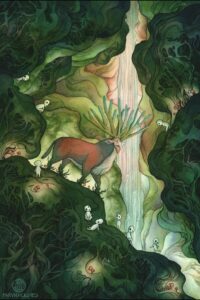
    Art depicting the Deer God and kodamas from Hayao Miyazaki's movie Princess Mononoke.
    Art by Calmality.

    Miyazaki seems to find redeeming goodness in every human with a face and a voice. The Word for World is Forest takes a much grimmer attitude, more like James Cameron’s Avatar (which owes an undeniable debt to both works under discussion). On the one hand, The Word for World is Forest still tells the story of humans who share both an affinity with the forest and with their own kind. But it also begins with a shockingly personal look at a few particular humans who care about almost nothing but their own power, making it distinctly unlike Miyazaki’s work.

    There’s an omnipresent attitude that the natural world has wisdom and wealth to share with all who touch it–human or not. This is where this novel and Miyazaki fans will find the most shared ground. The mystical, worshipful approach to trees and wind and water and sky lend themselves well to any fan of any film Miyazaki has directed.

    What it reads like: Princess Mononoke in space. So, a more fully-baked version of Avatar.

    5. Dragonsong by Anne McCaffrey (1976)

    Book cover for Anne McCaffrey's novel DRAGONSONG.

    Anne McCaffrey’s Dragonriders of Pern series is about time-traveling dragon riders fighting mycorrhizoid spores from space. However, the books are much more concerned with the mundane than with epic battles or interplanetary expeditions.

    Dragonsong is a prime example. It’s the story of a teenage girl who loves music–a craft reserved largely for men–and proactively cultivates her interests and abilities despite various roadblocks and fierce opposition from her family. Where other secondary fantasy might explore the relationships between kingdoms, Dragonsong spends time on mother-daughter and mother-father interactions. It’s not about pitting the protagonist against planet-breaking catastrophe. Rather, this novel explores the troubles of not doing your chores or getting your feet cut while wandering outside. And instead of populating the world with giant monsters, McCaffrey spends most of her attention on small, hungry fire-lizards that like to harmonize with the main character’s singing.

    McCaffrey’s writing tends to be more thematically heavy handed than many of Miyazaki’s films, but its focus on very real-world, everyday conflicts and concerns aligns it nicely with Miyazaki’s aesthetic. Dragonsong, in particular, is all about the interactions between humans and the natural world around them, with storms and seasons, waves and fish, lizards and dragons all engaging interestingly with the people of Half-Circle Seahold.

    What it reads like: Medieval Ponyo told by a narrator who’s willing to acknowledge the really poor parenting going on.

    6. Song for the Basilisk by Patricia McKillip (1998)

    Book cover for Patricia McKillip's novel SONG FOR THE BASILISK.

    The difficulty of accurately describing Patricia McKillip’s writing is in itself a shared characteristic with Miyazaki’s canon. Most of McKillip’s books–Song for the Basilisk included–are clearly works of fantasy, but that says little about what the experience of reading McKillip is actually like.

    Song for the Basilisk is a story about horrific trauma and devastating loss. The story unfolds with an ethereal touch that celebrates moments of beauty for their own sake, often making smaller stories out of these moments that might not be a story at all if relayed through another’s style and perspective–which is itself a point of connection between McKillip’s writing and Miyazaki’s work.

    Like several works listed here, Song for the Basilisk is also refreshingly complex in its unconventional relationships between active parties; there’s little clarity about who is really opposing whom in the end. Readers will still find heroes and villains, so to say, but not in all the places they might expect. This gives the book a unique break from the common mold.

    Very much like Princess Mononoke, The Wind Rises, and Nausicaä of the Valley of the Wind, Song for the Basilisk explores a deeply paradoxical relationship between violence and peace. Nausicaä, for instance, is a heroine who refuses to kill insects but who fights men and women with brutal ferocity. McKillip’s book connects violence to music, the very thing that gives healing and beauty to a cast of characters mourning immense loss.

    As I noted above, there’s no perfect match between Miyazaki and anything else. But this is a great starting point for Miyazaki fans looking for books like his movies.

    What it reads like: If Porco Rosso were about a singing competition instead of dogfighting.

    Character art for Nausicaa from Hayao Miyazaki's Nausicaa of the Valley of the Wind.
    Art by FF69.

    7. Spinning Silver by Naomi Novik (2018)

    Book cover for Naomi Novik's novel SPINNING SILVER.

    On its surface, Spinning Silver is a love story about a girl who tricks a magical being into thinking she herself is magical, or perhaps a bildungsroman about a girl making her way in the world long before she thought she was ready to (somewhat like Kiki’s Delivery Service). Like most fairytales and retellings, however, it holds much more story beyond that surface.

    Many things in this novel are never explained. Not unlike the singular phenomena at work in Spirited Away, My Neighbor Totoro, or even Porco Rosso, the events of Novik’s novel need no explanation because the novel isn’t about how these things transpired as much as it’s about the current state of the characters living in strange and wondrous worlds. It invites the reader not to worry about the mysteries behind the curtain. After all, there’s plenty to consider and admire right at hand.

    The looseness of Spinning Silver, as a retelling of another tale, is another area in which it reads like something Miyazaki might create. It leaves enough shared material to recognize its roots, but it also retains a unique enough shape that the original and the retelling can be wholly separate things, much as Miyazaki has done with his adaptations of Howl’s Moving Castle or Kiki’s Delivery Service.

    Last but not least, there’s understated, all but unobservable magic at work everywhere in this novel. As such, I think those who love Miyazaki’s worlds will find a lot to love in this one too.

    What it reads like: If the forest spirits of My Neighbor Totoro cared a lot about money and lived in Eastern Europe.

    I once sat with eight other people and watched Miyazaki’s first directorial credit, Lupin III: The Castle of Cagliostro. After watching the film, we discussed which Miyazaki film we each liked best overall. Eight people gave eight different answers. None of us could agree on a number one favorite.

    This experience left me with two overarching impressions:

    First, amazement that any storyteller could reach such a high level of excellence so many times; few narrative artists ever have.

    Second, that I need to find yet more stories like the ones Miyazaki tells. So please comment below if you know of more good books for Miyazaki fans!


    Get more nerdy content in your inbox:

    Sign me up

    * indicates required

    Intuit Mailchimp


    About the Author

    Headshot of epic fantasy author Stephen Taylor.

    Stephen Taylor is the author of The Witherclaw Trilogy as well as short fiction appearing in The Future Fire, MYTHIC Magazine, The Centropic Oracle, and other publications. His short story “Only an Ocean” won a Silver Honorable Mention in the L. Ron Hubbard Writers of the Future Contest. When he’s not writing, he’s often playing his violin or wandering in the woods.
css.php