
Tag: epic fantasy

  • 8 of the best magic systems in high fantasy

    8 of the best magic systems in high fantasy

    “Infinite are the arguments of mages,” wrote Ursula Le Guin. Likewise, infinite are the arguments about the best magic systems empowering those mages. This article will scarcely scratch the skin of that debate. But, as a reader and writer who cares a lot about interesting ways to use magic, I have some takes on the topic.

    Out of hundreds of possible options (probably thousands), here are the eight magic systems I think are most interesting in terms of how the author actually uses them.

    1. True names | Ursula Le Guin’s Earthsea Cycle
    2. Luxin | Brent Weeks’s Lightbringer series
    3. Death Witnessing | Katherine Addison’s The Goblin Emperor
    4. The One Power | Robert Jordan’s The Wheel of Time
    5. Forging/soulstamping | Brandon Sanderson’s The Emperor’s Soul
    6. Honorable mention: The Skill and the Wit | Robin Hobb’s Realm of the Elderlings
    7. Honorable mention: Warrens | Steven Erikson’s Malazan
    8. Honorable mention: Sympathy | Patrick Rothfuss’s Kingkiller Chronicles

    1. True names | The enduring magic system of Le Guin’s Earthsea Cycle

    Numerous magic systems use naming as a means to control things, generally centered on the concept of a true name. This system has roots in various religions and folk traditions. Unsurprisingly, Le Guin latched onto it and built a fascinating magic system around it.

    At its heart, the idea is this: By knowing the true name of a thing, a wizard can control it. Sparrowhawk, the titular character in Le Guin’s A Wizard of Earthsea, uses this principle to befriend birds, to tame a dragon, and to heal himself. It’s a simple enough concept for readers to follow to interesting ends. The ways Le Guin problematizes it are even more compelling.

    For instance, it’s not enough to know the sea’s name. A wizard might need to know the name of every drop of water before controlling an entire sea. Le Guin’s books also describe some things that don’t know their own names and are so free they can ignore the call even when issued by wizardry. Most fascinating is the way in which most trained wizards essentially subdue their own sexuality through use of their power (a concept only hinted at for the first few books of The Earthsea Cycle).

    Le Guin’s magic system is unfathomably powerful, yet it’s tempered with very real costs and risks. And above all, Earthsea is a place that uses wizardry for endlessly interesting things.

    Instead of the binary battle spells so common in early fantasy (heal wounds or cause them), Le Guin gives us a full array of tasks wizards might accomplish through magic.

    Her wizards fix pots and heal cataracts. They manage the winds for sailors. They repair boats and herd goats. Sometimes they send messages, and sometimes they refrain—because any use of their power is perilous to the wizard who understands it. Wizardry feels like a lived-in, economic element in Earthsea. It’s so fully incorporated that I can’t imagine the setting without it. That alone is why I rank it above all other magic systems in high fantasy.

    2. Luxin drafting | Creative and beautiful magic in Brent Weeks Lightbringer books

    Brent Weeks famously yelled at Brandon Sanderson when the latter published Warbreaker just a year before Weeks’s The Black Prism hit shelves. The issue? Color-based magic. Weeks wanted to do it first. Regardless of any common hue (pun intended), Weeks’s system of luxin drafting stands very much on its own.

    This magic system combines vision with physical substance.

    First, vision. Drafters (mages) can typically only draft one or two colors. These are only available when they have some source of that color in sight—which leads to all sorts of clever tricks like colored lenses for the drafters or reflective armor to counter mages.

    Next, substance. Whatever colors a drafter can access, the accessing mechanism spawns a physical substance, luxin, of an associated color. Luxins bring unique characteristics like durability, flammability, stickiness and so on. The evocation of luxin also allows build-up within a drafter’s body and expulsion (shooting streams or bolts of it out, for instance). There’s plenty of dueling and fighting to be done with luxin in these books. But there’s also an immense measure of craft and commerce connected to drafting.

    Drafters use luxin to track one another, to build vehicles, and even to fortify a city. As with Le Guin’s system of true names, a measure of this magic system’s appeal is its utility for so many different things. Combine that with numerous cool ways to manipulate the system, and it makes for an original and compelling magic system throughout the Lightbringer series.

    3. Death witnessing | An inglorious religious magic in Katherine Addison’s most popular works

    Imagine a magic system that’s basically just used for feeling what a dead person felt, or thinking what they thought. And there you have the essence of death witnessing.

    Addison introduces readers to this magic in a sort of mystery plotline within The Goblin Emperor. Witnessing for the dead plays a central step in finding the truth, absolving the innocent, or tracing the guilty. These of course have big narrative implications and opportunities. But death witnessing also leads to smaller ones, particularly in Addison’s novella The Witness for the Dead.

    As powerful as this form of magic is, it’s the least glamorous on this list. And like most great magic systems, there are costs and gambles tied to it. In this case, the costs are primarily emotional and social. Witnesses for the dead get some formal respect but not much popularity. And it will be no surprise that feeling an almost-dead person’s almost-dead experiences won’t usually be fun.

    Combine these elements and you get a magic system with a really unique fit into larger worldbuilding. It has a lived-in feeling to it that makes it deeply believable, but it also inspires a little fear—as most magic truly would in fantasy settings. Readers like me sometimes forget to be awed at the idea of a wizard wielding powers outside what I can harness. Addison’s books bring a lot of that awe back to me.

    4. The One Power | A deceptively named and deceptively fascinating system in Robert Jordan’s Wheel of Time

    The One Power is neither one nor solitary. But it is a power, easily ranking number two on this list in terms of raw potential. If you read The Eye of the World, book one in The Wheel of Time, you’ll find magic that feels routine among other epic fantasy of the 80s. Keep reading and you’ll find new layers in almost every following volume.

    First there are fireballs, bolts of lightning, and generic healing spells. Then there’s protective magic and dark lord sealing (also fairly generic). And finally you get faster-than-light travel, mind control, military reconnaissance, the transfer of lava straight from a volcano onto baddies, and lots more.

    Perhaps the biggest weakness in how this system shows up is that the first several books of Wheel of Time ignore magic’s massive logistical impacts. That changes later in the series, especially when Brandon Sanderson gets involved. By the end, The One Power feels widely integrated into how the world works. An equally important strength is that magic users themselves feel valuable and exceptional, even the weaker and less trained ones.

    There’s plenty of room for mages in this system to invent and be smart, as well as to win the day with sheer power. All in all, it’s one of the most accessible and diverse systems to make it into a big series. And like Addison’s death witnessing or Le Guin’s true names, the One Power lends itself well to evoking dread and wonder.

    5. Forging/soulstamping | Brandon Sanderon’s most contemplative and timely magic system

    Speaking of Brandon Sanderson, almost any of his magic systems could make this list. He has come up with several distinct, graspable, and mind-bendingly spectacular ways to utilize magical powers in fantasy worlds. He also makes incredible use of the spelled out (another pun intended) limitations of each system. From allomancy to stormlight to rithmatics, there’s plenty to love.

    Forging, introduced in The Emperor’s Soul, stands out as one of the most deliberate magic systems Sanderson has created. Allomany or stormlight—invaluable as they are in more pedestrian life—see most of their biggest use in colossal struggles like combat between demigod-like mages. Forging is a much slower magecraft in almost all cases shown. It’s a system of using seals (stamps) to imprint the form of something onto an object. This soulstamping process is a bit like imposing an artificial likeness. The nearer the form to the object’s actual nature, the more effectively the forgery takes.

    The plotline of The Emperor’s Soul involves some somewhat desperate forging to survive. It’s also deeply concerned with how artistry and imitation coincide. I’m fairly certain Sanderson wasn’t thinking about generative AI when he wrote this (15 years ago), but it’s deeply relevant today. His recent keynote speech on art and AI reflects some of the same musings, albeit with more concrete outcomes. If you want a thoughtful companion to that speech, take a close look at the forging system.

    And if you simply want a magic system that is fresh, look no farther.

    Honorable mentions: 3 other great magic systems

    Skill and Wit in Robin Hobb’s Realm of the Elderlings

    Robin Hobb’s Farseer Trilogy introduces two seemingly separate but philosophically connected magic systems.There’s the Wit, which is about communication between animals and humans. Then there’s the Skill, which is more or less about the same things from human to human. What makes them stand out so profoundly is the way Hobb ties them to real storytelling stakes.

    Warrens of Magic in Steven Erikson’s Malazan

    Erikson’s system of Warrens is about drawing magical powers from a series of vaguely connected sources. It’s easy enough to follow how it shows up in Erikson’s first books, but it’s intricately layered. Most intriguing of all, there’s a sense of impermanence, given how Warrens shift, get flooded, become the settings for whole subjourneys, and so on. The magic system itself feels as old and as mortal as the rest of the world.

    Sympathy in Patrick Rothfuss’s Kingkiller Chronicles

    Sympathy is only one of several distinct magic systems in Rothfuss’s primary work. It’s the most unique and interesting so far, however. The main idea is about energy transfer through sympathetic links—joining like objects together. It’s limited, like virtually everything listed above, but allows endless invention. It’s the sort of magic system a group of DND players would likely break to no end, which is a good sign that it’s useful, multifaceted, and actually fun.


    For more nerdy content like this, sign up for the monthly newsletter. It’s free to sign up, and you can unsubscribe any time.

    Sign me up

    * indicates required

    Intuit Mailchimp

    About the Author

    Headshot of epic fantasy author Stephen Taylor.

    Stephen Taylor is the author of The Witherclaw Trilogy as well as short fiction appearing in The Future Fire, MYTHIC Magazine, The Centropic Oracle, and other publications. His short story “Only an Ocean” won a Silver Honorable Mention in the L. Ron Hubbard Writers of the Future Contest. When he’s not writing, he’s often playing his violin or wandering in the woods.

  • Top books for readers who love The Lord of the Rings

    Top books for readers who love The Lord of the Rings

    Despite being a lifelong fan of J. R. R. Tolkien’s The Lord of the Rings, I don’t typically go out looking for another work that strikes the same chord. But there are plenty of great books for fans of The Lord of the Rings.

    I’ll be the first to admit being frustrated at the non-Tolkienesque recommendations I receive. “There is only one Lord of the Rings,” as Gandalf says in Peter Jackson’s adaptation of the three-volume epic. My ensuing recommendations are high fantasy or epic fantasy works that evoke a similar sense of beauty, adventure, heroism, depth, and melancholy as J. R. R. Tolkien’s The Lord of the Rings.

    Take them with your own grain of salt, though. These recommendations draw largely from data I’ve gathered on why readers continue to love The Lord of the Rings. There’s always some personal taste involved as well.

    Here are just seven series that share key similarities—all which stand well on their own merits, it’s worth adding.

    Fusing the ordinary and the very epic: Ursula K. Le Guin’s The Earthsea Cycle (1968 – 2001)

    Cover art for Ursula K. Le Guin's The Books of Earthsea, showing two dragons flying over a lone boat.

    Ursula K. Le Guin’s The Earthsea Cycle follows the coming-of-age journey of a wizard called Sparrowhawk, along with some of his treasure-hunting adventures, his attempts to bring real peace to a war-torn world, and a quest to stop wizardry itself (and all crafts of beauty and power) from disappearing. It’s also a series about the power of being very ordinary.

    Earthsea is one of the most obviously unique of all the works this article discusses. There are, however, so many ways in which reading this series feels like reading The Lord of the Rings.

    For the sake of brevity, here are a few high level items to consider:

    • In Earthsea, as in Middle-earth, magic seems to have touched everything. Yet the omnipresence of magical events has not diluted the power it brings to the page in this high-magic setting.
    • Readers might be fooled into thinking The Lord of the Rings is a long work of fiction. At 575,000 words, it’s about the size of two George R. R. Martin books, 1.25 books in the Stormlight Archive, and the final solitary volume in Tad Williams’s Memory, Sorrow, and Thorn (referenced later on). In short, The Lord of the Rings is short for high fantasy, epic fantasy, or similar genre organizers. And so is The Earthsea Cycle, the entire work spanning less than 500,000 words.
    • Short or not, Earthsea shows Le Guin’s uncanny ability to tell a great story with few pages. This is a skill Tolkien shared too, as noted above.
    • Earthsea is full of minor characters doing seemingly unimportant things. Yes, there are heroics like Aragorn’s or Gandalf’s. But the story’s mostly concerned with more ordinary events. This brings it closer to real life than your standard work of epic fantasy. It also makes it much more harmonious with Tolkien’s own work, which is greatly concerned with ordinary, daily, non-epic goings on.

    Fans of The Lord of the Rings will admire Le Guin’s skill with little things

    This last point might be most Tolkien-like of all: Earthsea’s clearest heroes don’t solve their problems by strength of arms.

    Le Guin meticulously crafts stories in which killing a bad guy doesn’t actually fix the world. Yes, you’ll find epic clashes of armies or magical powers in The Lord of the Rings. Earthsea has some similar moments. Yet it’s in quieter instances and less obvious decisions that both works bring their stories to a point of resolution.

    Sign up for the newsletter

    Get the latest articles and updates on The Witherclaw Trilogy with Stephen’s monthly newsletter. Subscribing is free and you can opt out whenever you want.

    Music is magic in The Riddle-Master Trilogy by Patricia McKillip (1976 – 1979)

    Cover art for the Riddle-Master trilogy by Patricia McKillip; a bare tree outlined by snow.

    The Riddle-Master Trilogy by Patricia McKillip tells the story of a young land-heir, swine-herd, beer-brewer, amatuer riddler, would-be-scholar, and prophesied hero all rolled up into one. Along the way, there’s plenty of murderous chasing, ancient riddles, and magical harping to keep readers interested. Much like Middle-Earth, McKillip’s fantasy world is filled to the brim with magic, much of it left almost wholly unexplained.

    In an earlier blog post on underrated works of epic fantasy, I’ve noted Tolkien’s critical influence on McKillip. What’s especially interesting is that McKillip tells such a different story in such a different style than Tolkien, despite numbering him among only a very few speculative fiction writers to shape her early work (Le Guin was another).

    “Tolkien just opened the doors to imagination.”

    —Patricia McKillip, 2010

    Where The Lord of the Rings divides an epic journey up across a party of disparate compatriots, there’s a much lonelier journey going on in The Riddle-Master Trilogy. The main characters—Morgon, Raederle, and Deth—spend a great deal of time alone or with little company around them. Also, much like The Earthsea Cycle mentioned above, there are no Helm’s Deeps or Pelennor Fields with armies fighting on them in this trilogy. Just a wizard or two and a long, well-tuned string of riddles to lure the curious reader forward.

    What feels most Tolkienesque about McKillip’s trilogy is the author’s evident respect for the beauty of the world she created. It’s stunningly unique, even when weighed against the almost 50 years of high fantasy following it. Like Tolkien, McKillip made something that feels too distinct to be properly replicated.

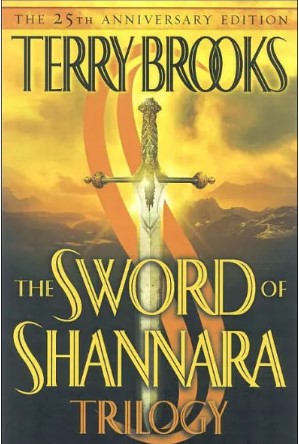
    An epic story with elves, quests, magic swords, and mystical mentors: The Sword of Shannara Trilogy by Terry Brooks (1977 – 1985)

    Cover art for Terry Brooks's The Sword of Shannara Trilogy, showing a magical sword.

    The past two works on the list are less apparent in their Tolkien-like trappings. Terry Brooks wore his clearly from the start of his career.

    The Sword of Shannara Trilogy, which contains three whole, standalone stories, draws on similar plotting, quest structures, and even hero party makeups. It doesn’t feel too fresh upfront, truly. But Brooks’s debut does show a great deal of skill and imagination all the same. Books two and three (and Brooks’s many Shannara stories after that) do a lot to distinguish themselves in their own right.

    Here’s a quick for instance on the similarities. Book one (The Sword of Shannara) follows the quest of a semi-orphaned villager and his adoptive brother as monstrous creatures chase them from their home and they set out to destroy a dark lord. Along their journey, they team up with a mysteriously knowledgeable druid, a dwarf, two bow-wielding elves, and the crown prince of a powerful kingdom that guards the border between the dark lord and the rest of the known world.

    And here’s an example of where Brooks does his own thing: The hero of book one doesn’t succeed through fighting, escaping, or purposefully destroying a magical relic. He succeeds by using truth and paradox to confound the deluded dark lord head on.

    Filled with immense monsters, ancient magic, fast-paced chases, and courageous confrontations of evil, The Sword of Shannara Trilogy embraces the sense of adventure and heroism that so many readers love in The Lord of the Rings. Where Tolkien leans more heavily into lore and detail, Brooks’s very American storytelling is a little more pulpy and action-packed. This makes for a different read than the previous works on the list. It’s one that has resonated with many Tolkien fans in the years since this trilogy helped launch epic fantasy as a commercial, formalized genre in the U.S.

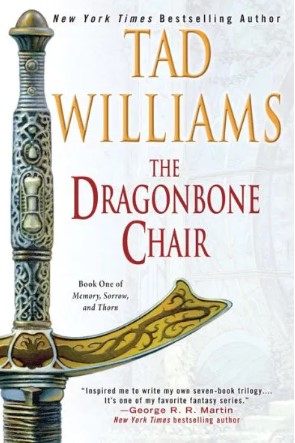
    A work that captures the sorrow of a closing age: Memory, Sorrow, and Thorn by Tad Williams (1988 – 1993)

    Cover art for Tad Williams's The Dragonbone Chair, showing a magical sword hilt.

    Tad Williams has written quite a variety of speculative fiction. To date he is most well-known for his million-word epic trilogy Memory, Sorrow, and Thorn. It’s worth noting that George R. R. Martin is one of the series’s many vocal fans. He particularly credits Williams with influencing him to write his own epic fantasy.

    Memory, Sorrow, and Thorn shares more than one strong similarity with The Lord of the Rings. It’s very much a story about small people (physically and socially) stepping into heroic roles they shouldn’t have to shoulder. It’s also one of the more rigorous of early epic fantasy stories in terms of overall setting and worldbuilding.

    There’s a particularly powerful parallel between Middle-earth and how Williams portrays ancient, magical peoples withdrawing from the world of humans. Much as Tolkien’s elves are leaving the lands of mortals, Williams’s magical races have in many ways already distanced themselves from the doings of humankind. This creates a growing distance between the ordinary world and magical occurrences underway. It also sets readers up for a huge sense of awe whenever pretty much anything magical comes about. Many low-magic series have followed. I have encountered few that bring such a sense of age and scope as Williams’s original trilogy—in a way that feels very much like reading The Lord of the Rings.

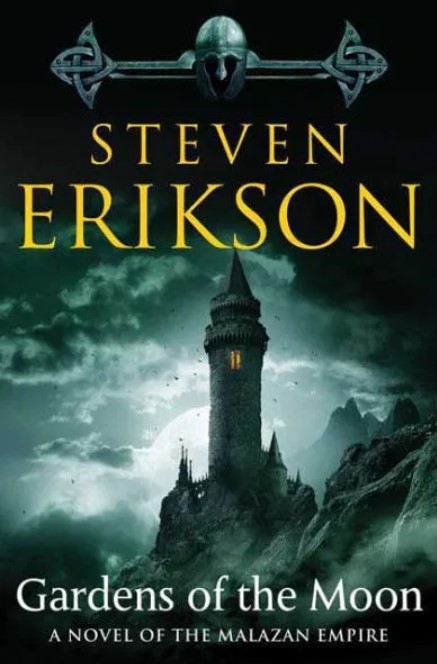
    Going epic on epic Fantasy: Steven Erikson’s Malazan Book of the Fallen (1999 – 2011)

    Cover art for Steven Erikson's Gardens of the Moon, the first book in his Malazan series, showing a lone tower lit by moonlight.

    Critics have often called Robert Jordan (author of The Wheel of Time) the American Tolkien because of the size and scope of his massive fantasy story. Don’t forget the Canadian Tolkien, though. His name is Steven Erikson.

    Erikson’s 10-book epic is more often compared to A Song of Ice and Fire than to The Lord of the Rings. It’s hard to find any writer in any genre who rivals Erikson’s depth of world-building (and that includes Tolkien himself).

    Where Tolkien uses his immense knowledge of philology and poetry to inform his worldbuilding, Erikson draws on archeology and anthropology as well. He creates economies, social contracts, militaries, and magic systems that feel incredibly plausible because they follow patterns so identifiable in human history.

    And this is to say nothing of Erikson’s sheer skill with words. Erikson graduated from the Iowa Writer’s Workshop, the most celebrated writing program in the world. And he makes his wordsmithing prowess plain from early on in book one of Malazan.

    Critics often describe Erikson as being too challenging for typical fantasy readers today. With a focus on warfare and imperialism, Malazan also sits more on the military fantasy side of the genre spectrum. It’s therefore a departure from the lofty, high fantasy space The Lord of the Rings craved for itself. That said, Erikson’s rich lore, expansive setting, immense cast of characters (god and human alike), and very character-oriented storytelling make his work an excellent fit for the many Tolkien fans who want something epic, well-imagined, and unforgettable.

    A magical mix of everything: The Swan’s War Trilogy by Sean Russell (2001 – 2004)

    Cover art for The One Kingdom by Sean Russell; a stone bridge over a wide gorge.

    Perhaps the least well known series on the list, The Swan’s War trilogy feels like an even amalgamation of the elements in almost all the above series. It follows several converging storylines, including the coming of age journey of a few village boys, a sort of Montagues and Capulets rivalry that goes full-blown medieval war, and the secret quest of an almost roguish wizard.

    I’d venture to guess that author Sean Russell knows one of Tolkien’s oft-forgotten secrets: Don’t explain everything. The Swan’s War trilogy feels almost like a dark fairy tale, when you get deep into it. The lore is less expansive than most items on this list. Yet it still feels deep and awe-inspiring without taking 5000 pages to get there.

    Like in The Fellowship of the Ring, particularly, there’s plenty of chasing and escaping from mysterious forces. Like in The Two Towers or The Return of the King, readers will find interesting stories about royal families, political intrigue, and warfare. And through it all, there are simpler tales about a few young cousins trying to find their way safely home.

    Much like The Lord of the Rings as a whole, Russell’s trilogy is fascinated with landscape and the journey itself. These books present a setting that feels as magical when uninhabited as it does when warring enchanters hunt each other across it. There’s plenty of imagination and adventure as well. But the unique sense of location is perhaps the single item that makes it feel most Tolkien-like.

    Celebrating fellowship: Michael J. Sullivan’s Riyria Revelations (2011 – 2012)

    Book cover for Michael J. Sullivan's epic fantasy novel Theft of Swords.

    Michael J. Sullivan’s six-book trilogy follows the oft-illegal adventures of two companion thieves, Royce and Hadrian. Sometimes they’ll be taking a job to make some quick cash. Sometimes they set out because they’ve been framed for jobs they didn’t do. They always collaborate, however, and their teamwork is part of the appeal.

    Riyria Revelations feels in many ways the most light-hearted and hopeful of the works on this list. Not that dark things don’t happen. They do in every volume. But as in The Lord of the Rings, there’s a present sense of fortitude or even optimism that largely stems from the comradery between its characters. Royce and Hadrian foil each other more blatantly than Frodo and Sam or Gimli and Legolas. The series visits themes of loyalty and fellowship again and again, however, both with its protagonists and with other characters.

    Make no mistake. There are also instances of arcane wizardry, skillful swordplay, epic monstrosities, and the search for lost royalty. Most fantasy readers will find something to like here, The Lords of the Rings fans or not. While Riyria Revelations is less of a bildungsroman than any other work on this list, it still feels relevant and a little classic. But it’s the ever present thread of friendship that feels most relevant to Tolkien.

    A few others worth mentioning

    As mentioned earlier, many Tolkien fans found something new to love in Robert Jordan’s The Wheel of Time. I see the appeal. It’s a long journey to the end of the series. It’s also the type of expansive tale that couldn’t be told without showing the length of the road from Emond’s Field to Tarmon Gai’don.

    Guy Gavriel Kay is another high fantasy author well worth including on this list. Kay not only writes poetic, distinctive, powerful fantasy on his own. He also played an integral role in bringing The Silmarillion to light.

    I’d also add Kristen Britain’s Green Rider series for consideration. In a similar vein to Terry Brooks, Britain wears many Tolkien influences on her sleeve. Few fantasy writers match her great love of horses—while Tolkien is one who seems to have shared it.

    Last but not least, if you’re a fan of The Lord of the Rings, you can always go read it again. I like to encourage people to try new books. But this is one work that surely has a lot to give over repeat readings. Tolkien’s tomes are full enough that you might find a new story or two there each time.

    Updated May 30, 2026. Post originally published in 2023.


    FAQs

    What books should fans of The Lord of the Rings read?

    Fans of The Lord of the Rings often enjoy fantasy series with similarly immersive settings, rich casts of characters, epic scopes, and thematic depth. These readers often enjoy Ursula K. Le Guin’s Earthsea Cycle, Tad Williams’s Memory, Sorrow, and Thorn trilogy, and Terry Brooks’s The Sword of Shannara Trilogy, among other works.

    What books have deep world-building like The Lord of the Rings?

    Few fantasy series have ever come close to the depth of world-building in The Lord of the Rings. Steven Erikson’s Malazan series has a particularly deep scope of history woven into the story. Robert Jordan’s The Wheel of Time and Brandon Sanderson’s Cosmere books are also similar in the complexity and size of their settings.

    What books have epic journeys like in The Lord of the Rings?

    The Lord of the Rings practically invented the subgenre of epic fantasy about long physical journeys. Whether based in a specific quest or a more generic search for adventure, journeys have been a mainstay in epic fantasy ever since. Robert Jordan’s The Wheel of Time, Patricia McKillip’s The Riddle-Master Trilogy , Terry Brooks’s Shannara series, Ursula K. Le Guin’s Earthsea Cycle, and many other series feature stories with long physical journeys at their hearts.


    Sign up for the newsletter to get more nerdy content like this in your inbox.

    Sign me up

    * indicates required

    Intuit Mailchimp


    About the Author

    Headshot of epic fantasy author Stephen Taylor.

    Stephen Taylor is the author of The Witherclaw Trilogy as well as short fiction appearing in The Future Fire, MYTHIC Magazine, The Centropic Oracle, and other publications. His short story “Only an Ocean” won a Silver Honorable Mention in the L. Ron Hubbard Writers of the Future Contest. When he’s not writing, he’s often playing my violin or wandering in the woods.

  • 5 reasons you should binge Malazan

    5 reasons you should binge Malazan

    Epic fantasy readers talk as if there’s nothing tougher to read than Malazan Book of the Fallen. I’m of the opinion that Malazan is not nearly as challenging as readers claim, but I want to go further in this article. In fact, I want to make the case for why readers should binge Malazan.

    I’d always intended to read the series deliberately. But after staying up all night with the flu and Gardens of the Moon, then eventually reading almost half of House of Chains on a single plane ride, I was convinced of a better way. In fact, binging might be the easiest way to read Malazan.

    Here are the top reasons I recommend reading it fast:

    1. There’s almost no repetition between books in Malazan
    2. Sequential reading will help with recall
    3. Faster reading shines a light on cross-book connections
    4. Quicker reading pairs well with the deceptively fast pace of these books
    5. You’ll still find many complete stories along the way

    What do I mean by binging?

    When I recommend binging Malazan, I’m not talking about listening at triple speed or quitting your day job to finish the next book in the series. I’m talking about reading the books back to back, in short order, with chunks of time dedicated to the process.

    Whether you do this in 30-minute blocks or 4-hour reading parties is up to you. For contrast, however, consider how I first read The Wheel of Time: Slowly. My journey took pauses between the more sluggish volumes (of which there are several). I gave myself ample time to read refreshers between books (as many Malazan readers report doing). I even tried to take time to stew on things and guess where the journey would go next.

    While I enjoyed this approach to Wheel of Time, it brought drawbacks as well. After one volume, I often forgot minor characters, for instance. It was easy to miss details about who was up to what, or how developed some of the macro plots really were. Most of all, it made the series feel even longer than it really is (for better or worse). Which queues up my first reason to read Malazan in a more streamlined way.

    1. There’s almost no repetition between books in Malazan

    Wheel of Time readers get to read the same bits about Domani culture or Two Rivers tabac thirty times before the series ends. This is part of what makes the series accessible, long though it is. Malazan readers won’t get the same benefit. Erikson rarely repeats much world-building or character detail.

    The beauty of binging Malazan is that you get new material with every volume. It’s a lot like The Lord of the Rings in this regard. But even when following characters the reader knows—or literal events that have already unfolded—there’s something spare about the information Erikson doles out. He tends to trust readers to keep details once he has shared them. Sometimes he expects reader recall for tidbits he has only even hinted at.

    Which leads to the second reason to binge this series.

    2. Sequential reading will help with recall

    With 700 named characters, dozens of Paths and Warrens, a plethora of species, and a long history at work, the world of Malaz can be legitimately tough to grasp all at once. Even halfway into the series, I sometimes found myself double checking whether one character was Jaghut or Imass, or whether another character fit my supposed memory of them. The easiest way to digest Erikson’s world-building is to read more. He always gives the information needed for a satisfying character arc or a conclusive arrival. But it takes reader persistence to keep up with it all.

    Reading the books in sequence, without big gaps, is a simple way to stay fresh. I completed all the first four volumes in near marathon-length reading sessions—and it was noticeably simpler to keep up with the craziness when I read more quickly.

    3. Faster reading shines a light on cross-book connections

    I can’t claim to catch nearly all of Erikson’s Easter eggs and foreshadowing hints. Reading in swift sequence has, however, made it much easier for me to see connections between magic systems, races, and key characters.

    Binge-type continuation tees up some big reveals. In particular, it makes it easier to understand which mages have which abilities (something that’s rarely explained in any explicit way) and which members of the pantheon are up to what. At the end of the day, Erikson has created a massive history, in addition to the massive story happening in time with the reader. Careful reading of any type will reveal some of the nuances and connections in this history. Continuous reading at any pace, however, will mitigate the need for incredible precision.

    4. Quicker reading pairs well with the deceptively fast pace of these books

    Malazan is generally fast-paced. It doesn’t always feel like it, but that’s partially because of in medias res storytelling that pulls lots of information into the reader’s head upfront. Across every volume, a lot happens in not so many pages (contrary to the common reader complaint about the series being slow paced).

    There’s not much room left for readers to really catch their breath. But as it happens, reading more quickly actually makes the quick pace of the series easier to navigate.

    Some data

    For reference, I analyzed a sample of just 100 reader reviews to see what average readers said about the pacing in Gardens of the Moon. About 20% said the first several chapters were slow or even tedious. About 40% of readers described the books as fast-paced (a higher number than I expected).

    5. You’ll still find many complete stories along the way

    Some content is bingeable because consumers love the characters. Sometimes it’s a storytelling format that makes it bingeworthy (episodic laughs or a monster-of-the-week structure). For Malazan, there’s a lot of binge power in how each volume delivers a strong story by itself.

    The larger story weaves its way across books, building momentum over time. One of the series’s great strengths, however, is the degree to which each book stands alone. Malazan gives readers a set of full stories in a way few other epic fantasy series come close to offering.

    So, if you choose to binge this series, you can rest assured that the investment begins paying off long before the ending. Even if you stopped halfway through, you would have started and finished several amazing stories by then.

    Conclusion

    No shade on Wheel of Time. Or on some of the really outstanding but unfinished epic fantasy series. Or the ones that are written to refresh readers’ memories all along the way. But if you want to read a huge corpus from start to finish, Malazan is a surprisingly good place to do it.


    For more nerdy content like this, sign up for the monthly newsletter. It’s free to sign up, and you can unsubscribe any time.

    Sign me up

    * indicates required

    Intuit Mailchimp

    About the Author

    Headshot of epic fantasy author Stephen Taylor.

    Stephen Taylor is the author of The Witherclaw Trilogy as well as short fiction appearing in The Future Fire, MYTHIC Magazine, The Centropic Oracle, and other publications. His short story “Only an Ocean” won a Silver Honorable Mention in the L. Ron Hubbard Writers of the Future Contest. When he’s not writing, he’s often playing his violin or wandering in the woods.

  • Four defining eras in the history of epic fantasy

    Four defining eras in the history of epic fantasy

    Epic fantasy isn’t new. It’s thousands of years old, actually. But epic fantasy as we know it now is more recent, and a few transformative eras have defined the genre with particular force.

    This article will look at some of the pivotal works and macro trends occurring in these eras.

    Like any attempt at history, this account will be zoomed out, debatable, and woefully incomplete. I’m not talking about J. R. R. Tolkien’s time at all, for instance. I’m not trying to distill everything that has happened to shape the genre. Plenty of other trends will intersect and overlap with the ones I’m looking at, furthermore. But there are patterns to be found, a few of which I’ll dig into, beginning with the first commercialized wave of epic fantasy after Tolkien’s time.

    Here are the eras I’ll analyze:

    1. Tolkien disciples and DND (1976 – 1990)
    2. Bigger and better epics (1990 – 2005)
    3. Finished series and fresh blood (2005 – 2015)
    4. Indie epics and niche audiences (2015 – present)

    1. Tolkien disciples and DND (1976 – 1990)

    It will surprise no one that the first era following Tolkien had a lot of Tolkien following. Some of this was subtle. Other examples were plain in their worship. There was, as yet, no escaping the shadow Tolkien had cast (and I’m not even trying to analyze the 20 years since The Lord of the Rings was first published).

    Fantasy as we know it didn’t yet have its own genre labels or bookshelves. But this era did a lot to set the table.

    Early genre trailblazers

    Within just a few years, Stephen Donaldson published his first trilogy in The Chronicles of Thomas Covenant. It’s a dark but well-regarded portal fantasy (one of many to come). With an overtly flawed protagonist and an unromantic worldview, Donaldson stood out immediately.

    These books made literary space for the lower, grittier elements that wouldn’t become mainstream in fantasy until the early 2000s.

    Meanwhile, Patricia McKillip completed her vastly different Riddle Master trilogy. McKillip brought a more poetic sensibility that echoed the elevated style of Tolkien without shame. She nonetheless gave readers an incredibly original setting and plot. Today’s readers likely wouldn’t realize what a Tolkien fan McKillip was when she wrote this trilogy.

    Terry Brooks’s Sword of Shannara Trilogy likewise followed Tolkien’s footsteps. Brooks leaned into the quest-like structure of The Lord of the Rings and the adventurous tone of The Hobbit. It’s fair to say that his debt also borrowed plot elements from The Lord of the Rings wholesale. But his trilogy found its own direction quickly, ushering in many followers of his own (and transporting readers into a world that would last 45 books and counting).

    Raymond Feist’s Riftwar Cycle and Anne McCaffrey’s Dragonriders of Pern were big hits in this era as well. These and other new authors showed publishers that fantasy had at least as much potential as its more well-established sibling science fiction.

    The DND contingent

    Meanwhile, there was this growing thing called Dungeons and Dragons (DND).

    Without going into all the cultural gravity of DND, it’s clear that DND had a huge impact on epic fantasy. Much of it sprang from Tolkien (like the followers above). Large readerships also came into fantasy solely through licensed DND content.

    Dragonlance (Tracy Hickman and Margaret Weis) and The Legend of Drizzt (R. A. Salvatore) were two especially popular series in this era. Readers often recommended these DND-affiliated works right alongside Gene Wolfe’s The Book of the New Sun or Ursula Le Guin’s Earthsea Cycle (though that’s not something I will do). Perhaps because of the hunger for more or perhaps because of how new the genre was, fantasy readers drew fewer lines in the sand and accepted fantasy books almost wherever they could find them.

    The long and short is that epic fantasy flourished. It found publishers, found bookstore shelf space, and found readers.

    2. Bigger and better epics

    If Era 1 was about finding readers, Era 2 was about keeping them for the long (or very long) haul. Books got fatter, and series got longer. We also saw the emergence of several more thoughtful epics (following a general pulpiness of the 80s).

    Tad Williams was one of the early greats in this era. Williams gave readers a very Tolkien-like journey in his Memory, Sorrow, and Thorn trilogy. He also offered a setting, style, and thematic journey that was much richer than the bubblegum fantasy works dominating the previous several years. Yet Williams stayed closer to Tolkien in style and tone than writers like Wolfe or Donaldson had, while still offering originality and depth (including a much lower-magic approach to epic fantasy) than many of his immediate predecessors.

    Robert Jordan and Terry Goodkind were, if anything, even more defining writers in this era. Both authors set the stage for long, connected series. To date, most epic fantasy had been contained in just a few volumes. Authors typically just wrote trilogies, modeled after the three-book publication format in which they’d encountered Tolkien. Some longer, connected series existed (McCaffrey’s Dragonriders of Pern, for instance), but it was rare to see anything beyond three or four books that continued a single storyline.

    Goodkind and Jordan doublehandedly changed this with their long, continuous series hitting shelves at the same time. And readers loved the long, newly large journey Jordan and Goodkind were offering.

    L. E. Modesitt and Kate Elliott soon followed (with their The Saga of Recluce and Crown of Stars series respectively). So did Robin Hobb with her amazingly poignant Realm of the Elderlings series. This era also introduced the soon to be phenomena called A Song of Ice and Fire and Malazan, both which followed in the longer path Jordan and Goodkind had made mainstream so quickly.

    Gone were the days when the trilogy was the ultimate form for epic fantasy. Five, seven, even fourteen books in a single story was an idea readers liked, thanks to a few daring authors and some bold publishers backing them. And it wasn’t only about length either. There was new depth and breadth to so many series coming out.

    3. Finished series and fresh blood

    The challenge with big series is that it takes years—even lifetimes—to complete them. A distinct new era arrived before Jordan or Goodkind finished their landmark series. Also, the publishing world was getting tired of waiting.

    If you scour the internet, you’ll find many a forum discussion and blog article in this era talking about epic fantasy being out of date. Urban was all the rage. Harry Dresden grew in popularity and Twilight permeated mixed groups of readers. Publishers, in particular, kept saying they wanted something different from old, second-world epics.

    The profile of emerging talent and readerships paints a somewhat different picture.

    Big changes rolling across the genre

    Between 2005 and 2015, several major things happened to cement epic fantasy’s lasting place.

    • Endings: Readers did indeed reach the final volumes of Goodkind’s Sword of Truth series and Jordan’s The Wheel of Time. These were both huge milestones, especially for doorstopper epic series.
    • Beginnings: The genre saw a massive influx of new talent. Patrick Rothfuss, Joe Abercrombie, Scott Lynch, Daniel Abraham, Elizabeth Bear, Brandon Sanderson and Naomi Novik all hit the scene within just two years of each other. N. K. Jemisin, Peter V. Brett and others debuted only a few years after that. The masters of the previous era (many who were completing their series now) were replaced at an incredible clip.
    • Pausings: We also had a few high profile delays in epic fantasy publishing during this time. We just didn’t know how big the delays would be for writers ranging from J. V. Jones to Scott Lynch to George R. R. Martin. But some of the most popular series out there got delayed. And delayed again.

    While new talent swept in to take the spotlight from more recent writers, authors from earlier eras also made new splashes. Terry Brooks released his Genesis of Shannara trilogy, one of his strongest out of all his connected works and an early marker of the direction his series would go to completion. Tad Williams came back strong to epic fantasy with his Shadowmarch series. Sean Russell completed his Swan’s War trilogy, which remains his most epic fantasy work to date (and a personal favorite of mine).

    Grimdark also saw a rapid rise during this era. A few authors had dipped into this subgenre already (Paul Kearney, for instance). But Richard K. Morgan and Mark Lawrence cemented the subgenre, largely following Abercrombie’s popularizing influence.

    More new works hit the shelves

    Oh, and now that a few big series were done, we started to get new ones. There were modest-sized epics like Brent Weeks’s Lightbringer series (perhaps a million words in all). And then, even before finishing Jordan’s The Wheel of Time, Sanderson began publishing his own massive epic, The Stormlight Archive. Furthermore, Tad Williams came back with more Osten Ard books, and Robin Hobb kept extending the breadth of her Realm of the Elderlings.

    This period brought huge momentum for established writers while introducing a host of new voices. No matter what publishers claimed early on, it was a momentous time to be reading epic fantasy.

    4. Indie epics and niche audiences (2015 – present)

    With several decades of fantasy works available now, readers started getting pickier. Gone were the days when I’d jump from Icewind Dale (R. A. Salvatore) to Gene Wolfe’s Shadow and Claw (and yes, I really did read these back to back). With so many choices, readers could find what they really wanted.

    There was this thing called social media, too. And smartphones making book recommendations available all day, every day. The big book recommendation forums folded into subreddits, and bloggers started becoming influencers. As a result, micro communities and niche audiences became all the norm. It was just a lot easier to find books that truly fit the vibe you wanted.

    Enter indie fantasy.

    Indie epic fantasy at a glance

    A few important indie figures predated this era. Michael J. Sullivan, for instance, started selling well a few years earlier. But the advent of new tools to find books made it possible for hundreds of indie fantasy authors to carve out their own places in the epic fantasy landscape. Several quickly aligned with traditional publishers (David Dalglish, Evan Winter, Anthony Ryan, and Sullivan mentioned above), though they often kept indie works moving as well. Others stuck purely to indie avenues, often finding commercial success through small but loyal audiences and faster times to publish.

    Indie publishing of course changed every aspect of book publishing. But for epic fantasy—which had grown into long series, protracted publishing timeframes, and even delayed completion—indie publishing was almost as game-changing as the mega-series model Goodkind and Jordan had introduced in the 90s. If you want more quest-like fantasy reminiscent of early Salvatore or Brooks, you can find it. If you want something punchier or darker, you can find that too. Short, long, high or low magic, indie fantasy has flooded readers’ to-be-read lists with relevant titles, often super-focused on specific reader interests.

    This has somewhat diluted the author-as-brand model of loyalty that dominated book publishing in all previous eras. But it has also made epic fantasy (all fantasy) more generally varied and inclusive.

    What’s next for epic fantasy?

    Few authors remain actively writing from the first era I’ve analyzed for this article. Brooks has retired. Salvatore has moved on to writing books about Breezy Do’Urden (props for that, Drizzt probably has enough books by now). Writers from the next era have mostly retired as well.

    It’s clear that a lot of readers are still watching Jemisin, Abercrombie, Sanderson and others from era 3. But it has been the better part of two decades since we’ve had a single debut with as much gravity as some of the 90s and 00s others managed. There’s too much publishing noise, too much volume for it to happen the same way (yet).

    Oh, and there’s AI. So here are a few things we can expect to see happen in the next era of epic fantasy.

    • Continual glut of content, including numerous AI-written novels that come and go rapidly
    • Steeper segmentation of readership as micro-communities hover around their influencer voices and subgenres of choice
    • Completion of the largest works outstanding from the last era (or two eras, hopefully)
    • A general decline in publisher interest in epic fantasy until a few more major new authors hit the scene (little wonder that romantasy is the dominant player right now)
    • Plenty of great authors still writing great epic fantasy, regardless of publisher preference

    There hasn’t truly been a bad time to be an epic fantasy reader in 50 years.

    I don’t think there ever will be.


    For more nerdy content like this, sign up for the monthly newsletter. It’s free to sign up, and you can unsubscribe any time.

    Sign me up

    * indicates required

    Intuit Mailchimp

    About the Author

    Headshot of epic fantasy author Stephen Taylor.

    Stephen Taylor is the author of The Witherclaw Trilogy as well as short fiction appearing in The Future Fire, MYTHIC Magazine, The Centropic Oracle, and other publications. His short story “Only an Ocean” won a Silver Honorable Mention in the L. Ron Hubbard Writers of the Future Contest. When he’s not writing, he’s often playing his violin or wandering in the woods.
  • The top 5 reasons readers love Brandon Sanderson’s Wind and Truth

    The top 5 reasons readers love Brandon Sanderson’s Wind and Truth

    If you follow epic fantasy book news, you’ve probably heard a thing or two about Brandon Sanderson’s Wind and Truth. This is the partial finale, a rest stop halfway through his longest and most epic series yet, so the pressure has been high for him to deliver something monumental and amazing. I have yet to finish the book (which I am enjoying), but here are five things other readers love about Wind and Truth, along with my perspective.

    My analysis comes from 200 voluntary, positive reader reviews, which I regard as primary data on what they really think. There’s plenty that fans are liking. Numerous reviews (I didn’t count on this front) mention losing sleep to finish this volume, for instance. Others bemoaned having to wait several more years before The Stormlight Archive continues. All in all, it’s an earnest, grateful response.

    Here’s the data, broken down.

    Data on why readers love Brandon Sanderson's Wind and Truth.

    1. Readers love the world-building in Wind and Truth

    Out of 200 reviews, 181 eagerly mentioned Sanderson’s world-building. This will surprise…no one.

    Fans have noted Sanderson’s interesting world-building since his debut, 20 years ago. He gives readers plenty of world-building detail. He shows interesting settings and set pieces. He draws from a well-thought out lore. His larger works also delve into multiple distinctive cultures and humanoid/intelligent races. Wind and Truth, for instance, features prominent characters of at least three (and possibly more) unique biological origins. And none of them are elves, goblins, or dwarves.

    Most notably, Sanderson has a) created settings that don’t fully parallel earth (which is rare in mainstream fantasy), and b) has come up with numerous complex magic systems that readers love. And to cap it off, Sanderson has built and interconnected series of worlds, joining multiple settings, multiple stories (of multiple volumes), with easter eggs and rewards for the readers who pick up on these connections.

    This is a different flavor of world-building than fans find with Robert Jordan or N. K. Jemisin, but it works for so many epic fantasy readers. While my analysis doesn’t make it possible to truly weight this against the other top reasons, this is clearly the most common cause that readers tip their hats to Sanderson’s storytelling skill.

    My thoughts: I particularly appreciate Sanderson’s willingness to depart from earth-analog settings. There’s so much space to do this in fantasy (as he has often commented), but not many writers try it seriously. I rarely get excited over world-building, but Sanderson is one writer who has really made it work for me.

    2. Sanderson fans rave about his characters

    From the 200 analyzed reviews, 170 praise Sanderson’s characters. Readers have a lot to say on this front.

    They enjoy the sense of character growth. Or they get angry and excited alike about messy relationships. Fans also comment on the top moments for their favorite characters (Kaladin, Dalinar, Syl, and Lift are some of the ones mentioned most often in these reviews). They share a sense of catharsis for the internal struggles these characters endure. And readers generally applaud the journeys characters take to reach the end of this story.

    Characterization, particularly where growth arcs are concerned, clearly carries more weight with most readers than worldbuilding does. Readers have long shared unique appreciation for Sanderson’s inclusion of neurodivergent characters, as one example. His characters confronting their own mental health are also recurring favorites. And reviewers also tend to love the relatability of Sanderson’s characters, particularly the ones who get point of view (POV) attention.

    My thoughts: Sanderson stays close to his characters. He gets in their heads, dwells on their concerns, lets the reader see how they perceive the world. Their internal dialogue is an active participant in the story. This adds to total word count, no doubt. But it’s a sure fire way to engage readers, and I’m always here for that side of his writing.

    3. Sanderson’s plotting continues to impress

    As with most of his fans’ favorites, Sanderson has delivered a plot that readers really buy into. 152 of 200 Wind and Truth reviews commented on this.

    Most report enjoying the pacing—regardless of the book’s length—and being surprised (if not SHOCKED), relieved, and hooked by the trajectory the story takes. There’s also something to be said for the clarity of the plot. Readers report understanding the impact of big twists, remembering key information they needed to follow, and generally feeling fairly well anchored as the plot progresses.

    And yes, for any readers wondering, it sounds as if there’s plenty of Sanderlanche to go around in Wind and Truth.

    My thoughts: Sanderson consistently builds in reminders of details previously shared. This adds to the length but lowers the learning curve for his books, particular where plot is concerned. It also makes his plots less labyrinthine, letting readers tease out key events beforehand and enjoy the rewards of figuring things out in advance. I don’t always love this, personally, but I might just be in the minority based on these reviews.

    4. Readers love Sanderson’s magic systems

    Interesting uses of and rules for magic were some of the first things readers noted about Sanderson’s early writing. And he has leaned into it more and more through the years. 144 reviews shared their appreciation for Sanderson’s unique and graspable magic systems.

    One of the interesting threads here is the influence of magic on plot and character. Many reviews make the case that Sanderson has connected his character journeys, settings, and plot threads to his magic systems, ensuring that magic is an integral part of the story (and not just ornamentation for it).

    My thoughts: This is one of the areas Sanderson most shines and most merits his hype. I think about it like Broadway shows where the music is just there for fun and has no bearing on the story. Plenty of fantasy authors bake magic in this way. But then there are musicals where the songs are the story. If Sanderson ever wrote a musical (and no one should be startled if he someday does), I’m betting he’ll write this second kind. He has been consistently good at tying magical events and rules into the actual heart of his stories, and fantasy needs more of this.

    5. Readers find a lot to love in the book’s core themes

    Sanderson has always been a hopeful writer, especially when compared to peer authors (think Scott Lynch, Joe Abercrombie, Richard Morgan, and Brian Ruckley, all who debuted around the same time as Sanderson). 20 years later, readers continue to appreciate his increasingly introspective approach to core themes. 130 of 200 reviews mentioned depth, thematic complexity, or Sanderson’s internal philosophizing as a winning point for them.

    My thoughts: With perhaps the exception of his first Mistborn novel, I see Stormlight as Sanderson’s most philosophical work. But I’ve found Wind and Truth to be less subtle than the past four books (and there are plenty of fantasy authors with more subtlety to begin with). So I was encouraged to see how many readers praised this side of Sanderson’s finale. My worry was that it would be more like Memory of Light ***potential Wheel of Time spoilers ahead *** in which the scope of the conflict handily drowns out some of the series’ most interesting introspection. *** end of spoilers ***

    Fingers crossed that reviewers are not just baiting me here.

    My perspective overall

    Well, I’m only halfway through Wind and Truth. The Way of Kings has long been my favorite book in the series, and I don’t see that changing here. But perhaps in another few weeks I’ll have more to say.

    So for reference to a book I have finished reading, here’s a quick contrast with a light analysis I did on The Way of Kings last year. The following are the top five items (found in 100 reviews) that other readers loved about The Way of Kings.

    1. Epic scope and world-building: 85/100
    2. Interesting and well-drawn characters: 78/100
    3. Digestible writing style: 70/100
    4. Engaging plotting: 65/100
    5. Thematic depth: 53/100

    My methods of analysis

    As with a few other reader data articles I’ve written, my approach is based on a coded verbal analysis of voluntary reviews. I spell my process out in some depth here. In this case, however, I used ChatGPT to code the data and manually went through a sample of 50 reviews to check the coding schema for accuracy. I’m also showing just the top 5 reasons here, as opposed to the 10 I shared for The Lord of the Rings.


    For more nerdy content like this, sign up for the monthly newsletter. It’s free to sign up, and you can unsubscribe any time.

    Sign me up

    * indicates required

    Intuit Mailchimp

    About the Author

    Headshot of epic fantasy author Stephen Taylor.

    Stephen Taylor is the author of The Witherclaw Trilogy as well as short fiction appearing in The Future Fire, MYTHIC Magazine, The Centropic Oracle, and other publications. His short story “Only an Ocean” won a Silver Honorable Mention in the L. Ron Hubbard Writers of the Future Contest. When he’s not writing, he’s often playing his violin or wandering in the woods.
  • Influential epics: The Elfstones of Shannara by Terry Brooks

    Influential epics: The Elfstones of Shannara by Terry Brooks

    Terry Brooks was perhaps the first “epic fantasy” author I ever read. Since I was a teenager, his books have maintained a distinctly positive place in my mind for that alone. As I recently picked up The Elfstones of Shannara (which I first read at age 16), I wondered how it would hold up for me personally, given all that I’ve read and the life I seem to have lived since then.

    I sort of expected Elftsones to disappoint me here or there. Books I loved as a teenager often do nowadays. I also wasn’t sure how well my own tastes would take to it now, after more than five years since I’ve read any of Brooks’s work. Not to mention that I really didn’t like the MTV adaptation of the book, further upping my reservations about a reread (once the elf DJ put on Coldplay during the magical Ellcrys ball, I sort of stopped believing).

    Caveats and concerns aside, my Elfstones reread reminded me just how powerful Brooks can be as a storyteller. I loved the book the first time around, and I loved it much more this time.

    Here are a few reasons why.

    The Elfstones of Shannara has an amazing opening

    Brooks has written several striking starter chapters through the years, but Elfstones stands at the top for me. The very first scenes accomplish a great deal of worldbuilding, set up the key plot challenges (a magical seal that has held demons in check for millennia is now fading), and get fairly deep into the mind of one of the book’s most interesting characters.

    This opening hooked today-years-old me and pulled me right back into the Four Lands, even after my many years away.

    So many recent epic fantasy novels err on the side of not taking time to properly ground the reader—and so many back in the day took too much time setting the table before any story starts happening. Yet Brooks manages a wonderful, readable balance right from page one. Not every chapter does it quite so well, but it goes a long way to get such a compelling, craft-smart chapter right out of the gate.

    Elfstones has a unique and compelling structure

    The first chunk of the book follows Ander Elessedil and then Allanon the druid, giving plenty of plot and high stakes without ever meeting Wil or Amberle—whom I recalled being the real heroes. The Elftsones of Shannara is somewhat like The Lord of the Rings in how it alternates mostly in large batches of chapters, leaving similarly large breaks before you get to continue with another storyline.

    Tolkien’s structure doesn’t work for every reader. But by establishing a more regular cadence of story juggling, Brooks gets the benefits—longer stretches to really get to know the characters and appreciate each sub group’s challenges—along with the big book feeling of having multiple plotlines unfolding in parallel.

    One of the most interesting aspects about Elfstones is how little the viewpoint characters in one storyline know about the ones in another. It really helps up the stakes, since they’re all in the dark at the same time the reader is, which is not the case in The Lord of the Rings or many other books that alternate between characters at a more conventional pace.

    There’s a lot of sequel power in The Elfstones of Shannara

    Brooks’s first book (The Sword of Shannara) is somewhat famously similar to The Lord of the Rings, and not in terms of structure as referenced above. The plots and character groupings are remarkably alike. In fact, these similarities are the number one source of criticisms for Brooks’s debut.

    That said, The Sword of Shannara made a huge impact on fantasy as a viable ‘genre.’ The pressure was on when Brooks wrote Elfstones. Add to that pressure: a) Brooks writing half of a totally different novel and having to scrap it; b) Brooks having to rewrite half of Elfstones for his editor after finishing the first draft; and c) general challenges making the middle book of a trilogy as strong as the first or third, and you have quite the recipe for a boring old book two of yesteryear.

    Instead, Brooks brings true sequel power—taking what was good and making it better while offering a truly new story. Very little about Elfstones feels like a repeat of Sword’s initial success. Brooks truly pushed himself into new territory with this one, and it pays off big time for readers because the story, character, and setting all stand on their own.

    And that might be one of the core strengths in The Elfstones of Shannara. A reader can pick it up without having read the former book. That reader can get a whole story in this single volume. There are clear rewards for reading book one first (and book three after). Yet this is one of those rare trilogies that doesn’t require 100% follow-through to get a complete story.

    Killing the villain isn’t the solution in Elfstones

    Most epic fantasy ends with a violent solution. Defeat the baddie and the problem is resolved. This was one of Ursula Le Guin’s biggest complaints with the genre (for something wholly different, explore her Earthsea Cycle).

    Elfstones is about as martial as most epic fantasy, with several large-scale battles and numerous smaller ones. But we find out early on that the plot needs a resolution other than being the best warrior. Furthermore, Brooks fulfills that promise. He does it both through the development of the plot and via key characters like Ander, Amberle, Wil, and even Allanon.

    Spoiler alert: Allanon does kill the baddie. And the fight keeps going.

    Brooks’s offers a much more interesting solution in the end. Instead of killing something, the heroes solve the problem by growing something. I wish I had a few dozen more epic fantasies that use creation as the solution to destruction. (Again, read Earthsea if you want this too; Sean Russell’s Initiate Brother Duology is another great example).

    The Eflstones of Shannara has a hard-hitting ending

    Last but least is the last. Elfstones brings it home with a fantastic ending. This is shockingly rare.

    Epic fantasy, as a genre, tends to lack strong endings. You’d think people would copy Tolkien more and give the ending time to breathe. Yet so many epic series rush to the finale and fail to deliver much beyond a big battle. This might not be such an egregious sin. Except that some of these series have pulled readers along for thousands of pages, all for a lackluster moment that doesn’t deliver on what readers really want.

    Elfstones isn’t most epic fantasy. It wraps up several carefully introduced themes. The story sees every major character through to a critical arrival point. It ties loose ends briefly but powerfully. There’s even a hint or two at more story to come without requiring the reader to press on.

    I wish for more epic fantasy with journeys like the ones in Elfstones. And I’d love to read a few more that pull the ending of the journey off so well.


    For more nerdy content like this, sign up for the monthly newsletter. It’s free to sign up, and you can unsubscribe any time.

    Sign me up

    * indicates required

    Intuit Mailchimp


    About the Author

    Headshot of epic fantasy author Stephen Taylor.

    Stephen Taylor is the author of The Witherclaw Trilogy as well as short fiction appearing in The Future Fire, MYTHIC Magazine, The Centropic Oracle, and other publications. His short story “Only an Ocean” won a Silver Honorable Mention in the L. Ron Hubbard Writers of the Future Contest. When he’s not writing, he’s often playing his violin or wandering in the woods.
  • Malazan isn’t as difficult as people say: A mid-read perspective on the series’ learning curve

    Malazan isn’t as difficult as people say: A mid-read perspective on the series’ learning curve

    Almost from the first time I heard of them, I was told to tread with caution where Steven Erikson’s Malazan books are concerned. Even his diehard fans say this series is hard to read. Some even intimate that The Malazan Book of the Fallen (the series’ official name) is the most difficult epic fantasy series to read of any written by a living author.

    I was about sixteen when I picked up the first volume. I backed off after just a page or two. This was mostly thanks to accounts of the Malazan learning curve—and not actually due to anything I was reading. Now, four books into the series, I seriously wish I’d pressed on instead of moving on in search of simpler series.

    Malazan isn’t really so hard to read. It’s complex, to be sure, and Erikson doesn’t hold readers’ hands like some other authors do. But I’m convinced that thousands of epic fantasy readers are missing out because of exaggerated reports about the challenges of reading this series. Many readers also steer away, unfortunately, because of the vigor of Erikson’s valiant fans, who can, in their zeal for the books, often attack and insult potential readers.

    I believe there’s a lot of happy middle ground, so here’s my take and TLDR pitch for the series: If you love unique epic fantasy, you should seriously consider reading Malazan. It truly isn’t that hard to digest—and there’s assuredly as much to admire as Erikson’s fervent fans proclaim.

    First, some background and a few notes on the Malazan learning curve.

    What is the Malazan series about?

    Malazan is a story about: godlike beings breaking free from their imprisonment; an empire crumbling, rallying, and redefining itself; a squad of veterans fighting to survive; individual people struggling to stay individuals (not just pawns in ascendants’ hands).

    Readers often have a hard time describing the plot because there are, in fact, many plots. In fact, the interweaving of so many is one of the sources of difficulty for most readers, although most Malazan storylines by themselves will feel plenty familiar to fantasy readers.

    Is Malazan really that difficult to read?

    This is a legitimate question. Here are some of the things real world readers say about Gardens of the Moon (the first book in the series) in Amazon reviews:

    “Erikson seriously erred beginning this story in medias res.”

    “What I found… was a turgid, impenetrable mess.”

    “Everything stops reading like nonsense about halfway through.”

    “Things seemingly come out of no where [sic]. No explanation. No rules.”

    “The book is too difficult.”

    And here are a few comments from experienced reviewers:

    Library of a Viking: “I barely understand a single thing.” (commented in the middle of book two.)

    Daniel Greene: “This is for epic fantasy fans only.”

    Bookborn: “I thought I was too stupid for the series.”

    I tend to disagree with the tenor of the comments above. But coming to grips with Malazan is obviously a challenge for many smart readers.

    Sign up for the newsletter

    Get the latest articles and updates on The Witherclaw Trilogy with Stephen’s monthly newsletter. Subscribing is free and you can opt out whenever you want.

    Malazan does indeed come with a learning curve

    The dramatis personae in Steven Erikson's epic fantasy novel Gardens of the Moon

    Some authors tell you three or four times how everything works in their fantasy settings. Erikson respects reader intelligence a lot and spreads his telling more thinly. Sometimes he lets you figure things out all on your own, which can make it difficult to read Malazan.

    Easy example: Characters in Malazan refer often to the unfortunate dead crossing Hood’s Gate. Erikson doesn’t sit down and go into expository detail about Hood being the god of death or his worship being one of a few sanctioned religions before the Malaz conquest of Kartool Island. He generally just lets characters say things like, “He’s already at Hood’s Gate.” There’s enough context to figure out quickly what these characters really mean.

    Not so simple example: Erikson famously assumed hordes of readers would deduce the identities of several new ascendants (gods, more or less) based simply on the timing of their ascent. In book two or three he says outright, “Those new ascendants are in fact such and such characters.” I read book one and most of two without ever putting the pieces together. That’s how it goes for almost all Malazan readers out there. (Sidenote: it doesn’t actually matter whether readers picked up the hint or not. The plot still makes plenty of sense up to the point that Erikson does share the information more forthrightly.)

    Malazan readers do still need to come to grips with a lot. There’s a vast high fantasy setting, with a big cast. The world has unique races, a large pantheon of important players, and an incredibly important magic system. All without much overt guidance from the author. The thing is, Erikson anchors the reading experience so expertly that you don’t need to know everything. Not by a long shot. His effective use of prose, characterization, and plot go a long way to proofing his books against gaps in reader memory or notice.

    You get some whole stories without reading to the end

    Another chief way Erikson offsets the learning curve is by giving a solid ending with just about every book in the series. Malazan stands head and shoulders above many other truly great works of epic fantasy by delivering substantive stories without requiring quite so much of the reader’s blood to access each one.

    Gardens of the Moon, for instance, has a beginning, a middle, and an end. It doesn’t have all the endings it could have. But it provides a satisfying stopping point for readers who decide they’ve had enough. Deadhouse Gates (book two) does this even more profoundly, finishing a few amazing stories while continuing and beginning others. It strikes a balance sort of halfway between Terry Brooks’s original Sword of Shannara trilogy—in which each book ended its own tale more or less completely—and Brandon Sanderson’s Stormlight Archive—in which each book has a strong conclusion without closing many doors.

    So. If the idea of a 10-book series scares you, take comfort. Malazan is a much safer, less difficult investment than The Wheel of Time, A Song of Ice and Fire, The Sword of Truth or many other peer series. You can bail out at the end of almost any book and you’ll still get some solid, whole stories.

    Malazan’s greatest strengths are tied to its moderate difficulty level

    One of the things that amazes me most, having read just a quarter of the series so far, is how much story Erikson has already packed in. The pace is unyieldingly quick, with major events advancing in every chapter. Part of the genius of the books is how much Erikson elects to skip. Other authors might fall into the trap of overexplaining or making sure it’s all crystal clear (e.g. where other authors often do overexplain or overemphasize). Not Erikson.

    It’s surprisingly like William Gibson’s Neuromancer in this way. So much happens so quickly, often with little contextual information shared in the moment. But the heart of the story is clear without much context anyway. Truly, the author’s choice to skip the boring parts doesn’t hurt. It just keeps things interesting.

    Difficulty level or no, Malazan sets an unfathomably high bar for epic fantasy

    The biggest reasons to read Malazan are, of course, not about the level of difficulty or the time commitment required to read it. You should read the series because the books are amazing.

    It’s not great because of the 700 character-cast. It’s great because of the depth of human insight they bring to the story or the riveting relationships those characters form.

    The series doesn’t need the careful stitching together of 30 different plotlines to be exciting. It’s exciting because of the quality of storytelling in each smaller story Erikson develops.

    Malazan isn’t about Erikson’s obvious love for history, either, regardless of the hundreds of thousands of years of lore bleeding onto the page. Malazan is about being transported to an unforgettable setting.

    It’s bigger than The Wheel of Time and richer than Memory, Sorrow, and Thorn—with a larger world, a stronger history, deeper cultures, and a more lively cast of characters. Its moments of breathtaking heroism rival anything in the genre, from The Lord of the Rings to Elfstones of Shannara to the Lightbringer series. The deep human insight pervading these books is particularly unique, measuring up with the best of Robin Hobb, J. V. Jones, Sean Russel and many other top tier fantasy authors. In short, there’s something outstanding here for just about any epic fantasy reader.

    Conclusion: Epic fantasy readers should seriously consider Malazan

    I first learned about Erikson thanks to a Terry Brooks fan forum. It was in this same forum that I—as a hungry young fantasy reader—first heard of R. A. Salvatore, Anne McCaffrey, Guy Gavriel Kay, Naomi Novik, and many other authors old and new alike.

    Everywhere Erikson came up, his work was regarded on par with Tolkien’s The Lord of the Rings and George R. R. Martin’s A Song of Ice and Fire, often with no competing comparisons. It was this consistent attribution of quality that finally convinced me to try Malazan again after 15+ years since my first attempt.

    From where I am, a mere 25% through the series, I genuinely believe those claims.

    Reference information

    A breakdown of the wordcount across many large fantasy and science fiction series.

    The number of named characters in the Malazan series: Malazan has about 700 named characters. For comparison, A Song of Ice and Fire has about 1000 so far, and The Wheel of Time boasts a whopping 2700.

    Word count of the Malazan series: All told, the ten books in this series total about 3,325,000 words. That’s about three times as long as the entire Harry Potter series and a million words shy of The Wheel of Time.

    Publication history of the Malazan series: The entire 10-book series was published between 1999 and 2011, averaging close to 15 months between each book.


    FAQs

    Why is Malazan so hard to read?

    Steven Erikson’s Malazan is not as hard to read as many reviewers describe it. However, the series is long and complex, with a massive world, a many-layered plot, and a huge cast of key characters. Malazan also forbears from many instances of repeated explanation. The lack of expository reminders puts more onus on readers to remember what they’ve already read.

    Is there an easy way to read Malazan?

    Malazan is best read in publication order. Whether readers move immediately on to the next book or not, it can be helpful to review the dramatis personae included in most publications of the books. Fans have created a dedicated Malazan Wiki, which also helps readers refresh core details between books.

    What’s the best reading order for Malazan?

    Although the timeline jumps back and forth in parts, Malazan Book of the Fallen is written in strict order from books one to ten. The simplest reading order is in order of publication. Subsequent connected works like The Kharkanas Trilogy (a prequel trilogy) or The Tales of Witness (a sequel series) are best read after the main series, since these books offer spoilers into key events of the main series.


    For more nerdy content like this, sign up for the monthly newsletter. It’s free to sign up, and you can unsubscribe any time.

    Sign me up

    * indicates required

    Intuit Mailchimp


    About the Author

    Headshot of epic fantasy author Stephen Taylor.

    Stephen Taylor is the author of The Witherclaw Trilogy as well as short fiction appearing in The Future Fire, MYTHIC Magazine, The Centropic Oracle, and other publications. His short story “Only an Ocean” won a Silver Honorable Mention in the L. Ron Hubbard Writers of the Future Contest. When he’s not writing, he’s often playing his violin or wandering in the woods.
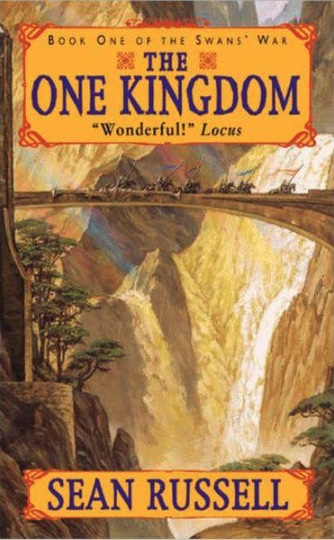
  • Murtagh brings Inheritance sequel energy in the best way

    Murtagh brings Inheritance sequel energy in the best way

    I don’t love it when creators turn one good idea into a massive franchise (let alone one bad idea). But I’m also a sucker for a sequel. I especially love sequels that do their own thing rather than trying to repeat a formula. Christopher Paolini’s recent novel Murtagh is one such sequel.

    If you’ve read elsewhere on my blog, you’ll know that reading Paolini’s Inheritance Cycle has had a lasting impact on me. I encountered the first two books as a teenager—struggling to finish my own first novel at the time—and eagerly awaited books three and four after that. I read Murtagh (which is flagged as a World of Eragon novel rather than a run of the mill sequel) with similar eagerness and am glad that I did, as I’ll explore in a more review-like structure than I’ve used in this blog before.

    Because I’m looking at this very much as a book for people who’ve read The Inheritance Cycle, you’ll find some series spoilers below. I won’t, however, spoil Murtagh itself. Caveats, also: If you didn’t like The Inheritance Cycle, you probably won’t like Murtagh, which might mean this article isn’t for you either. But then again, maybe I can change your mind.

    Murtagh shows us a different Alagaesia

    Quick summary, for starters: Murtagh takes place after the conclusion of The Inheritance Cycle, when Murtagh (the character) is pretty much an outcast everywhere for his role in Galbatorix’s rule and demise alike. The Varden hate Murtagh and Thorn for fighting them in nearly every major battle. The dwarves hate them for killing their king. And for good measure, loyal citizens of Galbatorix’s empire hate them too—even though their role in bringing Gabatorix down doesn’t seem to be well or widely known.

    With this backdrop, Murtagh and Thorn embark on a series of adventures to confront a new threat to Alagaesia. Part of this is about trying to do something good for the people they’ve stymied or outright fought in the past (like Nasuada). The journey is also about Murtagh and Thorn looking for where they belong now, given the huge changes they’ve brought to the world around them.

    Despite events from the previous four books having huge bearings on everything about Murtagh, this book does its own thing in a few major ways:

    • New plot and story shape. Murtagh tells its own unique story, rather than recycling previous plot lines (which I would have hated). It also manages to feel like an entire story in one volume—even though much is left open at the end. One of the things that most impressed me about the book was how self-contained it feels, even given the huge amount of story preceding it.
    • New magical goings on. Paolini spent a significant amount of time establishing the magic system in The Inheritance Cycle, and that setup rewards series readers with some dynamic new ways magic can be used. On the one hand, this is cool and interesting. On the other hand, it also helps up the stakes and build character for Murtagh, whose magical training was very different from Eragon’s.
    • New locales. While a chunk of the book is set in places we’ve seen in previous books, Paolini breathes a lot of new life into return locations. He also shows us plenty of new and vibrant settings, all while maintaining a sort of worldbuilding aesthetic that feels fully harmonious with The Inheritance Cycle.
    • New faces and forces at work. New characters like Lyreth, Bachel and Uvek (my favorite of the new faces) go a long way to making Murtagh feel like its own thing. Unsurprisingly, this book also offers a lot more depth and relatability for both Thorn and Murtagh themselves, particularly in their journey from being total loners to learning what it means to play nice with others.
    • A different kind of story for different kinds of characters. The dragon-rider relationship is central to Murtagh much as it is in The Inheritance Cycle. Where Eragon and Saphira enjoy closeness and vulnerability from the start, Murtagh feels like a very different book in large part because of how distinctly different a dragon-rider relationship Murtagh and Thorn share.

    Murtagh stays true to the tone and thematic core of The Inheritance Cycle

    Murtagh and Thorn, fan art
    Art by Apljck

    Just as I was really impressed with how Murtagh feels like its own thing, what I loved second most about the novel was revisiting the world of Eragon in a way that felt not just fresh but also true to form.

    Paolini has had a lot of new life and writing experience to draw upon since the completion of The Inheritance Cycle. I wondered upfront whether writing his first two Fractalverse novels would shape Murtagh into something less recognizable for fans of the former books. He took a long hiatus from writing novels in Alagaesia, after all. But Murtagh feels like an organic continuation of the story, both in tone and substance.

    There’s a strong thematic connection between previous books and this one. The first four books deal heavily with themes such as: the nature of oaths and promises; the loneliness of being an orphan, a rider, a dragon, the last of something, the first of something; inheritance in all its meanings; identity both based on genealogy and choice. Murtagh takes a unique angle to more or less all of these same themes, showing up as its own while really fleshing out the themes that hold The Inheritance Cycle together. In particular, there’s a lot of more subtle exploration here about what it means, in this world, to be a dragon rider—including both the power and the baggage the role brings.

    The setting of Alagaesia itself also felt like a true continuation of the world Paolini began building twenty plus years before he wrote Murtagh. Part of this comes down to the way he sets the scene and the details he chooses to include. But I get the feeling that this world is firmly established in the author’s mind, firmly enough to leave, take the better part of a decade away, and return to the same setting.

    Lots of fantasy authors have tried to transport readers back with them after a time away. Some succeed (Tad Williams, Terry Brooks, Robin Hobb). Many others have failed to recreate the magic, though. Thankfully, the effect worked for me in Murtagh. It felt as easy as ever to lose myself in Alagaesia.

    Conclusion: Murtagh is a great read for fans of The Inheritance Cycle

    The future’s bright for the world of Eragon. Especially given Paolini’s rapid pace over the past few years, I’m excited to explore where he takes readers next.

    While I really enjoyed the original conclusion of The Inheritance Cycle, Murtagh made for a captivating reentry to the series.


    For more nerdy content like this, sign up for the monthly newsletter. It’s free to sign up, and you can unsubscribe any time.

    Sign me up

    * indicates required

    Intuit Mailchimp


    About the Author

    Headshot of epic fantasy author Stephen Taylor.

    Stephen Taylor is the author of The Witherclaw Trilogy as well as short fiction appearing in The Future Fire, MYTHIC Magazine, The Centropic Oracle, and other publications. His short story “Only an Ocean” won a Silver Honorable Mention in the L. Ron Hubbard Writers of the Future Contest. When he’s not writing, he’s often playing his violin or wandering in the woods.
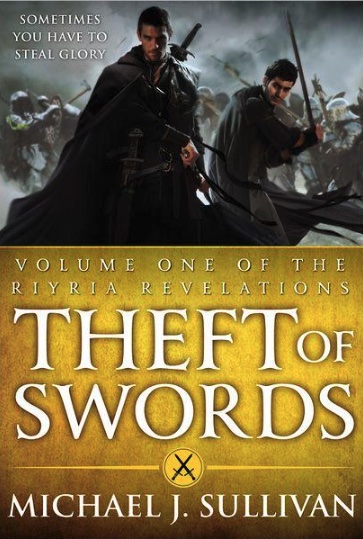
  • Craft of writing: How Brent Weeks uses third person limited point of view (POV)

    Craft of writing: How Brent Weeks uses third person limited point of view (POV)

    There are few techniques that I (as a fiction writer) think about more often than third person limited point of view (POV). And while not every reader cares about this sort of thing, most readers do care about the results when writers employ techniques like third person limited, which is the real focus of this article.

    I spend plenty of space across my blog talking about fantasy and science fiction books I love, including some reasons why I love them. With this article, however, I’m kicking off a new series that explores the same topic from a writing craft perspective, digging deeper into some individual examples that really stand out. My hope is that readers and writers alike will better appreciate and enjoy what they’re reading (or writing) as they give it some craft thought.

    First up: Brent Weeks, author of the Lightbringer Series, the Night Angel Trilogy and a new connected novel Night Angel Nemesis. Weeks is well known and regarded among epic fantasy readers, but some of his strongest skills (in my opinion) often go unsung. This article specifically explores how Weeks handles third person limited POV in his Lightbringer books.

    Here goes.

    Ground rules: What is third person limited point of view?

    Third person limited POV takes the narration into the experience, thoughts, and knowledge of a character—or set of characters—without giving the reader access to everyone’s experience, thoughts, and knowledge. Where an omniscient POV could dip into anyone’s mind when convenient, third person limited comes with some restrictions on whose information is available when.

    This most often means the narrative sticks with just one character at a time. While authors are typically strict about managing whose thoughts they follow, it’s much less common to find any set rules about how deeply in or out of those thoughts the narration might go. And that’s where things get really interesting.

    Excerpt #1:

    Wetting his lips, Kip got moving. He had the distinct sensation of being followed. Stalked. He looked over his shoulder. There was nothing there. Of course. His mother always said he had too much imagination. Just walk, Kip. Places to be. Animals are more scared of you and all that.

    The Black Prism by Brent Weeks

    When we get to this “Just walk, Kip” part, most fantasy authors (and most third person limited narratives) would use italics to demarcate character thought. Weeks foregoes the italics and just keeps the words coming. Is it Kip thinking this now, or his mother speaking in the past? Probably one and the same, with no need to distinguish between either voice in this instance.

    I’ve heard several writers and a few editors criticize Weeks for the way he handles third person limited—specifically in this choice not to italicize character thoughts when they appear within the narrative. I first want to note that readers aren’t typically complaining about this. I also want to heap praise for how effective Weeks’s technique really is.

    Here are three main strengths to consider, from a writing craft perspective, about Weeks’s approach to third person limited POV.

    1. This direct approach to third person limited POV elides between character thought and overall narration

    Use of italics for character thought creates a sort of POV false dichotomy. We’re either getting the narrator’s thoughts or the characters’.

    As such, there’s an often artificial distinction in the source of whatever information we’re reading. Use of italics separates the parts of the narrative coming from a narrator (not the character) from the character’s own time-bound, in-story, limited point of view. There’s nothing wrong with having this distinction, in my opinion. The elimination of such a distinction, however, makes the narrative more interesting and immediate.

    For a story like the Lightbringer Series, this take on third person limited POV plants a seed of bias and fallibility. To avoid spoilers for the series, let me just say that things are not always as they seem—including to the characters whose voices we probably trust. Part of each volume’s emotional power comes from Weeks’s candid exploration of the view point characters’ blind spots.

    And, because there’s not much formal distinction between the narrator’s view of things and the characters’, the story organically works these character blind spots into the wider narrative.

    Weeks could have told the same story using italics to stencil out his characters’ thoughts paragraph by paragraph. This would, however, hint at where the narrative gives us a partial truth or a misperception. As such, it would undermine many many compelling moments to come.


    Recommended Reading: 9 Unmistakable Epic Fantasy Artists

    2. Skipping italics in third person limited POV removes the false binary of being in/out of character thought

    There’s another manufactured dichotomy at work when authors use italics to show character thought. The italics introduce a sort of on/off switch. Italics=character thought. No italics=no character thought. But what about when you want to be 50% in the character’s head, like free indirect voice? Or 100% in their head, like stream of consciousness? Or just 75% in their head, like italics usually convey?

    Take a look at the passage below to see a few different ticks on this POV spectrum.

    Excerpt #2:

    Kip saw something in the mist. His heart leapt into his throat. The curve of a mail cowl. A glint of eyes searching in the darkness.

    Then it was swallowed up in the roiling mists.

    A ghost. Dear Orholam. Some spirit keeping watch at its grave.

    Look on the bright side. Maybe wolves are scared of ghosts.

    The Black Prism by Brent Weeks

    The first two sentences are probably fully removed from Kip’s head. Then, with “the curve of a mail cowl” and beyond, the storytelling camera zooms closer. Before we know it, we’re getting direct expressions of thought from the character (“Look on the bright side” for instance).

    Weeks doesn’t have to worry about how deep or how direct his POV is—or when to switch the italics on—which gives much greater flexibility to dip partially into the character’s perceptions, to move deeper still, or to withdraw. He seamlessly blends many distinct levels of connection to the characters’ thoughts. His approach to third person limited also avoids the thought/no thought binary that italics often implies.

    3. Weeks’s approach to POV moves readers closer to the characters

    Ultimately, Weeks’s use of third person limited POV gives readers a closer, more personal look at the characters about whom he’s writing. It feels, after all, as if they are writing the story with him. He tends to be more generous with character thought than many of his peer authors (much more generous, actually), which empowers his view point characters to come to life in a way more often reserved to first person narratives.

    Excerpt #3:

    It was too much information to soak up at once—broken the halo?—but it was a straight answer. Kip walked over to the dead man. His skin was pallid in the rising light. Pull it together, Kip. Ask whatever you need to ask.

    The Black Prism by Brent Weeks

    The ability to get into the character’s head is the single most unique narrative benefit of fiction. Much as film, TV, theatre and other storytelling media try to do this, there’s no stronger way to transport the audience into the character’s psyche than through a strong use of written POV.


    Recommended Reading: How Naomi Novik Uses Straightforward Exposition to Guide Readers

    Conclusion: Italics are fine too

    Weeks is by no means alone in his use of deep character immersion without italics. Writers have done this for decades if not centuries now. Ursula K. Le Guin, Patricia McKillip and Orson Scott Card have all employed similar POV techniques to great effect—just as many many skilled writers use third person limited with italics to delineate character thought.

    It might be worth stating that I’m not at all against using italics. Some writers might do this just because they’ve seen it done (and not for any distinctly craft-oriented reasons), but there are cases in which it’s extremely helpful.

    For instance, fantasy is full of characters who communicate telepathically or who have voices reach their minds through other magical means. Imagine if Christopher Paolini’s Eragon and Saphira were trying to have a conversation without the guidance of italics (it would be hard to follow). Or imagine if Robert Jordan’s Rand al’Thor and Lews Therin Telamon were trying to outshout each other without italics to help steer the reader along. It would most likely convince the readers that Rand was going mad. But it might not convince them to keep reading.

    Italics can also be useful for omniscient third person narratives or narratives that, while not omniscient, head hop without clear patterns or distinctions to reveal when the head hopping happens. Even if you just want to use them for a single character’s thoughts, italics create a clean line of separation between the character’s perceptions and the rest of the narrative.

    It just comes down to whether you want such separation or not—and I tend to favor something else.


    For more nerdy content like this, sign up for the monthly newsletter. It’s free to sign up, and you can unsubscribe any time.

    Sign me up

    * indicates required

    Intuit Mailchimp


    About the Author

    Headshot of Stephen Taylor

    Stephen Taylor is the author of The Witherclaw Trilogy as well as short fiction appearing in The Future Fire, MYTHIC Magazine, The Centropic Oracle, and other publications. His short story “Only an Ocean” won a Silver Honorable Mention in the L. Ron Hubbard Writers of the Future Contest. When he’s not writing, he’s often playing his violin or wandering in the woods.
  • 10 underrated works of epic fantasy

    10 underrated works of epic fantasy

    There’s no shortage of underrated epic fantasy. There’s no shortage of epic fantasy at all, in fact, since epic fantasy as we know it today is the product of tried storytelling traditions from across the globe.

    Critics disagree on when epic fantasy really emerged as its own subgenre. However, fantasy-dedicated imprints have consistently published series in this vein since Terry Brooks’s 1977 debut, The Sword of Shannara. And of course there are numerous notable earlier works, such as The Lord of the Rings or even The Chronicles of Prydain by Lloyd Alexander, who coined the term “high fantasy.”

    With 45+ years of clear history behind it, epic fantasy offers lots of choices for readers today. The sheer volume of epic fantasy works now in circulation has led to many interesting works being buried or forgotten (generally underrated). This post will take a close look at just a few of these, including:

    1. The Sun Sword series by Michelle West
    2. The Swan’s War trilogy by Sean Russell
    3. Riddle-Master by Patricia McKillip
    4. A Sword of Shadows by J. V. Jones
    5. The Cathrand Voyage Quartet by Robert V. S. Redick

    Before digging in, it’s worth confronting two overarching questions.

    First: What is epic fantasy?

    Longer articles than this one have tried to answer this question.

    I’m not really going to equivocate about the nature of epic fantasy versus high fantasy, heroic fantasy, grimdark, or even military fantasy. Every work below contains the following characteristics: A big cast of characters (typically with multiple points of view in the same book), a secondary world setting, and storylines concerned with a grand, even earth-shaking scale of events.

    Sign up for the newsletter

    Get the latest articles and updates on The Witherclaw Trilogy with Stephen’s monthly newsletter. Subscribing is free and you can opt out whenever you want.

    Second: What does underrated mean in the context of epic fantasy?

    This is even more subjective than the question of what epic means. When I say “underrated epic fantasy,” I’m largely basing my assessment on works being less well-known. Most of the series I’ll address have devoted fans and have received high praise from their readers. They just aren’t as widely recognized as series like The Wheel of Time, Malazan, Riyria Revelations, The Broken Earth Trilogy, etc.

    So, if epic is your jam and you want to find something a little different, here are ten underrated works of epic fantasy you might consider.

    1. The Sun Sword by Michelle West (1997 – 2004)

    Book cover for the underrated epic fantasy, Michelle West's The Sun Sword, showing a number of warriors planting a banner above a horde of demonic corpses.

    As a child of the 90s, I have to think something magical was in the air at the time. Michelle West, also known as Michelle Sagara, is one of several epic fantasy authors to begin landmark series within just a few years. Like Robin Hobb, George R. R. Martin, and J. V. Jones (mentioned below), West had already shown her skill with other books before she launched into this series. She made an explosive mark on the relatively small corps of readers who got to experience it.

    The Sun Sword series is also very like these works in its ability to take on darker, heavier themes with a more direct approach than much epic fantasy had in the 80s or earlier. West’s writing takes a zoomed in view of slavery, sexism, and oppression in general, making for a more challenging read than many of the adventure-focused fantasies that preceded authors like her.

    West’s worldbuilding is detailed and deep, but where she really stands out is in her ability to humanize characters making drastic, compromised decisions. There are seemingly clear decisions, like whether to conceal magical powers that could make one a target. And there are much tougher ones for characters like Diora, who influence whether a catastrophic war will unfold or not.

    Rich in imagination and immense in scope, West’s The Sun Sword stands up with the best epic fantasy of the 90s and beyond. But I have yet to meet a single reader in person who knows this series, reminding me what an underrated gem it is among epic fantasy.

    Book Details

    • Six books:
      • The Broken Crown (1997)
      • The Uncrowned King (1998)
      • The Shining Court (1999)
      • The Sea of Sorrows (2001)
      • The Riven Shield (2003)
      • The Sun Sword (2004)

    2. The Swan’s War trilogy by Sean Russell (2001 – 2004)

    Cover art for the underrated epic fantasy The One Kingdom by Sean Russell; a stone bridge over a wide gorge.

    Sean Russell often flies under the fantasy reader’s radar. Most of his books are unique blends of genre elements. (For instance, he’s one of the only authors I know who has written books about what it might have been like to have Francis Bacon discover magic while envisioning the modern scientific method.) The Swan’s War is a similarly fresh amalgamation of very different ideas, but it brings a strong does of familiarity for epic fantasy readers as well.

    Russell himself describes this trilogy as a sort of fantasy take on both Romeo and Juliet–with two warring families and a not entirely happy love story–and a high fantasy version of The Adventures of Huckleberry Finn. It might sound hard to synthesize these very different premises, but Russell’s intriguing worldbuilding and clever plotting make it work well.

    Here are a few elements epic fantasy readers might especially appreciate:

    • A heavily martial theme as two aristocratic houses duke it out
    • Epic landscapes that can be traversed quickly thanks to terrestrial navigation magic
    • A mysterious river that might not cut the same path for any two voyagers
    • Freakishly strong bull monsters attacking castles in the middle of the night
    • Some very cunning wizards

    Critics sometimes discount The Swan’s War because of similarities to The Wheel of Time–specifically in how three young men, who happen to be a lot like Rand al’Thor, Matt Cauthon, and Perrin Aybara, set out from their home and encounter a group of nomadic, peaceful people who are connected to an ancient cultural reversal and some big plot stuff. So yes, these are clear similarities at surface level.

    That said, Russell’s work is not very much like The Wheel of Time in setting, tone, world-building or actual character development journeys. If Russell meant to copy Robert Jordan’s epic, he must have given up reading after book one or two.

    With a fascinatingly vague magic system, exceptional examples of fantasy characters with disabilities, and some truly epic moments in each volume of the trilogy, The Swan’s War is a hidden triumph of the genre and a personal favorite on my list of underrated epic fantasy.

    Good fit for readers of: Robin Hobb, Tad Williams, or Terry Brooks.

    Book Details

    • Three books
      • The One Kingdom (2001)
      • The Isle of Battle (2002)
      • The Shadow Roads (2004)

    3. Riddle-Master by Patricia McKillip (1976 – 1979)

    Cover art for the underrated epic fantasy Riddle-Master trilogy by Patricia McKillip; a bare tree outlined by snow.

    Patricia McKillip is an outstanding writer, with evident skill in several big fantasy subgenres. I’ve mentioned her elsewhere on this blog and will surely do so again.

    The Riddle-Master trilogy stands apart in so many ways that I’m constantly surprised it isn’t more widely known. It’s worth noting upfront that Riddle-Master is less epic than any others on the list, given that it’s a shorter tale set in a smaller world with a slimmer cast and fewer big confrontations. It’s also the earliest inclusion on this list chronologically, having hit stores a year before even Terry Brooks’s The Sword of Shannara arrived with its tidal pull toward what we now know as epic fantasy.

    Riddle-Master is an astonishingly fresh combination of familiar and distinctive storytelling. The main character, Morgon of Hed, is one part farmer and swineherd, one part unlikely scholar, one part prophecy fulfillment, and one part prince with a magical connection to the very land he rules. So if you’re looking for rags to riches, coming of age journeys, unexpected royalty, or other tropes so common in epic fantasy across the following few decades, Morgon fits the bill in a totally unconventional way.

    Throughout this trilogy, McKillip shows her ability to breathe magical quality into everything about her world. The setting and political structures are vibrant and can’t be disconnected from the plot and characters. The various types of magic shown or simply hinted at make the setting a treasure to explore, from the ghost-cursed forests in the south to the lonely tundras populated by wizard deer in the far north.

    McKillip has often acknowledged the huge influence Tolkien had on her work. I think her Riddle-Master trilogy might be the most Tolkien-like work I’ve read by any other author. And yet it’s wholly, unforgettably unique at the same time.

    Good fit for readers of: J. R. R. Tolkien, Ursula K. Le Guin, Patrick Rothfuss, or Katherine Addison.

    Book Details

    • Three books
      • The Riddle-Master of Hed (1976)
      • Heir of Sea and Fire (1977)
      • Harpist in the Wind (1979)
    • The final book was nominated for both the Hugo Award and the World Fantasy Award; it also won the Locus Award for Best Fantasy Novel

    Recommended Reading: Top-Tier Epic Fantasy Written by Women

    4. A Sword of Shadows by J. V. Jones (1999 – )

    Cover art for the underrated epic fantasy novel A Cavern of Black Ice by J. V. Jones; an arctic landscape with wolves harrying a young woman and a young man.

    I first encountered J. V. Jones by seeing the outstanding cover for A Sword from Red Ice (below). I was probably too young to read it then, but I recognized the cover when I stumbled across Jones’s name four or five years later. This time I also heard Jones compared to George R. R. Martin and Steven Erickson, as a contender in the very top tier of epic fantasy writers of the day. That caught my attention even more than the cover art had.

    Regardless of any assessment of who writes best in epic fantasy, A Sword of Shadows has some extraordinarily strong writing that most epic fantasy readers will enjoy.

    Cover art for A Sword from Red Ice; a monstrous entity breaking from red ice while a young man cowers nearby.

    Jones’s characters–especially the less obviously central ones–are incredibly compelling, nuanced, memorable, and interesting all around. Her setting is rich with lore, history, and mystery, while teeming with just the right details to bring her cold world to life in every chapter. The story’s stakes get higher and higher, with truly immense conflicts speeding forward even as Jones spends time and care on the very small, personal battles that make her world so believable.

    The long incompletion of the series might be one reason readers steer away from Jones’s work. This is one of only two incomplete series listed here, and it might stay incomplete for years to come. Jones has released samples of the manuscript for Endlords, book five in A Sword of Shadows, but we’re still waiting for a release date–and it has been twelve years since book four came out. Also, it’s hard to find any real confirmation that the yet untitled book six will actually end the series.

    Incomplete or not, however, A Sword of Shadows is an amazingly vivid story so far, and I for one have high hopes for the final two volumes. And if it’s never finished? Well, then there can be some underrated epic fantasy to mirror the very popular ones that aren’t yet done.

    Good fit for readers of: Tad Williams, Peter V. Brett, or George R. R. Martin.

    Book Details

    • Planned as six books:
      • A Cavern of Black Ice (1999)
      • A Fortress of Grey Ice (2003)
      • A Sword from Red Ice (2007)
      • Watcher of the Dead (2010)
      • Endlords (TBD)
      • TBD (TBD)

    5. The Cathrand Voyage Quartet by Robert V. S. Redick (2008 – 2013)

    Cover art for the underrated epic fantasy novel The Red Wolf Conspiracy by Robert V. S. Redick. The covers shows a sword and a compass set over a sea chart.

    Of all the works listed here, The Cathrand Voyage Quartet might offer the most unconventional style and setting.

    It’s epic in scope and character, no doubt. I’d contend that pretty much any books about emperors starting civil wars to weaken their enemies while secret sorcerers works to magically bring a banished king to power to take over the world have to fit some epic molds. But whereas just about every other book on this list features pseudo-European landscapes, long road trips, horseback chases, magical forests, and other familiar fantasy fare, Robert V. S. Redick’s four books bring a different flavor.

    Many of the series’ events take place on or around the IMS Cathrand, a monstrously big unité d’habitation type of ship that can house a small city’s worth of people…perhaps forever. And what lives on this ship? Alien wizards, intelligent rats, and a captain who is sort of a 30% version of Ahab.

    Oh, and there’s underwater treasure hunting.

    In short, there’s lots to love about Redick’s books. The Cathrand Voyage Quartet delivers a more user friendly read than most others on the list as well, since it tends to speak to a younger audience overall without actually being dumbed down or written just for teens.

    Good fit for readers of: Michael J. Sullivan, David Eddings, or Brian Jacques.

    Book Details

    • Four books
      • The Red Wolf Conspiracy (2008)
      • The Ruling Sea (2009)
      • The River of Shadows (2011)
      • The Night of the Swarm (2013)

    More underrated epic fantasy worth mentioning

    With additional time, I plan to share my thoughts on a few more series well worth noting on this list! Until then, here’s a slim breakdown broken down chronologically by the start of each series:

    • Deverry by Katherine Kerr (1986 – ). At sixteen books and counting, Katherine Kerr’s Deverry series is the longest on this list. She does break it up, however, into smaller sub-series that make it more digestible (think three or four books each). Kerr takes a more distinctly high magic approach to her books than most epic fantasy included in this list. She also combines a firmly Celtic feel with numerous nods to Buddhism and a distinctive set of intelligent races.
    • Monarchies of God by Paul Kearney (1995 – 2002). Think early flintlock with a noticeable shift toward grimdark. Kearney led that charge before the arrival of names like Joe Abercrombie, Richard Morgan, Kameron Hurley, or Mark Lawrence. Also worth noting: Steven Erickson loves this series despite it being, in full, about the length of just one Erickson novel. Kearney was a big name in epic fantasy at the turn of the century but seems to have been somewhat buried as a new generation of authors rose.
    • Crown of Stars by Kate Elliott (1997 – 2006). Crown of Stars almost walks a line between historical and epic fantasy. Its expensive setting is strongly reminiscent of real cultures and peoples in Medieval Europe. Also worth noting: Kate Elliott is one of the early American pioneers in the world of getting a really big book split into two. Book four in this series was split first; the sixth volume in Crown of Stars wound up being 430,000 words long, necessitating an extension into seven volumes total. Maybe more publishers are cool with that size of tome now, but Elliot helped pave the way for many epic series becoming even more epic with multiple volume splits.
    • The Kingdoms of Bone and Thorn by Greg Keyes (2003 – 2008). This series was quite popular around the time of its release but seems to have fallen from recognition since then. Monumental struggles between aristocrats, kingdoms, powerful churches, the undead, alternate dimensions (including possibly our own…), assassins, monks, sorcerer princesses, and musicians trying to discover forgotten arts are just a few of the things to epic fantasy readers might love about The Kingdoms of Bone and Thorn.
    • The Godless World by Brian Ruckley (2006 – 2009). Brian Ruckley himself described his trilogy as “a fairly dark, uncompromising kind of fantasy.” Ruckley’s debut arrived in the U.S. right about the time Brandon Sanderson, Joe Abercrombie, Scott Lynch, and Patrick Rothfuss entranced fantasy readers with their own debuts. This glut of talent might be why his work didn’t get the attention other authors’ did. That said, despite some sometimes tropey plot devices, Ruckley’s trilogy brings a uniquely close look at both sides of an epic story, and he wraps the whole thing together in just three books.

    Note: This article is a 2023 update of a previously published post.


    Get more nerdy content in your inbox:

    Sign me up

    * indicates required

    Intuit Mailchimp


    About the Author

    Headshot of epic fantasy author Stephen Taylor.

    Stephen Taylor is the author of The Witherclaw Trilogy as well as short fiction appearing in The Future Fire, MYTHIC Magazine, The Centropic Oracle, and other publications. His short story “Only an Ocean” won a Silver Honorable Mention in the L. Ron Hubbard Writers of the Future Contest. When he’s not writing, he’s often playing his violin or wandering in the woods.
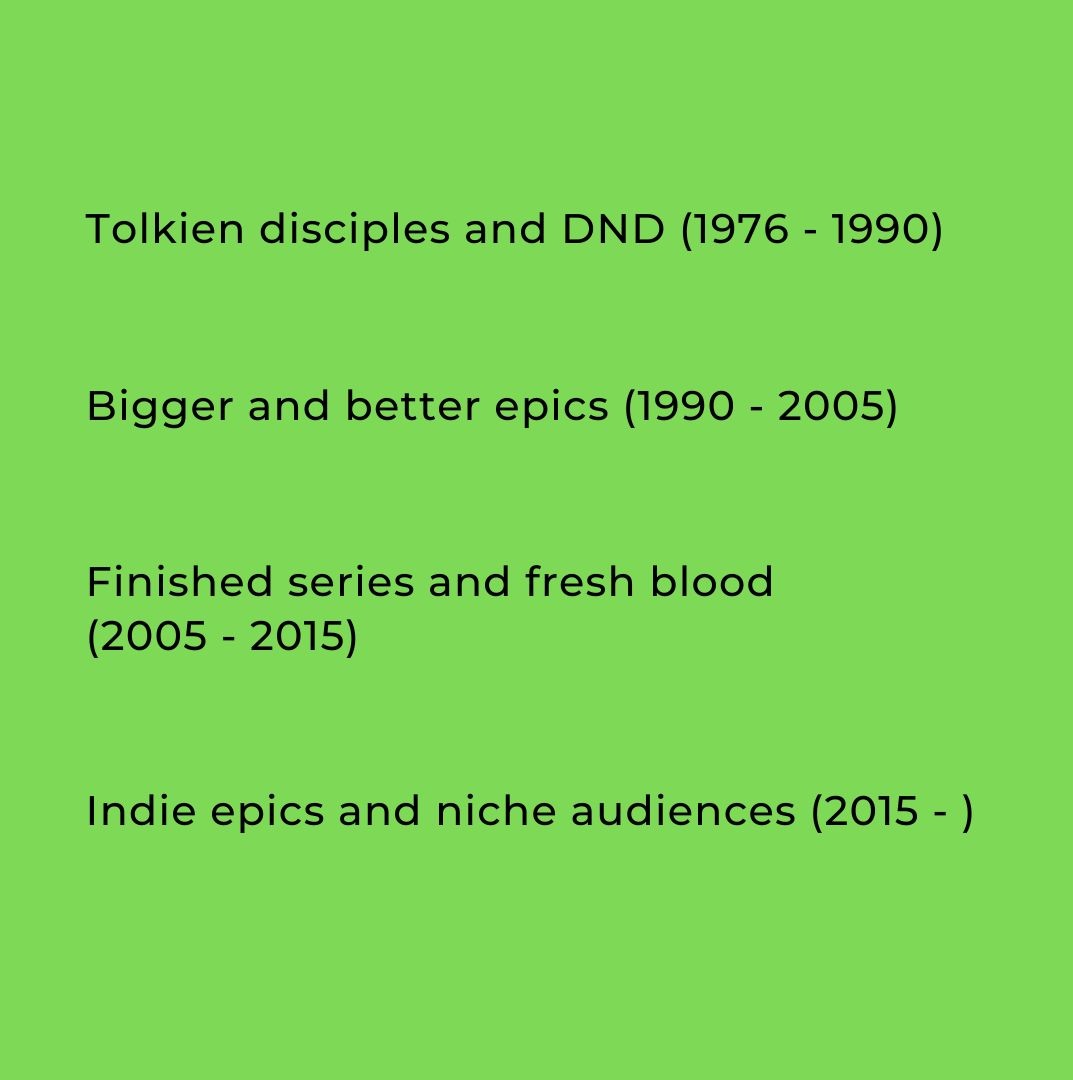
css.php