
Despite being a lifelong fan of J. R. R. Tolkien’s The Lord of the Rings, I don’t typically go out looking for another work that strikes the same chord. But there are plenty of great books for fans of The Lord of the Rings.
I’ll be the first to admit being frustrated at the non-Tolkienesque recommendations I receive. “There is only one Lord of the Rings,” as Gandalf says in Peter Jackson’s adaptation of the three-volume epic. My ensuing recommendations are high fantasy or epic fantasy works that evoke a similar sense of beauty, adventure, heroism, depth, and melancholy as J. R. R. Tolkien’s The Lord of the Rings.
Take them with your own grain of salt, though. These recommendations draw largely from data I’ve gathered on why readers continue to love The Lord of the Rings. There’s always some personal taste involved as well.
Here are just seven series that share key similarities—all which stand well on their own merits, it’s worth adding.
Fusing the ordinary and the very epic: Ursula K. Le Guin’s The Earthsea Cycle (1968 – 2001)

Ursula K. Le Guin’s The Earthsea Cycle follows the coming-of-age journey of a wizard called Sparrowhawk, along with some of his treasure-hunting adventures, his attempts to bring real peace to a war-torn world, and a quest to stop wizardry itself (and all crafts of beauty and power) from disappearing. It’s also a series about the power of being very ordinary.
Earthsea is one of the most obviously unique of all the works this article discusses. There are, however, so many ways in which reading this series feels like reading The Lord of the Rings.
For the sake of brevity, here are a few high level items to consider:
- In Earthsea, as in Middle-earth, magic seems to have touched everything. Yet the omnipresence of magical events has not diluted the power it brings to the page in this high-magic setting.
- Readers might be fooled into thinking The Lord of the Rings is a long work of fiction. At 575,000 words, it’s about the size of two George R. R. Martin books, 1.25 books in the Stormlight Archive, and the final solitary volume in Tad Williams’s Memory, Sorrow, and Thorn (referenced later on). In short, The Lord of the Rings is short for high fantasy, epic fantasy, or similar genre organizers. And so is The Earthsea Cycle, the entire work spanning less than 500,000 words.
- Short or not, Earthsea shows Le Guin’s uncanny ability to tell a great story with few pages. This is a skill Tolkien shared too, as noted above.
- Earthsea is full of minor characters doing seemingly unimportant things. Yes, there are heroics like Aragorn’s or Gandalf’s. But the story’s mostly concerned with more ordinary events. This brings it closer to real life than your standard work of epic fantasy. It also makes it much more harmonious with Tolkien’s own work, which is greatly concerned with ordinary, daily, non-epic goings on.
Fans of The Lord of the Rings will admire Le Guin’s skill with little things
This last point might be most Tolkien-like of all: Earthsea’s clearest heroes don’t solve their problems by strength of arms.
Le Guin meticulously crafts stories in which killing a bad guy doesn’t actually fix the world. Yes, you’ll find epic clashes of armies or magical powers in The Lord of the Rings. Earthsea has some similar moments. Yet it’s in quieter instances and less obvious decisions that both works bring their stories to a point of resolution.
Sign up for the newsletter
Get the latest articles and updates on The Witherclaw Trilogy with Stephen’s monthly newsletter. Subscribing is free and you can opt out whenever you want.
Music is magic in The Riddle-Master Trilogy by Patricia McKillip (1976 – 1979)

The Riddle-Master Trilogy by Patricia McKillip tells the story of a young land-heir, swine-herd, beer-brewer, amatuer riddler, would-be-scholar, and prophesied hero all rolled up into one. Along the way, there’s plenty of murderous chasing, ancient riddles, and magical harping to keep readers interested. Much like Middle-Earth, McKillip’s fantasy world is filled to the brim with magic, much of it left almost wholly unexplained.
In an earlier blog post on underrated works of epic fantasy, I’ve noted Tolkien’s critical influence on McKillip. What’s especially interesting is that McKillip tells such a different story in such a different style than Tolkien, despite numbering him among only a very few speculative fiction writers to shape her early work (Le Guin was another).
“Tolkien just opened the doors to imagination.”
—Patricia McKillip, 2010
Where The Lord of the Rings divides an epic journey up across a party of disparate compatriots, there’s a much lonelier journey going on in The Riddle-Master Trilogy. The main characters—Morgon, Raederle, and Deth—spend a great deal of time alone or with little company around them. Also, much like The Earthsea Cycle mentioned above, there are no Helm’s Deeps or Pelennor Fields with armies fighting on them in this trilogy. Just a wizard or two and a long, well-tuned string of riddles to lure the curious reader forward.
What feels most Tolkienesque about McKillip’s trilogy is the author’s evident respect for the beauty of the world she created. It’s stunningly unique, even when weighed against the almost 50 years of high fantasy following it. Like Tolkien, McKillip made something that feels too distinct to be properly replicated.
An epic story with elves, quests, magic swords, and mystical mentors: The Sword of Shannara Trilogy by Terry Brooks (1977 – 1985)
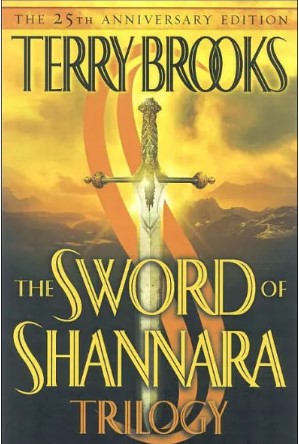
The past two works on the list are less apparent in their Tolkien-like trappings. Terry Brooks wore his clearly from the start of his career.
The Sword of Shannara Trilogy, which contains three whole, standalone stories, draws on similar plotting, quest structures, and even hero party makeups. It doesn’t feel too fresh upfront, truly. But Brooks’s debut does show a great deal of skill and imagination all the same. Books two and three (and Brooks’s many Shannara stories after that) do a lot to distinguish themselves in their own right.
Here’s a quick for instance on the similarities. Book one (The Sword of Shannara) follows the quest of a semi-orphaned villager and his adoptive brother as monstrous creatures chase them from their home and they set out to destroy a dark lord. Along their journey, they team up with a mysteriously knowledgeable druid, a dwarf, two bow-wielding elves, and the crown prince of a powerful kingdom that guards the border between the dark lord and the rest of the known world.
And here’s an example of where Brooks does his own thing: The hero of book one doesn’t succeed through fighting, escaping, or purposefully destroying a magical relic. He succeeds by using truth and paradox to confound the deluded dark lord head on.
Filled with immense monsters, ancient magic, fast-paced chases, and courageous confrontations of evil, The Sword of Shannara Trilogy embraces the sense of adventure and heroism that so many readers love in The Lord of the Rings. Where Tolkien leans more heavily into lore and detail, Brooks’s very American storytelling is a little more pulpy and action-packed. This makes for a different read than the previous works on the list. It’s one that has resonated with many Tolkien fans in the years since this trilogy helped launch epic fantasy as a commercial, formalized genre in the U.S.
A work that captures the sorrow of a closing age: Memory, Sorrow, and Thorn by Tad Williams (1988 – 1993)
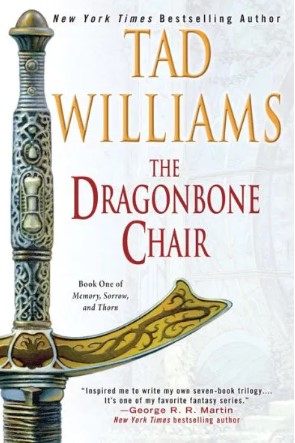
Tad Williams has written quite a variety of speculative fiction. To date he is most well-known for his million-word epic trilogy Memory, Sorrow, and Thorn. It’s worth noting that George R. R. Martin is one of the series’s many vocal fans. He particularly credits Williams with influencing him to write his own epic fantasy.
Memory, Sorrow, and Thorn shares more than one strong similarity with The Lord of the Rings. It’s very much a story about small people (physically and socially) stepping into heroic roles they shouldn’t have to shoulder. It’s also one of the more rigorous of early epic fantasy stories in terms of overall setting and worldbuilding.
There’s a particularly powerful parallel between Middle-earth and how Williams portrays ancient, magical peoples withdrawing from the world of humans. Much as Tolkien’s elves are leaving the lands of mortals, Williams’s magical races have in many ways already distanced themselves from the doings of humankind. This creates a growing distance between the ordinary world and magical occurrences underway. It also sets readers up for a huge sense of awe whenever pretty much anything magical comes about. Many low-magic series have followed. I have encountered few that bring such a sense of age and scope as Williams’s original trilogy—in a way that feels very much like reading The Lord of the Rings.
Going epic on epic Fantasy: Steven Erikson’s Malazan Book of the Fallen (1999 – 2011)
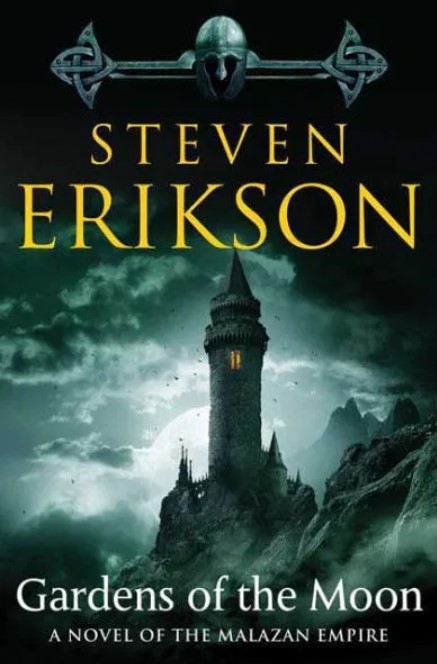
Critics have often called Robert Jordan (author of The Wheel of Time) the American Tolkien because of the size and scope of his massive fantasy story. Don’t forget the Canadian Tolkien, though. His name is Steven Erikson.
Erikson’s 10-book epic is more often compared to A Song of Ice and Fire than to The Lord of the Rings. It’s hard to find any writer in any genre who rivals Erikson’s depth of world-building (and that includes Tolkien himself).
Where Tolkien uses his immense knowledge of philology and poetry to inform his worldbuilding, Erikson draws on archeology and anthropology as well. He creates economies, social contracts, militaries, and magic systems that feel incredibly plausible because they follow patterns so identifiable in human history.
And this is to say nothing of Erikson’s sheer skill with words. Erikson graduated from the Iowa Writer’s Workshop, the most celebrated writing program in the world. And he makes his wordsmithing prowess plain from early on in book one of Malazan.
Critics often describe Erikson as being too challenging for typical fantasy readers today. With a focus on warfare and imperialism, Malazan also sits more on the military fantasy side of the genre spectrum. It’s therefore a departure from the lofty, high fantasy space The Lord of the Rings craved for itself. That said, Erikson’s rich lore, expansive setting, immense cast of characters (god and human alike), and very character-oriented storytelling make his work an excellent fit for the many Tolkien fans who want something epic, well-imagined, and unforgettable.
A magical mix of everything: The Swan’s War Trilogy by Sean Russell (2001 – 2004)
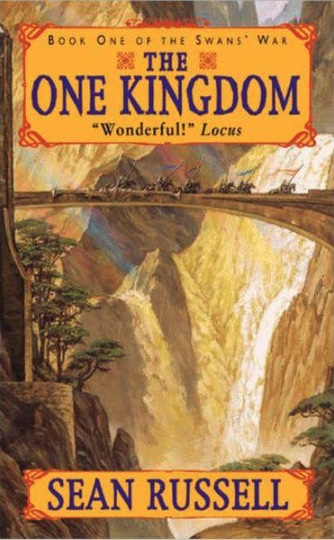
Perhaps the least well known series on the list, The Swan’s War trilogy feels like an even amalgamation of the elements in almost all the above series. It follows several converging storylines, including the coming of age journey of a few village boys, a sort of Montagues and Capulets rivalry that goes full-blown medieval war, and the secret quest of an almost roguish wizard.
I’d venture to guess that author Sean Russell knows one of Tolkien’s oft-forgotten secrets: Don’t explain everything. The Swan’s War trilogy feels almost like a dark fairy tale, when you get deep into it. The lore is less expansive than most items on this list. Yet it still feels deep and awe-inspiring without taking 5000 pages to get there.
Like in The Fellowship of the Ring, particularly, there’s plenty of chasing and escaping from mysterious forces. Like in The Two Towers or The Return of the King, readers will find interesting stories about royal families, political intrigue, and warfare. And through it all, there are simpler tales about a few young cousins trying to find their way safely home.
Much like The Lord of the Rings as a whole, Russell’s trilogy is fascinated with landscape and the journey itself. These books present a setting that feels as magical when uninhabited as it does when warring enchanters hunt each other across it. There’s plenty of imagination and adventure as well. But the unique sense of location is perhaps the single item that makes it feel most Tolkien-like.
Celebrating fellowship: Michael J. Sullivan’s Riyria Revelations (2011 – 2012)
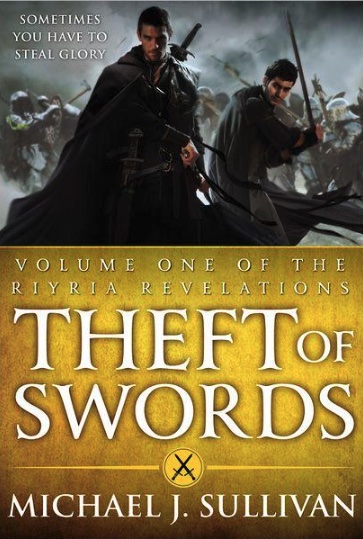
Michael J. Sullivan’s six-book trilogy follows the oft-illegal adventures of two companion thieves, Royce and Hadrian. Sometimes they’ll be taking a job to make some quick cash. Sometimes they set out because they’ve been framed for jobs they didn’t do. They always collaborate, however, and their teamwork is part of the appeal.
Riyria Revelations feels in many ways the most light-hearted and hopeful of the works on this list. Not that dark things don’t happen. They do in every volume. But as in The Lord of the Rings, there’s a present sense of fortitude or even optimism that largely stems from the comradery between its characters. Royce and Hadrian foil each other more blatantly than Frodo and Sam or Gimli and Legolas. The series visits themes of loyalty and fellowship again and again, however, both with its protagonists and with other characters.
Make no mistake. There are also instances of arcane wizardry, skillful swordplay, epic monstrosities, and the search for lost royalty. Most fantasy readers will find something to like here, The Lords of the Rings fans or not. While Riyria Revelations is less of a bildungsroman than any other work on this list, it still feels relevant and a little classic. But it’s the ever present thread of friendship that feels most relevant to Tolkien.
A few others worth mentioning
As mentioned earlier, many Tolkien fans found something new to love in Robert Jordan’s The Wheel of Time. I see the appeal. It’s a long journey to the end of the series. It’s also the type of expansive tale that couldn’t be told without showing the length of the road from Emond’s Field to Tarmon Gai’don.
Guy Gavriel Kay is another high fantasy author well worth including on this list. Kay not only writes poetic, distinctive, powerful fantasy on his own. He also played an integral role in bringing The Silmarillion to light.
I’d also add Kristen Britain’s Green Rider series for consideration. In a similar vein to Terry Brooks, Britain wears many Tolkien influences on her sleeve. Few fantasy writers match her great love of horses—while Tolkien is one who seems to have shared it.
Last but not least, if you’re a fan of The Lord of the Rings, you can always go read it again. I like to encourage people to try new books. But this is one work that surely has a lot to give over repeat readings. Tolkien’s tomes are full enough that you might find a new story or two there each time.
Updated May 30, 2026. Post originally published in 2023.
FAQs
Fans of The Lord of the Rings often enjoy fantasy series with similarly immersive settings, rich casts of characters, epic scopes, and thematic depth. These readers often enjoy Ursula K. Le Guin’s Earthsea Cycle, Tad Williams’s Memory, Sorrow, and Thorn trilogy, and Terry Brooks’s The Sword of Shannara Trilogy, among other works.
Few fantasy series have ever come close to the depth of world-building in The Lord of the Rings. Steven Erikson’s Malazan series has a particularly deep scope of history woven into the story. Robert Jordan’s The Wheel of Time and Brandon Sanderson’s Cosmere books are also similar in the complexity and size of their settings.
The Lord of the Rings practically invented the subgenre of epic fantasy about long physical journeys. Whether based in a specific quest or a more generic search for adventure, journeys have been a mainstay in epic fantasy ever since. Robert Jordan’s The Wheel of Time, Patricia McKillip’s The Riddle-Master Trilogy , Terry Brooks’s Shannara series, Ursula K. Le Guin’s Earthsea Cycle, and many other series feature stories with long physical journeys at their hearts.
Sign up for the newsletter to get more nerdy content like this in your inbox.
About the Author

Stephen Taylor is the author of The Witherclaw Trilogy as well as short fiction appearing in The Future Fire, MYTHIC Magazine, The Centropic Oracle, and other publications. His short story “Only an Ocean” won a Silver Honorable Mention in the L. Ron Hubbard Writers of the Future Contest. When he’s not writing, he’s often playing my violin or wandering in the woods.

Leave a Reply