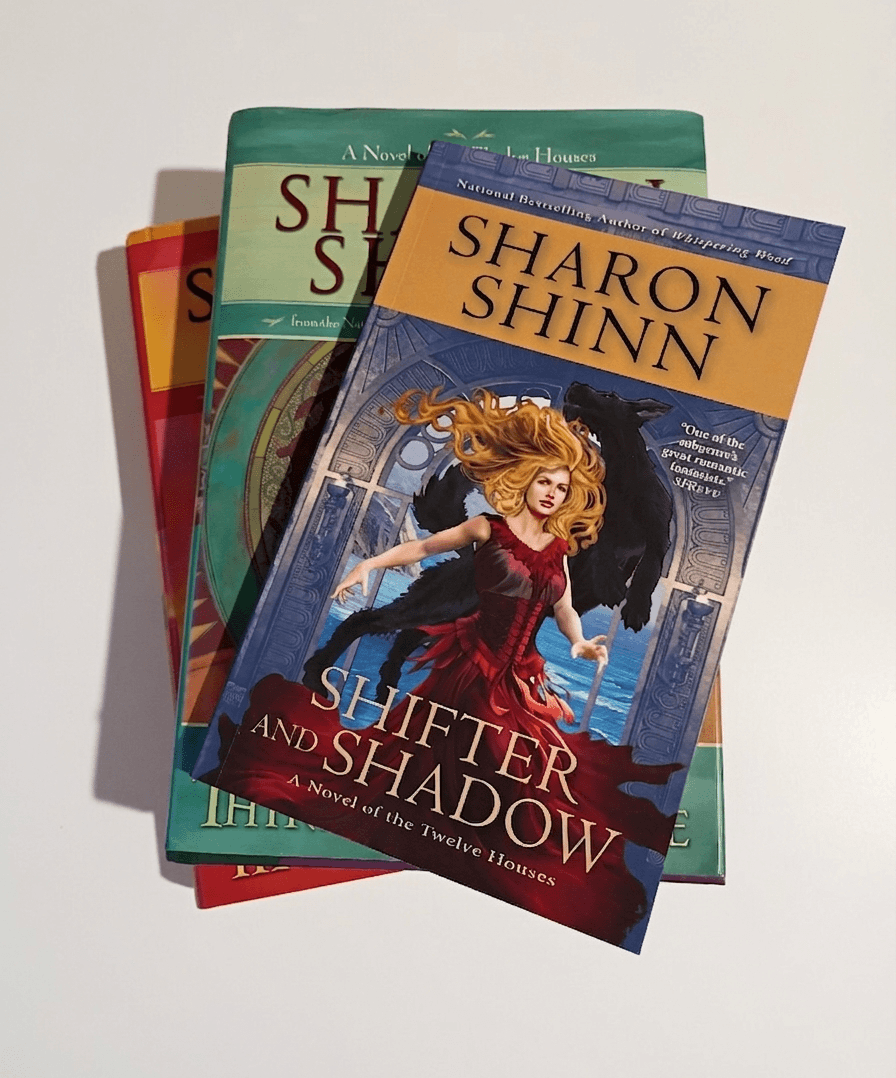
I recently revisited Sharon Shinn’s The Twelve Houses series. I’d read the first book back when it was new. It stuck with me enough that I remembered it, 20 years later, and picked it back up.
Book one was much like I remembered. The following books far exceeded my expectations.
I’m surprised Sharon Shinn isn’t better known, given how much craft and story this series have to offer. Here are five main reasons high fantasy readers should consider The Twelve Houses.
1. The Twelve Houses series brings together a great cast of characters
The story kicks off with a group of mystics (mages) and King’s riders (elites) embarking on a sort of reconnaissance mission across the realm. Within a chapter or two, it’s clear that this will be a motley crew sort of story. The following books hold true to that promise.
Each book in the series follows one main character, with plenty of alternating sections in others’ points of view as well. Senneth, the star of book one, comes off the page quickly. Within a few hundred pages, the rest of the leads do as well, and the character writing never looks back. Every volume brings major character growth. What really stands out, however, is the dimension their relationships bring to both subsequent character development and the overall plot.
There’s a lot to love if you grow attached to any one main character. And there’s plenty to keep coming back for if you want deep comradery like in The Lord of the Rings or other early epic fantasy. As interesting as the setting and story are, it’s the characters who carry these books most consistently.
2. Shinn’s exploration of her magic system is fascinating
At surface level, the magic in The Twelve Houses isn’t particularly groundbreaking. You’ll find shapeshifters, fire witches, magical healing, concealment, and a smattering of other skills at play. By early in book two, however, it’s clear that Shinn knows how to push her magic system to its limits, finding interesting ways to solve problems within well-trodden types of sorcery.
Brandon Sanderson, a dedicated champion for this type of magic maxing, has often remarked that it’s limitations that make magic most interesting. Shinn leans into that idea again and again (long before Sanderson was known for such a thing).
Her magic system is on the harder side of things without being difficult to grasp. Each book adds both depth and breadth, fleshing it out further. And, most interestingly, Shinn continually pulls out new ways to cleverly embrace her own rules and boundaries.
3. There’s something refreshingly accessible about The Twelve Houses
This is a series most readers can tackle without fear. Booksellers today would likely categorize it as romantasy, but it blends genres in a way that makes it a great entry point for readers new to romantasy, epic fantasy, or sword and sorcery (which is what it was often labeled as when the first few books came out).
On the romantasy side, each book features a main romantic plot/couple, complete with outright confessions of love and a few weddings. On the sword and sorcery side, the series begins literally following a sword-wielding sorcerer (who needs both her physical and magical skills at various points). And on the epic side, there’s a big long quest/journey, a broad cast of political powers, the looming threat of war, and pitched magical battles in some instances.
The Twelve Houses series is never the most romantically-focused or the most epic. But this middle ground across genre lines makes it immediately readable and quite different from standard fare.
4. Each book tells a full story
Each volume in this series has a beginning, a middle, and an end. This might not be a high bar in other genres, but for high fantasy, this sense of book-by-book completion really stands out (and it stood out even more when it was first published). If you’ve read other articles in this blog, you’ll know I place a premium on the storytelling skill it takes to write this sort of series.
The series currently sits at six volumes (five novels and one novella). As epic as the scope can become, however, the individual books are fairly short. Most are between 400 and 500 pages. Even with moderate pacing (never all that fast) throughout the series, this combination of brevity and breathing room makes it a manageable reading investment for almost anyone who likes high fantasy. You’ll never find so much plot or so many characters that you can’t keep up. And you don’t have to read 2000 pages before finding out if you’ll like anything that happens.
In all, it’s continually impressive at how clean and compact each book feels.
Which connects to the final and (IMO) most impressive characteristic of all.
5. Any book in the series could be a reader’s favorite
Not only does every book tell its own story. Each volume is powerfully distinct in terms of theme. So while the series feels consistently like itself, no two books are really about the same things.
What this does is make for a series in which any book could be a reader’s favorite (which impresses me more than anything else Shinn does here). If you want the book with the most military motion, you can pick that one (and it stands on its own quite well). Or if you want the most introspective or gentle, you have a few other options. If you want the best of all, take book one or four, or maybe three. I ended up liking book two least, but even that one hit hard and delivered on numerous promises to readers.
The point is that there’s strength balanced well across the entire series. Imagine if a series as long as The Wheel of Time achieved something like this (hint, almost no series that long ever has).
For more nerdy content like this, sign up for the monthly newsletter. It’s free to sign up, and you can unsubscribe any time.
About the Author
Stephen Taylor is the author of The Witherclaw Trilogyas well as short fiction appearing in The Future Fire, MYTHIC Magazine,The Centropic Oracle, and other publications. His short story “Only an Ocean” won a Silver Honorable Mention in the L. Ron Hubbard Writers of the Future Contest. When he’s not writing, he’s often playing his violin or wandering in the woods.
“Infinite are the arguments of mages,” wrote Ursula Le Guin. Likewise, infinite are the arguments about the best magic systems empowering those mages. This article will scarcely scratch the skin of that debate. But, as a reader and writer who cares a lot about interesting ways to use magic, I have some takes on the topic.
Out of hundreds of possible options (probably thousands), here are the eight magic systems I think are most interesting in terms of how the author actually uses them.
1. True names | The enduring magic system of Le Guin’s Earthsea Cycle
Numerous magic systems use naming as a means to control things, generally centered on the concept of a true name. This system has roots in various religions and folk traditions. Unsurprisingly, Le Guin latched onto it and built a fascinating magic system around it.
At its heart, the idea is this: By knowing the true name of a thing, a wizard can control it. Sparrowhawk, the titular character in Le Guin’s A Wizard of Earthsea, uses this principle to befriend birds, to tame a dragon, and to heal himself. It’s a simple enough concept for readers to follow to interesting ends. The ways Le Guin problematizes it are even more compelling.
For instance, it’s not enough to know the sea’s name. A wizard might need to know the name of every drop of water before controlling an entire sea. Le Guin’s books also describe some things that don’t know their own names and are so free they can ignore the call even when issued by wizardry. Most fascinating is the way in which most trained wizards essentially subdue their own sexuality through use of their power (a concept only hinted at for the first few books of The Earthsea Cycle).
Le Guin’s magic system is unfathomably powerful, yet it’s tempered with very real costs and risks. And above all, Earthsea is a place that uses wizardry for endlessly interesting things.
Instead of the binary battle spells so common in early fantasy (heal wounds or cause them), Le Guin gives us a full array of tasks wizards might accomplish through magic.
Her wizards fix pots and heal cataracts. They manage the winds for sailors. They repair boats and herd goats. Sometimes they send messages, and sometimes they refrain—because any use of their power is perilous to the wizard who understands it. Wizardry feels like a lived-in, economic element in Earthsea. It’s so fully incorporated that I can’t imagine the setting without it. That alone is why I rank it above all other magic systems in high fantasy.
2. Luxin drafting | Creative and beautiful magic in Brent Weeks Lightbringer books
Brent Weeks famously yelled at Brandon Sanderson when the latter published Warbreaker just a year before Weeks’s The Black Prism hit shelves. The issue? Color-based magic. Weeks wanted to do it first. Regardless of any common hue (pun intended), Weeks’s system of luxin drafting stands very much on its own.
This magic system combines vision with physical substance.
First, vision. Drafters (mages) can typically only draft one or two colors. These are only available when they have some source of that color in sight—which leads to all sorts of clever tricks like colored lenses for the drafters or reflective armor to counter mages.
Next, substance. Whatever colors a drafter can access, the accessing mechanism spawns a physical substance, luxin, of an associated color. Luxins bring unique characteristics like durability, flammability, stickiness and so on. The evocation of luxin also allows build-up within a drafter’s body and expulsion (shooting streams or bolts of it out, for instance). There’s plenty of dueling and fighting to be done with luxin in these books. But there’s also an immense measure of craft and commerce connected to drafting.
Drafters use luxin to track one another, to build vehicles, and even to fortify a city. As with Le Guin’s system of true names, a measure of this magic system’s appeal is its utility for so many different things. Combine that with numerous cool ways to manipulate the system, and it makes for an original and compelling magic system throughout the Lightbringer series.
3. Death witnessing | An inglorious religious magic in Katherine Addison’s most popular works
Imagine a magic system that’s basically just used for feeling what a dead person felt, or thinking what they thought. And there you have the essence of death witnessing.
Addison introduces readers to this magic in a sort of mystery plotline within The Goblin Emperor. Witnessing for the dead plays a central step in finding the truth, absolving the innocent, or tracing the guilty. These of course have big narrative implications and opportunities. But death witnessing also leads to smaller ones, particularly in Addison’s novella The Witness for the Dead.
As powerful as this form of magic is, it’s the least glamorous on this list. And like most great magic systems, there are costs and gambles tied to it. In this case, the costs are primarily emotional and social. Witnesses for the dead get some formal respect but not much popularity. And it will be no surprise that feeling an almost-dead person’s almost-dead experiences won’t usually be fun.
Combine these elements and you get a magic system with a really unique fit into larger worldbuilding. It has a lived-in feeling to it that makes it deeply believable, but it also inspires a little fear—as most magic truly would in fantasy settings. Readers like me sometimes forget to be awed at the idea of a wizard wielding powers outside what I can harness. Addison’s books bring a lot of that awe back to me.
4. The One Power | A deceptively named and deceptively fascinating system in Robert Jordan’s Wheel of Time
The One Power is neither one nor solitary. But it is a power, easily ranking number two on this list in terms of raw potential. If you read The Eye of the World, book one in The Wheel of Time, you’ll find magic that feels routine among other epic fantasy of the 80s. Keep reading and you’ll find new layers in almost every following volume.
First there are fireballs, bolts of lightning, and generic healing spells. Then there’s protective magic and dark lord sealing (also fairly generic). And finally you get faster-than-light travel, mind control, military reconnaissance, the transfer of lava straight from a volcano onto baddies, and lots more.
Perhaps the biggest weakness in how this system shows up is that the first several books of Wheel of Time ignore magic’s massive logistical impacts. That changes later in the series, especially when Brandon Sanderson gets involved. By the end, The One Power feels widely integrated into how the world works. An equally important strength is that magic users themselves feel valuable and exceptional, even the weaker and less trained ones.
There’s plenty of room for mages in this system to invent and be smart, as well as to win the day with sheer power. All in all, it’s one of the most accessible and diverse systems to make it into a big series. And like Addison’s death witnessing or Le Guin’s true names, the One Power lends itself well to evoking dread and wonder.
5. Forging/soulstamping | Brandon Sanderon’s most contemplative and timely magic system
Speaking of Brandon Sanderson, almost any of his magic systems could make this list. He has come up with several distinct, graspable, and mind-bendingly spectacular ways to utilize magical powers in fantasy worlds. He also makes incredible use of the spelled out (another pun intended) limitations of each system. From allomancy to stormlight to rithmatics, there’s plenty to love.
Forging, introduced in The Emperor’s Soul, stands out as one of the most deliberate magic systems Sanderson has created. Allomany or stormlight—invaluable as they are in more pedestrian life—see most of their biggest use in colossal struggles like combat between demigod-like mages. Forging is a much slower magecraft in almost all cases shown. It’s a system of using seals (stamps) to imprint the form of something onto an object. This soulstamping process is a bit like imposing an artificial likeness. The nearer the form to the object’s actual nature, the more effectively the forgery takes.
The plotline of The Emperor’s Soul involves some somewhat desperate forging to survive. It’s also deeply concerned with how artistry and imitation coincide. I’m fairly certain Sanderson wasn’t thinking about generative AI when he wrote this (15 years ago), but it’s deeply relevant today. His recent keynote speech on art and AI reflects some of the same musings, albeit with more concrete outcomes. If you want a thoughtful companion to that speech, take a close look at the forging system.
And if you simply want a magic system that is fresh, look no farther.
Honorable mentions: 3 other great magic systems
Skill and Wit in Robin Hobb’s Realm of the Elderlings
Robin Hobb’s Farseer Trilogy introduces two seemingly separate but philosophically connected magic systems.There’s the Wit, which is about communication between animals and humans. Then there’s the Skill, which is more or less about the same things from human to human. What makes them stand out so profoundly is the way Hobb ties them to real storytelling stakes.
Warrens of Magic in Steven Erikson’s Malazan
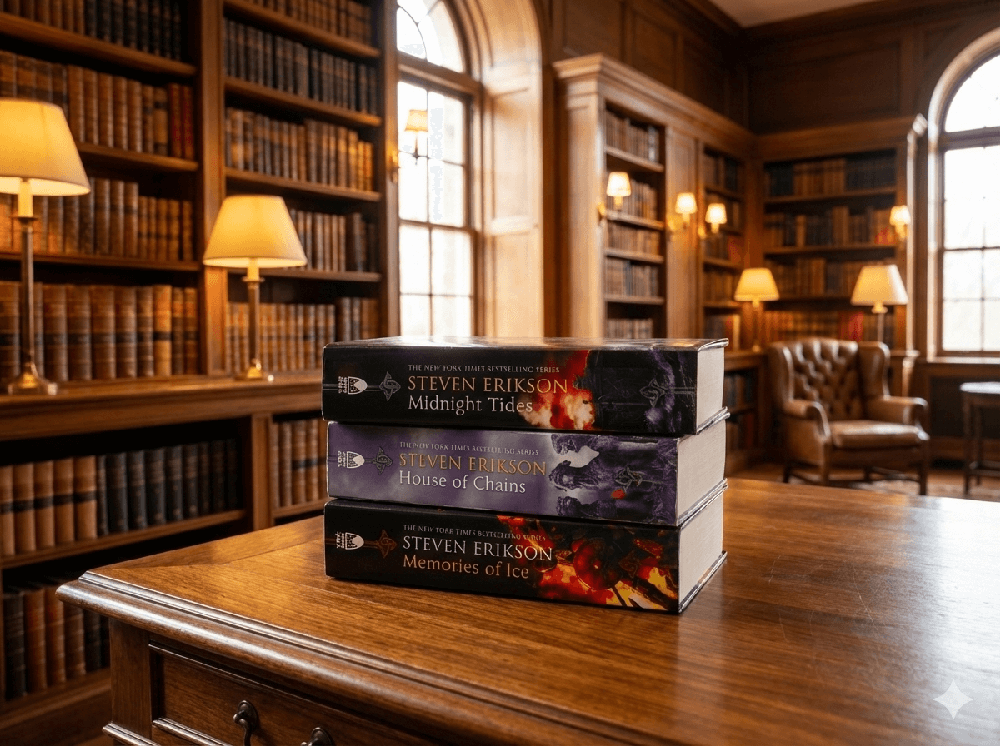
Erikson’s system of Warrens is about drawing magical powers from a series of vaguely connected sources. It’s easy enough to follow how it shows up in Erikson’s first books, but it’s intricately layered. Most intriguing of all, there’s a sense of impermanence, given how Warrens shift, get flooded, become the settings for whole subjourneys, and so on. The magic system itself feels as old and as mortal as the rest of the world.
Sympathy in Patrick Rothfuss’s Kingkiller Chronicles
Sympathy is only one of several distinct magic systems in Rothfuss’s primary work. It’s the most unique and interesting so far, however. The main idea is about energy transfer through sympathetic links—joining like objects together. It’s limited, like virtually everything listed above, but allows endless invention. It’s the sort of magic system a group of DND players would likely break to no end, which is a good sign that it’s useful, multifaceted, and actually fun.
For more nerdy content like this, sign up for the monthly newsletter. It’s free to sign up, and you can unsubscribe any time.
About the Author
Stephen Taylor is the author of The Witherclaw Trilogyas well as short fiction appearing in The Future Fire, MYTHIC Magazine,The Centropic Oracle, and other publications. His short story “Only an Ocean” won a Silver Honorable Mention in the L. Ron Hubbard Writers of the Future Contest. When he’s not writing, he’s often playing his violin or wandering in the woods.
Despite being a lifelong fan of J. R. R. Tolkien’s The Lord of the Rings, I don’t typically go out looking for another work that strikes the same chord. But there are plenty of great books for fans of The Lord of the Rings.
I’ll be the first to admit being frustrated at the non-Tolkienesque recommendations I receive. “There is only one Lord of the Rings,” as Gandalf says in Peter Jackson’s adaptation of the three-volume epic. My ensuing recommendations are high fantasy or epic fantasy works that evoke a similar sense of beauty, adventure, heroism, depth, and melancholy as J. R. R. Tolkien’s The Lord of the Rings.
Take them with your own grain of salt, though. These recommendations draw largely from data I’ve gathered on why readers continue to love The Lord of the Rings. There’s always some personal taste involved as well.
Here are just seven series that share key similarities—all which stand well on their own merits, it’s worth adding.
Fusing the ordinary and the very epic: Ursula K. Le Guin’s The Earthsea Cycle (1968 – 2001)
Ursula K. Le Guin’s The Earthsea Cycle follows the coming-of-age journey of a wizard called Sparrowhawk, along with some of his treasure-hunting adventures, his attempts to bring real peace to a war-torn world, and a quest to stop wizardry itself (and all crafts of beauty and power) from disappearing. It’s also a series about the power of being very ordinary.
Earthsea is one of the most obviously unique of all the works this article discusses. There are, however, so many ways in which reading this series feels like reading The Lord of the Rings.
For the sake of brevity, here are a few high level items to consider:
In Earthsea, as in Middle-earth, magic seems to have touched everything. Yet the omnipresence of magical events has not diluted the power it brings to the page in this high-magic setting.
Readers might be fooled into thinking The Lord of the Rings is a long work of fiction. At 575,000 words, it’s about the size of two George R. R. Martin books, 1.25 books in the Stormlight Archive, and the final solitary volume in Tad Williams’s Memory, Sorrow, and Thorn (referenced later on). In short, The Lord of the Rings is short for high fantasy, epic fantasy, or similar genre organizers. And so is The Earthsea Cycle, the entire work spanning less than 500,000 words.
Short or not, Earthsea shows Le Guin’s uncanny ability to tell a great story with few pages. This is a skill Tolkien shared too, as noted above.
Earthsea is full of minor characters doing seemingly unimportant things. Yes, there are heroics like Aragorn’s or Gandalf’s. But the story’s mostly concerned with more ordinary events. This brings it closer to real life than your standard work of epic fantasy. It also makes it much more harmonious with Tolkien’s own work, which is greatly concerned with ordinary, daily, non-epic goings on.
Fans of The Lord of the Rings will admire Le Guin’s skill with little things
This last point might be most Tolkien-like of all: Earthsea’s clearest heroes don’t solve their problems by strength of arms.
Le Guin meticulously crafts stories in which killing a bad guy doesn’t actually fix the world. Yes, you’ll find epic clashes of armies or magical powers in The Lord of the Rings. Earthsea has some similar moments. Yet it’s in quieter instances and less obvious decisions that both works bring their stories to a point of resolution.
Sign up for the newsletter
Get the latest articles and updates on The Witherclaw Trilogy with Stephen’s monthly newsletter. Subscribing is free and you can opt out whenever you want.
Music is magic in The Riddle-Master Trilogy by Patricia McKillip (1976 – 1979)
The Riddle-Master Trilogy by Patricia McKillip tells the story of a young land-heir, swine-herd, beer-brewer, amatuer riddler, would-be-scholar, and prophesied hero all rolled up into one. Along the way, there’s plenty of murderous chasing, ancient riddles, and magical harping to keep readers interested. Much like Middle-Earth, McKillip’s fantasy world is filled to the brim with magic, much of it left almost wholly unexplained.
In an earlier blog post on underrated works of epic fantasy, I’ve noted Tolkien’s critical influence on McKillip. What’s especially interesting is that McKillip tells such a different story in such a different style than Tolkien, despite numbering him among only a very few speculative fiction writers to shape her early work (Le Guin was another).
“Tolkien just opened the doors to imagination.”
—Patricia McKillip, 2010
Where The Lord of the Rings divides an epic journey up across a party of disparate compatriots, there’s a much lonelier journey going on in The Riddle-Master Trilogy. The main characters—Morgon, Raederle, and Deth—spend a great deal of time alone or with little company around them. Also, much like The Earthsea Cycle mentioned above, there are no Helm’s Deeps or Pelennor Fields with armies fighting on them in this trilogy. Just a wizard or two and a long, well-tuned string of riddles to lure the curious reader forward.
What feels most Tolkienesque about McKillip’s trilogy is the author’s evident respect for the beauty of the world she created. It’s stunningly unique, even when weighed against the almost 50 years of high fantasy following it. Like Tolkien, McKillip made something that feels too distinct to be properly replicated.
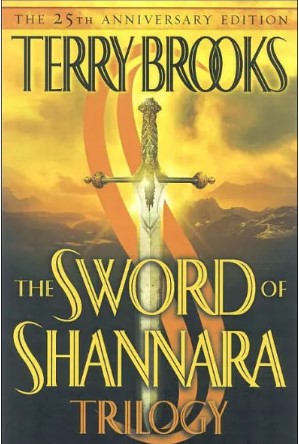
An epic story with elves, quests, magic swords, and mystical mentors: The Sword of Shannara Trilogy by Terry Brooks (1977 – 1985)
The past two works on the list are less apparent in their Tolkien-like trappings. Terry Brooks wore his clearly from the start of his career.
The Sword of Shannara Trilogy, which contains three whole, standalone stories, draws on similar plotting, quest structures, and even hero party makeups. It doesn’t feel too fresh upfront, truly. But Brooks’s debut does show a great deal of skill and imagination all the same. Books two and three (and Brooks’s many Shannara stories after that) do a lot to distinguish themselves in their own right.
Here’s a quick for instance on the similarities. Book one (The Sword of Shannara) follows the quest of a semi-orphaned villager and his adoptive brother as monstrous creatures chase them from their home and they set out to destroy a dark lord. Along their journey, they team up with a mysteriously knowledgeable druid, a dwarf, two bow-wielding elves, and the crown prince of a powerful kingdom that guards the border between the dark lord and the rest of the known world.
And here’s an example of where Brooks does his own thing: The hero of book one doesn’t succeed through fighting, escaping, or purposefully destroying a magical relic. He succeeds by using truth and paradox to confound the deluded dark lord head on.
Filled with immense monsters, ancient magic, fast-paced chases, and courageous confrontations of evil, The Sword of Shannara Trilogy embraces the sense of adventure and heroism that so many readers love in The Lord of the Rings. Where Tolkien leans more heavily into lore and detail, Brooks’s very American storytelling is a little more pulpy and action-packed. This makes for a different read than the previous works on the list. It’s one that has resonated with many Tolkien fans in the years since this trilogy helped launch epic fantasy as a commercial, formalized genre in the U.S.
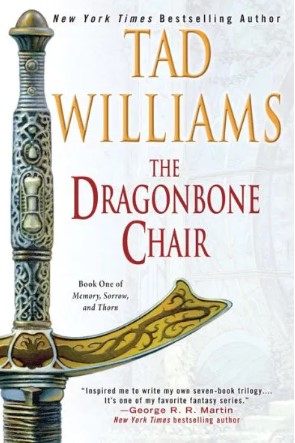
A work that captures the sorrow of a closing age: Memory, Sorrow, and Thorn by Tad Williams (1988 – 1993)
Tad Williams has written quite a variety of speculative fiction. To date he is most well-known for his million-word epic trilogy Memory, Sorrow, and Thorn. It’s worth noting that George R. R. Martin is one of the series’s many vocal fans. He particularly credits Williams with influencing him to write his own epic fantasy.
Memory, Sorrow, and Thorn shares more than one strong similarity with The Lord of the Rings. It’s very much a story about small people (physically and socially) stepping into heroic roles they shouldn’t have to shoulder. It’s also one of the more rigorous of early epic fantasy stories in terms of overall setting and worldbuilding.
There’s a particularly powerful parallel between Middle-earth and how Williams portrays ancient, magical peoples withdrawing from the world of humans. Much as Tolkien’s elves are leaving the lands of mortals, Williams’s magical races have in many ways already distanced themselves from the doings of humankind. This creates a growing distance between the ordinary world and magical occurrences underway. It also sets readers up for a huge sense of awe whenever pretty much anything magical comes about. Many low-magic series have followed. I have encountered few that bring such a sense of age and scope as Williams’s original trilogy—in a way that feels very much like reading The Lord of the Rings.
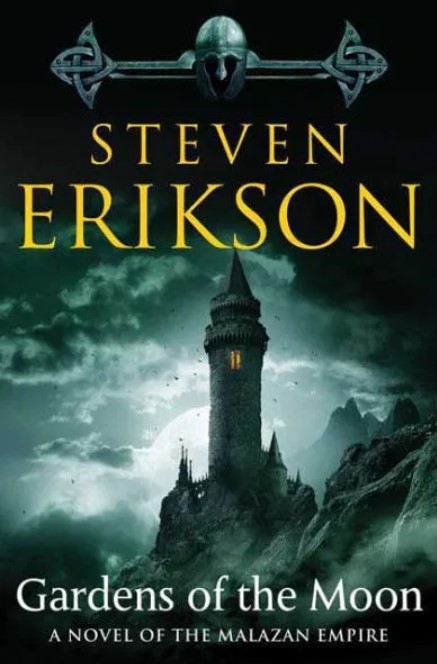
Going epic on epic Fantasy: Steven Erikson’s Malazan Book of the Fallen (1999 – 2011)
Critics have often called Robert Jordan (author of The Wheel of Time) the American Tolkien because of the size and scope of his massive fantasy story. Don’t forget the Canadian Tolkien, though. His name is Steven Erikson.
Erikson’s 10-book epic is more often compared to A Song of Ice and Fire than to The Lord of the Rings. It’s hard to find any writer in any genre who rivals Erikson’s depth of world-building (and that includes Tolkien himself).
Where Tolkien uses his immense knowledge of philology and poetry to inform his worldbuilding, Erikson draws on archeology and anthropology as well. He creates economies, social contracts, militaries, and magic systems that feel incredibly plausible because they follow patterns so identifiable in human history.
And this is to say nothing of Erikson’s sheer skill with words. Erikson graduated from the Iowa Writer’s Workshop, the most celebrated writing program in the world. And he makes his wordsmithing prowess plain from early on in book one of Malazan.
Critics often describe Erikson as being too challenging for typical fantasy readers today. With a focus on warfare and imperialism, Malazan also sits more on the military fantasy side of the genre spectrum. It’s therefore a departure from the lofty, high fantasy space The Lord of the Rings craved for itself. That said, Erikson’s rich lore, expansive setting, immense cast of characters (god and human alike), and very character-oriented storytelling make his work an excellent fit for the many Tolkien fans who want something epic, well-imagined, and unforgettable.
A magical mix of everything: The Swan’s War Trilogy by Sean Russell (2001 – 2004)
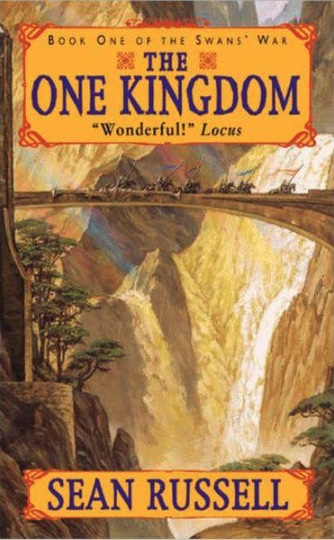
Perhaps the least well known series on the list, The Swan’s War trilogy feels like an even amalgamation of the elements in almost all the above series. It follows several converging storylines, including the coming of age journey of a few village boys, a sort of Montagues and Capulets rivalry that goes full-blown medieval war, and the secret quest of an almost roguish wizard.
I’d venture to guess that author Sean Russell knows one of Tolkien’s oft-forgotten secrets: Don’t explain everything. The Swan’s War trilogy feels almost like a dark fairy tale, when you get deep into it. The lore is less expansive than most items on this list. Yet it still feels deep and awe-inspiring without taking 5000 pages to get there.
Like in The Fellowship of the Ring, particularly, there’s plenty of chasing and escaping from mysterious forces. Like in The Two Towers or The Return of the King, readers will find interesting stories about royal families, political intrigue, and warfare. And through it all, there are simpler tales about a few young cousins trying to find their way safely home.
Much like The Lord of the Rings as a whole, Russell’s trilogy is fascinated with landscape and the journey itself. These books present a setting that feels as magical when uninhabited as it does when warring enchanters hunt each other across it. There’s plenty of imagination and adventure as well. But the unique sense of location is perhaps the single item that makes it feel most Tolkien-like.
Celebrating fellowship: Michael J. Sullivan’s Riyria Revelations (2011 – 2012)
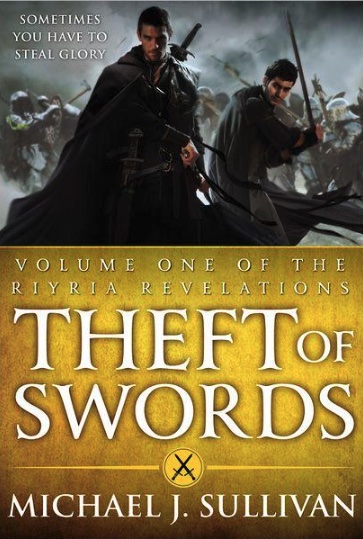
Michael J. Sullivan’s six-book trilogy follows the oft-illegal adventures of two companion thieves, Royce and Hadrian. Sometimes they’ll be taking a job to make some quick cash. Sometimes they set out because they’ve been framed for jobs they didn’t do. They always collaborate, however, and their teamwork is part of the appeal.
Riyria Revelations feels in many ways the most light-hearted and hopeful of the works on this list. Not that dark things don’t happen. They do in every volume. But as in The Lord of the Rings, there’s a present sense of fortitude or even optimism that largely stems from the comradery between its characters. Royce and Hadrian foil each other more blatantly than Frodo and Sam or Gimli and Legolas. The series visits themes of loyalty and fellowship again and again, however, both with its protagonists and with other characters.
Make no mistake. There are also instances of arcane wizardry, skillful swordplay, epic monstrosities, and the search for lost royalty. Most fantasy readers will find something to like here, The Lords of the Rings fans or not. While Riyria Revelations is less of a bildungsroman than any other work on this list, it still feels relevant and a little classic. But it’s the ever present thread of friendship that feels most relevant to Tolkien.
A few others worth mentioning
As mentioned earlier, many Tolkien fans found something new to love in Robert Jordan’s The Wheel of Time. I see the appeal. It’s a long journey to the end of the series. It’s also the type of expansive tale that couldn’t be told without showing the length of the road from Emond’s Field to Tarmon Gai’don.
Guy Gavriel Kay is another high fantasy author well worth including on this list. Kay not only writes poetic, distinctive, powerful fantasy on his own. He also played an integral role in bringing The Silmarillion to light.
I’d also add Kristen Britain’s Green Rider series for consideration. In a similar vein to Terry Brooks, Britain wears many Tolkien influences on her sleeve. Few fantasy writers match her great love of horses—while Tolkien is one who seems to have shared it.
Last but not least, if you’re a fan of The Lord of the Rings, you can always go read it again. I like to encourage people to try new books. But this is one work that surely has a lot to give over repeat readings. Tolkien’s tomes are full enough that you might find a new story or two there each time.
Updated May 30, 2026. Post originally published in 2023.
FAQs
What books should fans of The Lord of the Rings read?
Fans of The Lord of the Rings often enjoy fantasy series with similarly immersive settings, rich casts of characters, epic scopes, and thematic depth. These readers often enjoy Ursula K. Le Guin’s Earthsea Cycle, Tad Williams’s Memory, Sorrow, and Thorn trilogy, and Terry Brooks’s The Sword of Shannara Trilogy, among other works.
What books have deep world-building like The Lord of the Rings?
Few fantasy series have ever come close to the depth of world-building in The Lord of the Rings. Steven Erikson’s Malazan series has a particularly deep scope of history woven into the story. Robert Jordan’s The Wheel of Time and Brandon Sanderson’s Cosmere books are also similar in the complexity and size of their settings.
What books have epic journeys like in The Lord of the Rings?
The Lord of the Rings practically invented the subgenre of epic fantasy about long physical journeys. Whether based in a specific quest or a more generic search for adventure, journeys have been a mainstay in epic fantasy ever since. Robert Jordan’s The Wheel of Time, Patricia McKillip’s The Riddle-Master Trilogy , Terry Brooks’s Shannara series, Ursula K. Le Guin’s Earthsea Cycle, and many other series feature stories with long physical journeys at their hearts.
Sign up for the newsletter to get more nerdy content like this in your inbox.
About the Author
Stephen Taylor is the author of The Witherclaw Trilogyas well as short fiction appearing in The Future Fire, MYTHIC Magazine,The Centropic Oracle, and other publications. His short story “Only an Ocean” won a Silver Honorable Mention in the L. Ron Hubbard Writers of the Future Contest. When he’s not writing, he’s often playing my violin or wandering in the woods.
In December, I completed a draft of book three in The Witherclaw Trilogy. The book is far from finished. I’m not even sure what I’ll title it yet. But it feels a lot more real now than it did a month before, let alone six or 12 months back. And I’m proud to share the news that it will, in fact, be done done (printed, published, all the stuff) before too long.
While most articles on my blog focus on published books, today I want to share a few reflections and updates on this one.
A sort of spoiler-free summary of book three
First thing’s first. If I had to describe the book today—which I sort of have to if I want to finish this article—I’d say something like the following.
Two years have passed since the Battle of Lilywater. Varan Witherclaw has remained in Foneth all that time, aiding Inorovel in her research and Giovel in the Divine Order’s hunt for witches. Plenty has changed. The Order is on a thin leash, since people are more suspicious of magecraft than ever before. The Optacracy is in a bind, because while Redrem is playing nice now, Lacia isn’t. And on top of it all, there’s something of a plague (which I originally planned for Candle and Claw, but then a global pandemic happened AS I WAS WRITING IT, so I decided it would be too much).
Last but not least, this book will introduce a new alliance of witches and their battle against the Order for control of an ancient stone glyph Inorovel unearths. Varan will find herself caught in the middle of this conflict, with some serious choices to make about how attached she is (or isn’t) to Foneth and the people who live within it.
Where Giovel was the hero of Candle and Claw, and Jinaten was the star and Glyph and Glaive, this book will be Varan’s story first and foremost. About time, since I named the trilogy after her.
Where does this put the series?
I’ve been calling this The Witherclaw Trilogyfor a while. And that hasn’t changed. Book three will offer a clear ending point for all major storylines.
I might yet write other content in the same world, but for now I have no spinoffs planned, let alone sequels or prequels. I’ve been working steadily on this ending point since 2020—and even beyond, as I’ll describe a little later on. And I’m eager to write some other stories too (more on that to come as well).
When will book three come out?
Based on how much work the last two volumes took beyond drafting alone, I’m targeting a release date later in 2027 (between September and November). It’s a bit of a wait, to be sure. I’d love to have it completed and ready sooner, but I don’t think I’ll be able to get all the publishing parts done on time.
This could always change. For reference, here’s a status report by month to show how quickly (or slowly) this book came together at different times of the year.
January 2025: Three chapters complete (a mere 26 pages).
February 2025: Four chapters complete in all.
March 2025: Eight chapters down! As many in March as the previous two months combined.
April 2025: 14 chapters completed. It looked like I was gaining real steam.
May 2025: 17 chapters done. Not so much progress.
June 2025: 22 chapters down as the year reached its halfway point. I was worried, at this juncture, about finishing a draft by the end of the year (which had long been my goal).
July 2025: 28 chapters complete. A little acceleration, despite lots of vacation time without writing at all.
August 2025: 37 chapters done. This was a big turning point.
September 2025: 50 Chapters done. Even more progress than in August.
October 2025: 59 chapters done. It was starting to feel doable.
November 2025: 68 chapters done. I knew I could finish by the end of the year.
December 2025: 75 chapters done, completing the draft at 599 pages.
If I can keep a steadiness to my work like I did from August to December, maybe I’ll get this book wrapped up sooner and can release before the current plan.
As part of the release, however, I’m also hoping to get a few other things out the door:
A box set for the whole trilogy
Hard cover options for all three books
The audiobook for Candle and Claw (which actually I think will be ready well before this book comes out)
What then?
I have another series I’m itching to get back to. The first book in that series has a solid draft done already. It will need some work before I release it but might be ready in 2028. These will be shorter, slightly less epic books, but I’m excited to share them.
I also have several short stories in the works, after taking a near five-year hiatus from short story writing. Fingers crossed that I’ll have a few of those out before book three is totally wrapped.
Last but not least: My qualitative feelings on book three
When I was 15, I wrote a novel. It wasn’t amazing. That novel was the story of book three, though. It stuck with me enough that I realized I needed to write a few more books to set it up (enter Candle and Claw and Glyph and Glaive). I did plenty of other things between writing this book the first time and rewriting it now. But it has been an unfinished project since then, more than 20 years back.
For that reason alone, I’m thrilled to be approaching a true finish line.
My revisions will mostly involve cutting content from the first half and repositioning material for the third quarter or so. I revised the endings more than anything else in the previous two books. I’m sure I’ll do some of that with this one as well. Less, though, if my sense of it is right. I think the ending is closer to where I want it with this book than it has been with either previous volume. But the finale has been in my mind since well before I started either of those projects, so hopefully it doesn’t need as many tweaks.
I’m surprised at some of the twists and turns to get to this point. I already feel a strong emotional investment in this one, however. That tends to be a sign that I’m happy with it.
As I finished writing Candle and Claw over five years ago, I felt I’d arrived somewhere I couldn’t have reached without writing my way there. I feel the same this time. That is what makes me most excited to polish this book and share it with readers next year.
For more nerdy content like this, sign up for the monthly newsletter. It’s free to sign up, and you can unsubscribe any time.
About the Author
Stephen Taylor is the author of The Witherclaw Trilogyas well as short fiction appearing in The Future Fire, MYTHIC Magazine,The Centropic Oracle, and other publications. His short story “Only an Ocean” won a Silver Honorable Mention in the L. Ron Hubbard Writers of the Future Contest. When he’s not writing, he’s often playing his violin or wandering in the woods.
Epic fantasy readers talk as if there’s nothing tougher to read than Malazan Book of the Fallen. I’m of the opinion that Malazan is not nearly as challenging as readers claim, but I want to go further in this article. In fact, I want to make the case for why readers should binge Malazan.
I’d always intended to read the series deliberately. But after staying up all night with the flu and Gardens of the Moon, then eventually reading almost half of House of Chains on a single plane ride, I was convinced of a better way. In fact, binging might be the easiest way to read Malazan.
Here are the top reasons I recommend reading it fast:
When I recommend binging Malazan, I’m not talking about listening at triple speed or quitting your day job to finish the next book in the series. I’m talking about reading the books back to back, in short order, with chunks of time dedicated to the process.
Whether you do this in 30-minute blocks or 4-hour reading parties is up to you. For contrast, however, consider how I first read The Wheel of Time: Slowly. My journey took pauses between the more sluggish volumes (of which there are several). I gave myself ample time to read refreshers between books (as many Malazan readers report doing). I even tried to take time to stew on things and guess where the journey would go next.
While I enjoyed this approach to Wheel of Time, it brought drawbacks as well. After one volume, I often forgot minor characters, for instance. It was easy to miss details about who was up to what, or how developed some of the macro plots really were. Most of all, it made the series feel even longer than it really is (for better or worse). Which queues up my first reason to read Malazan in a more streamlined way.
1. There’s almost no repetition between books in Malazan
Wheel of Time readers get to read the same bits about Domani culture or Two Rivers tabac thirty times before the series ends. This is part of what makes the series accessible, long though it is. Malazan readers won’t get the same benefit. Erikson rarely repeats much world-building or character detail.
The beauty of binging Malazan is that you get new material with every volume. It’s a lot like The Lord of the Rings in this regard. But even when following characters the reader knows—or literal events that have already unfolded—there’s something spare about the information Erikson doles out. He tends to trust readers to keep details once he has shared them. Sometimes he expects reader recall for tidbits he has only even hinted at.
Which leads to the second reason to binge this series.
2. Sequential reading will help with recall
With 700 named characters, dozens of Paths and Warrens, a plethora of species, and a long history at work, the world of Malaz can be legitimately tough to grasp all at once. Even halfway into the series, I sometimes found myself double checking whether one character was Jaghut or Imass, or whether another character fit my supposed memory of them. The easiest way to digest Erikson’s world-building is to read more. He always gives the information needed for a satisfying character arc or a conclusive arrival. But it takes reader persistence to keep up with it all.
Reading the books in sequence, without big gaps, is a simple way to stay fresh. I completed all the first four volumes in near marathon-length reading sessions—and it was noticeably simpler to keep up with the craziness when I read more quickly.
3. Faster reading shines a light on cross-book connections
I can’t claim to catch nearly all of Erikson’s Easter eggs and foreshadowing hints. Reading in swift sequence has, however, made it much easier for me to see connections between magic systems, races, and key characters.
Binge-type continuation tees up some big reveals. In particular, it makes it easier to understand which mages have which abilities (something that’s rarely explained in any explicit way) and which members of the pantheon are up to what. At the end of the day, Erikson has created a massive history, in addition to the massive story happening in time with the reader. Careful reading of any type will reveal some of the nuances and connections in this history. Continuous reading at any pace, however, will mitigate the need for incredible precision.
4. Quicker reading pairs well with the deceptively fast pace of these books
Malazan is generally fast-paced. It doesn’t always feel like it, but that’s partially because of in medias res storytelling that pulls lots of information into the reader’s head upfront. Across every volume, a lot happens in not so many pages (contrary to the common reader complaint about the series being slow paced).
There’s not much room left for readers to really catch their breath. But as it happens, reading more quickly actually makes the quick pace of the series easier to navigate.
Some data
For reference, I analyzed a sample of just 100 reader reviews to see what average readers said about the pacing in Gardens of the Moon. About 20% said the first several chapters were slow or even tedious. About 40% of readers described the books as fast-paced (a higher number than I expected).
5. You’ll still find many complete stories along the way
Some content is bingeable because consumers love the characters. Sometimes it’s a storytelling format that makes it bingeworthy (episodic laughs or a monster-of-the-week structure). For Malazan, there’s a lot of binge power in how each volume delivers a strong story by itself.
The larger story weaves its way across books, building momentum over time. One of the series’s great strengths, however, is the degree to which each book stands alone. Malazan gives readers a set of full stories in a way few other epic fantasy series come close to offering.
So, if you choose to binge this series, you can rest assured that the investment begins paying off long before the ending. Even if you stopped halfway through, you would have started and finished several amazing stories by then.
Conclusion
No shade on Wheel of Time. Or on some of the really outstanding but unfinished epic fantasy series. Or the ones that are written to refresh readers’ memories all along the way. But if you want to read a huge corpus from start to finish, Malazan is a surprisingly good place to do it.
For more nerdy content like this, sign up for the monthly newsletter. It’s free to sign up, and you can unsubscribe any time.
About the Author
Stephen Taylor is the author of The Witherclaw Trilogyas well as short fiction appearing in The Future Fire, MYTHIC Magazine,The Centropic Oracle, and other publications. His short story “Only an Ocean” won a Silver Honorable Mention in the L. Ron Hubbard Writers of the Future Contest. When he’s not writing, he’s often playing his violin or wandering in the woods.
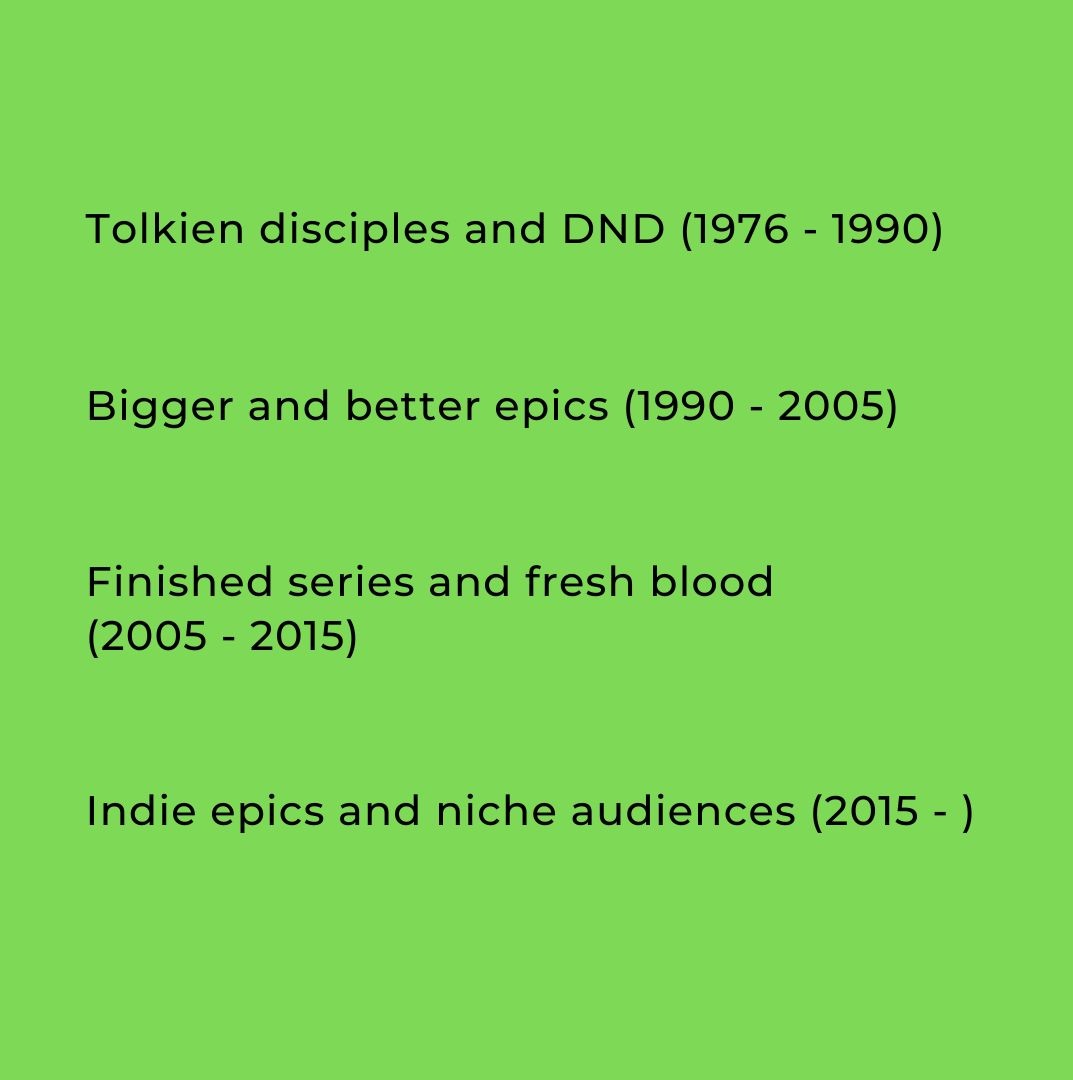
Epic fantasy isn’t new. It’s thousands of years old, actually. But epic fantasy as we know it now is more recent, and a few transformative eras have defined the genre with particular force.
This article will look at some of the pivotal works and macro trends occurring in these eras.
Like any attempt at history, this account will be zoomed out, debatable, and woefully incomplete. I’m not talking about J. R. R. Tolkien’s time at all, for instance. I’m not trying to distill everything that has happened to shape the genre. Plenty of other trends will intersect and overlap with the ones I’m looking at, furthermore. But there are patterns to be found, a few of which I’ll dig into, beginning with the first commercialized wave of epic fantasy after Tolkien’s time.
It will surprise no one that the first era following Tolkien had a lot of Tolkien following. Some of this was subtle. Other examples were plain in their worship. There was, as yet, no escaping the shadow Tolkien had cast (and I’m not even trying to analyze the 20 years since The Lord of the Rings was first published).
Fantasy as we know it didn’t yet have its own genre labels or bookshelves. But this era did a lot to set the table.
Early genre trailblazers
Within just a few years, Stephen Donaldson published his first trilogy in The Chronicles of Thomas Covenant. It’s a dark but well-regarded portal fantasy (one of many to come). With an overtly flawed protagonist and an unromantic worldview, Donaldson stood out immediately.
These books made literary space for the lower, grittier elements that wouldn’t become mainstream in fantasy until the early 2000s.
Meanwhile, Patricia McKillip completed her vastly different Riddle Master trilogy. McKillip brought a more poetic sensibility that echoed the elevated style of Tolkien without shame. She nonetheless gave readers an incredibly original setting and plot. Today’s readers likely wouldn’t realize what a Tolkien fan McKillip was when she wrote this trilogy.
Terry Brooks’s Sword of Shannara Trilogy likewise followed Tolkien’s footsteps. Brooks leaned into the quest-like structure of The Lord of the Rings and the adventurous tone of The Hobbit. It’s fair to say that his debt also borrowed plot elements from The Lord of the Rings wholesale. But his trilogy found its own direction quickly, ushering in many followers of his own (and transporting readers into a world that would last 45 books and counting).
Raymond Feist’s Riftwar Cycle and Anne McCaffrey’s Dragonriders of Pern were big hits in this era as well. These and other new authors showed publishers that fantasy had at least as much potential as its more well-established sibling science fiction.
The DND contingent
Meanwhile, there was this growing thing called Dungeons and Dragons (DND).
Without going into all the cultural gravity of DND, it’s clear that DND had a huge impact on epic fantasy. Much of it sprang from Tolkien (like the followers above). Large readerships also came into fantasy solely through licensed DND content.
Dragonlance (Tracy Hickman and Margaret Weis) and The Legend of Drizzt (R. A. Salvatore) were two especially popular series in this era. Readers often recommended these DND-affiliated works right alongside Gene Wolfe’s The Book of the New Sun or Ursula Le Guin’s Earthsea Cycle (though that’s not something I will do). Perhaps because of the hunger for more or perhaps because of how new the genre was, fantasy readers drew fewer lines in the sand and accepted fantasy books almost wherever they could find them.
The long and short is that epic fantasy flourished. It found publishers, found bookstore shelf space, and found readers.
2. Bigger and better epics
If Era 1 was about finding readers, Era 2 was about keeping them for the long (or very long) haul. Books got fatter, and series got longer. We also saw the emergence of several more thoughtful epics (following a general pulpiness of the 80s).
Tad Williams was one of the early greats in this era. Williams gave readers a very Tolkien-like journey in his Memory, Sorrow, and Thorn trilogy. He also offered a setting, style, and thematic journey that was much richer than the bubblegum fantasy works dominating the previous several years. Yet Williams stayed closer to Tolkien in style and tone than writers like Wolfe or Donaldson had, while still offering originality and depth (including a much lower-magic approach to epic fantasy) than many of his immediate predecessors.
Robert Jordan and Terry Goodkind were, if anything, even more defining writers in this era. Both authors set the stage for long, connected series. To date, most epic fantasy had been contained in just a few volumes. Authors typically just wrote trilogies, modeled after the three-book publication format in which they’d encountered Tolkien. Some longer, connected series existed (McCaffrey’s Dragonriders of Pern, for instance), but it was rare to see anything beyond three or four books that continued a single storyline.
Goodkind and Jordan doublehandedly changed this with their long, continuous series hitting shelves at the same time. And readers loved the long, newly large journey Jordan and Goodkind were offering.
L. E. Modesitt and Kate Elliott soon followed (with their The Saga of Recluce and Crown of Stars series respectively). So did Robin Hobb with her amazingly poignant Realm of the Elderlings series. This era also introduced the soon to be phenomena called A Song of Ice and Fire and Malazan, both which followed in the longer path Jordan and Goodkind had made mainstream so quickly.
Gone were the days when the trilogy was the ultimate form for epic fantasy. Five, seven, even fourteen books in a single story was an idea readers liked, thanks to a few daring authors and some bold publishers backing them. And it wasn’t only about length either. There was new depth and breadth to so many series coming out.
3. Finished series and fresh blood
The challenge with big series is that it takes years—even lifetimes—to complete them. A distinct new era arrived before Jordan or Goodkind finished their landmark series. Also, the publishing world was getting tired of waiting.
If you scour the internet, you’ll find many a forum discussion and blog article in this era talking about epic fantasy being out of date. Urban was all the rage. Harry Dresden grew in popularity and Twilight permeated mixed groups of readers. Publishers, in particular, kept saying they wanted something different from old, second-world epics.
The profile of emerging talent and readerships paints a somewhat different picture.
Big changes rolling across the genre
Between 2005 and 2015, several major things happened to cement epic fantasy’s lasting place.
Endings: Readers did indeed reach the final volumes of Goodkind’s Sword of Truth series and Jordan’s The Wheel of Time. These were both huge milestones, especially for doorstopper epic series.
Beginnings: The genre saw a massive influx of new talent. Patrick Rothfuss, Joe Abercrombie, Scott Lynch, Daniel Abraham, Elizabeth Bear, Brandon Sanderson and Naomi Novik all hit the scene within just two years of each other. N. K. Jemisin, Peter V. Brett and others debuted only a few years after that. The masters of the previous era (many who were completing their series now) were replaced at an incredible clip.
Pausings: We also had a few high profile delays in epic fantasy publishing during this time. We just didn’t know how big the delays would be for writers ranging from J. V. Jones to Scott Lynch to George R. R. Martin. But some of the most popular series out there got delayed. And delayed again.
While new talent swept in to take the spotlight from more recent writers, authors from earlier eras also made new splashes. Terry Brooks released his Genesis of Shannara trilogy, one of his strongest out of all his connected works and an early marker of the direction his series would go to completion. Tad Williams came back strong to epic fantasy with his Shadowmarch series. Sean Russell completed his Swan’s War trilogy, which remains his most epic fantasy work to date (and a personal favorite of mine).
Grimdark also saw a rapid rise during this era. A few authors had dipped into this subgenre already (Paul Kearney, for instance). But Richard K. Morgan and Mark Lawrence cemented the subgenre, largely following Abercrombie’s popularizing influence.
More new works hit the shelves
Oh, and now that a few big series were done, we started to get new ones. There were modest-sized epics like Brent Weeks’s Lightbringer series (perhaps a million words in all). And then, even before finishing Jordan’s The Wheel of Time, Sanderson began publishing his own massive epic, The Stormlight Archive. Furthermore, Tad Williams came back with more Osten Ard books, and Robin Hobb kept extending the breadth of her Realm of the Elderlings.
This period brought huge momentum for established writers while introducing a host of new voices. No matter what publishers claimed early on, it was a momentous time to be reading epic fantasy.
4. Indie epics and niche audiences (2015 – present)
With several decades of fantasy works available now, readers started getting pickier. Gone were the days when I’d jump from Icewind Dale (R. A. Salvatore) to Gene Wolfe’s Shadow and Claw (and yes, I really did read these back to back). With so many choices, readers could find what they really wanted.
There was this thing called social media, too. And smartphones making book recommendations available all day, every day. The big book recommendation forums folded into subreddits, and bloggers started becoming influencers. As a result, micro communities and niche audiences became all the norm. It was just a lot easier to find books that truly fit the vibe you wanted.
Enter indie fantasy.
Indie epic fantasy at a glance
A few important indie figures predated this era. Michael J. Sullivan, for instance, started selling well a few years earlier. But the advent of new tools to find books made it possible for hundreds of indie fantasy authors to carve out their own places in the epic fantasy landscape. Several quickly aligned with traditional publishers (David Dalglish, Evan Winter, Anthony Ryan, and Sullivan mentioned above), though they often kept indie works moving as well. Others stuck purely to indie avenues, often finding commercial success through small but loyal audiences and faster times to publish.
Indie publishing of course changed every aspect of book publishing. But for epic fantasy—which had grown into long series, protracted publishing timeframes, and even delayed completion—indie publishing was almost as game-changing as the mega-series model Goodkind and Jordan had introduced in the 90s. If you want more quest-like fantasy reminiscent of early Salvatore or Brooks, you can find it. If you want something punchier or darker, you can find that too. Short, long, high or low magic, indie fantasy has flooded readers’ to-be-read lists with relevant titles, often super-focused on specific reader interests.
This has somewhat diluted the author-as-brand model of loyalty that dominated book publishing in all previous eras. But it has also made epic fantasy (all fantasy) more generally varied and inclusive.
What’s next for epic fantasy?
Few authors remain actively writing from the first era I’ve analyzed for this article. Brooks has retired. Salvatore has moved on to writing books about Breezy Do’Urden (props for that, Drizzt probably has enough books by now). Writers from the next era have mostly retired as well.
It’s clear that a lot of readers are still watching Jemisin, Abercrombie, Sanderson and others from era 3. But it has been the better part of two decades since we’ve had a single debut with as much gravity as some of the 90s and 00s others managed. There’s too much publishing noise, too much volume for it to happen the same way (yet).
Oh, and there’s AI. So here are a few things we can expect to see happen in the next era of epic fantasy.
Continual glut of content, including numerous AI-written novels that come and go rapidly
Steeper segmentation of readership as micro-communities hover around their influencer voices and subgenres of choice
Completion of the largest works outstanding from the last era (or two eras, hopefully)
A general decline in publisher interest in epic fantasy until a few more major new authors hit the scene (little wonder that romantasy is the dominant player right now)
Plenty of great authors still writing great epic fantasy, regardless of publisher preference
There hasn’t truly been a bad time to be an epic fantasy reader in 50 years.
I don’t think there ever will be.
For more nerdy content like this, sign up for the monthly newsletter. It’s free to sign up, and you can unsubscribe any time.
About the Author
Stephen Taylor is the author of The Witherclaw Trilogyas well as short fiction appearing in The Future Fire, MYTHIC Magazine,The Centropic Oracle, and other publications. His short story “Only an Ocean” won a Silver Honorable Mention in the L. Ron Hubbard Writers of the Future Contest. When he’s not writing, he’s often playing his violin or wandering in the woods.
If there’s one thing I love to find in fantasy books, it’s wizardry. And I’m not just talking about Merlin, Dumbledore, or other old guys with fancy robes (though that’s fine too). The best wizards in fantasy span a dozen different types of magic, to say nothing of their other variety.
For my list of the best wizards out there, I’m making no distinction in sex or in-world terminology. Yes, they’ll be called witches, drafters, channelers, or other terms in the books in which they appear. I’ll use a few terms (mages, in particular) interchangeably as well, but there’s no need for much distinction here. Magic is magic. Wizardry just happens to be my favorite term for it.
So without further caveat, here are my top picks for those wizards (in alphabetical order).
Mild spoiler warnings for all series listed above.
Dazen Guile brings style and substance to his magical feats
Dazen Guile goes by Gavin Guile in most instances throughout Brent Weeks’s Lighbtringer series. He’s not Gavin at all. He’s much better.
Dazen is perhaps the best showman of the wizards on this list. Not only is he described as being remarkably good looking, he’s charismatic, he has dramatic timing down to an art form, and his magical deeds embody the entire rainbow.
Dazen’s greatest magical accomplishment is probably the construction of Brightwater Wall. This is essentially an immense, city-spanning barrier made of ultra durable magical plastic. Dazen marshalls 200 other wizards to get it done, showing that he’s a team player, as much as loves to show off. And he does it within only a few days.
Even though the wall ends up being a bit of a failure (too many gaps left in the end), it’s just so cool all the same.
Sign up for the newsletter
Get the latest articles and updates on The Witherclaw Trilogy with Stephen’s monthly newsletter. Subscribing is free and you can opt out whenever you want.
Egwene al’Vere inspires other mages to flock behind her
Egwene isn’t the strongest channeler in Robert Jordan’s The Wheel of Time. She also has bad taste in Warders. But no one uses politics, guts, backbone, and rizz as much as she does to get the world’s wizards fighting on the same side.
Where other wizards shine alone, Egwene rallies everyone to her cause. Where her peers use magical objects and clever loopholes, Egwene leans into the might of aggregation. She ends up with hundreds if not thousands of channelers backing her willingly, and she personally turns the tides in multiple theaters of the Last Battle.
Even among the best wizards, few can match her in feats of strength or ultimate impact. And no one on this list is as good at making friends out of competing wizards.
FitzChivalry cares more about real life than about magical power
Fitz is the first person viewpoint character in Robin Hobb’s Farseer Trilogy (also in other books). Readers spend a lot of time in his head. There’s no hiding his paradigm or his motivations. What really stands out—especially in a character who’s fully naked to the reader—is how Fitz cares so much more about his real world problems than about power.
It’s clear that he enjoys some of the benefits of being able to bond with animals. He also derives some obvious pleasure in defeating long-time rivals. But despite having immense magical potential, his mind is constantly concerned with real-world issues and relationships. There’s a sincere plainness and relatability to his story that makes him something of an everyman’s wizard.
Oh, and finding ways to come back from having his body killed is pretty cool too.
Gandalf is the world’s most iconic wizard—and he took down a Balrog of Morgoth
The image of wizards with pointy hats owes a lot to Gandalf. He owns the look more than anyone else. He could probably hang his famous hat on that and make it to this list already.
But he also holds the bridge of Khazad-dûm alone, ensures Frodo’s survival, and takes down an entire Balrog of Morgoth. So he’s got two unstoppably obvious reasons to make the list of best wizards in fantasy.
Ghisteslwchlohm is a villain, but he cares about wizardly education
Probably the least known wizard on this list will be Ghisteslwchlohm, a dastardly wizard in Patricia McKillip’s Riddle-Master Trilogy. He’s not ultimately the most important (he has almost no time on the page, in fact), but here’s a snippet from his resume:
Founding Lungold’s school of wizards (one of the earliest magical schools in fantasy literature)
Gathering all living knowledge of the Star-Bearer by siphoning it from the minds of the world’s other most powerful wizards
Speaking the nine strictures of wizardry
Having an amazing name
The best wizards aren’t always the most obvious. Ghisteslwchlohm paved the way for a lot of other interesting magical baddies, and he did it by defying the mold and being interesting decades before villains started getting much texture.
Gilbert Norrell fights classism with wizardry
Mr Gilbert Norrell brings action to an era of academic interest. Early on in Susanna Clarke’s Jonathan Strange & Mr Norrell, Norrell breaks the mold among English magicians by actually using magic. He’s treated as something of a social pariah, since his peers only study magic as a theoretical practice. In essence, he’s undermining the bourgeoisie.
This was a huge step in England’s path to wizardry. Imagine if, a few centuries later, Harry Potter had to fight Voldemort with only theoretical magic because society said it was uncouth to actually cast a spell?
In at least moderate seriousness, Norrell is an almost stereotypical wizard but one of the first and greatest to inhabit Georgian England.
Hermione Granger goes full maximalist in an era of low magic
Most wizards on this list express some serious reticence (often masked in plot device) about using their magic for mundane means. Not Hermione.
From her first scenes in the Harry Potter series, Hermione makes it clear that she’s ready to solve problems and get the job done. And her muggle-raised smarts make it obvious to her how useful magic really is.
Need better hair? There’s a magical product for that—and for shrinking front teeth while you’re at it. Ron splinched himself again? There’s some magical stuff for that too. Need a Time Lord Mary Poppins bag? Here one is.
Hermione is the wizarding world’s clear MVP in more than half of the books featuring her. She’s not only one of the most powerful spellcasters in the Harry Potter universe, she’s one of the most resourceful of all wizards (and yes, I know she calls herself a witch).
Jasnah Kholin uses magic even when it’s not cool to do so
Of all the interesting mages in Brandon Sanderson’s Stormlight Archive, Jasnah stands out for being a) exceptionally smart and b) boldly iconoclastic. She’s refreshingly respectful toward people who think she’s a little crazy. She also defends her positions and her rights to use powers that scare others.
One of the most interesting things about Jasnah (so far) is how little of her journey into power readers actually see. There are many questions yet to be answered about how she started her radiant journey. But she uses a fairly unique set of abilities and she disguises them effectively for an extended time. Even those closest to her fail to understand her power (or her character).
The element of mystery, combined with her non-mysterious consistency in showing up, make her a great wizard in her own right. Add to it that she is one of the first of her era to swear the Third Ideal (probably the Fourth as well; some people think she has even sworn the Fifth, but that’s crazy talk). Like Mr Norrell, Ghisteslwchlohm, and Gandalf, Jasnah does more than just buck trends. She sets them.
Mamoru Matsuda is a stand-up kid who faces uncertainty with complete courage
M. L. Wang’s novel The Sword of Kaigen opens with Mamoru facing something of an existential crisis. Within the first few chapters, he realizes that his view of the world has been myopic at best and more than likely just wrong. His sincere engagement with this challenge makes him relatable right out of the gate.
Then he becomes an amazing ice wizard samurai. So he’s relatable AND a boss.
Mamoru’s journey is one of the most personal on this list. It’s a game of lower stakes than pretty much any other wizard’s journey. But while other wizards are being tortured and killed (both things happen for several on this list), Mamoru is dealing with issues every reader will likewise confront at some point.
And as much of a cool wizard as he is, he solves most of his problems without magic.
Quick Ben outplays the gods over and over again
There are so many mages to choose from in Steven Erikson’s Malazan series. But Quick Ben (Ben Adaephon Delat) stands out for his combination of audacity, cunning, and down-to-earth sensibility. Where others have to be the star, he’s a preeminent team player.
Just a few Quick Ben accomplishments:
Outwitting gods (multiple times)
Expansive skill across warrens few mages understand
Surviving encounters with multiple Hounds of Shadow at once (he does this easily)
Pulling strings to make a Barghast-Bridgeburner alliance possible
Teaching others how to use truly insane powers
He’s endlessly competent while coming across as such a humble, friendly guy again and again. Not just any wizard can be amazing without hubris ruining him.
Sparrowhawk is the the wizard who thrives when wizardry is done
Speaking of hubris, meet Sparrowhawk. Like Quick Ben, Sparrowhawk is staggeringly capable. From the very beginning of Ursua K. Le Guin’s Earthsea Cycle, it’s stated outright that Sparrowhawk will go far. But the narrative makes it sound like his greatest deeds would be feats of wizardry.
Sure enough, Sparrowhawk brings peace, tames dragons, fights some too, faces powers unknown to any wizard, travels farther than any before, and basically cures worldwide depression.
Despite his many amazing moments of magical might, however, Sparrowhawk’s greatest moments actually come through the power of insight. Like Mamoru Matsuda, his journey is personal and down to earth in ways that few wizards’ can be.
Case in point: Sparrowhawk eventually loses all magic and becomes an old goatherd. But even then, he has amazing presence, poise, and wizardly wisdom to exceed even Gandalf’s (no joke).
Sunny Nwazue is the wizard America (and Nigeria) have waited for
Sunny is a soccer-loving free agent among the Leopard People—a vibrant magical community in Nnedi Okorafor’s Akata Witch and subsequent books. She’s also a powerful mage who helps take down a serial killer and stops some truly horrific monsters.
She embodies elements of almost all the other magic users listed above:
Like Mamoru, she’s sincere and relatable
Like Gandalf, she stands up to powers seemingly greater than her own
When social norms and family pressures try to stop her from doing good things, Sunny does good things anyway, much like Mr Norrell, Jasnah, and Hermione
In a similar vein to Egwene, Dazen, and Quick Ben, she’s also part of a strong team dynamic so often missing among wizardkind
Last but not least, Sunny’s the only Nigerian American to make this list. Or Nigerian. Or American. The point is, England isn’t the only country with amazing magic.
Some runners up
Pug | Magician by Raymond E. Feist
John Ross | Word & Void trilogy by Terry Brooks
Thara Celehar | The Goblin Emperor by Terry Brooks
Galadriel | The Scholomance Trilogy by Naomi Novik
Will Stanton | The Dark is Rising Sequence by Susan Cooper
FAQs
Who is the most powerful wizard in fantasy literature?
There’s no clear answer to the debate about the most powerful wizard in fantasy. If ranked by sheer power alone, Dragonlance‘s Raistlin Majereor Magician’s Pug are some of the most obvious choices, since both wield power on par with gods in their settings. Gandalf from The Lord of the Rings and the Dragon Reborn from The Wheel of Time are also exceptionally powerful, since both show powers that endure more or less beyond death.
Are there differences between wizards, witches, mages, sorcerers, and other magic users?
Specific fantasy settings have their own rules to distinguish between types of magic user. In settings like Dungeons and Dragons, for instance, titles like wizard, warlock, and sorcerer often identify the source or nature of a magic user’s power. Settings like Ursula K. Le Guin’s Earthsea Cycle also use different titles to describe the nature of training a magic user has received.
What is the source of a wizard’s power?
Wizards in fiction have countless different sources of power. Wizards across fantasy settings draw power from other magical beings, knowledge, genetically inherited abilities, contracts, magical objects, and many other sources. Hard magic systems, like the primary system in Brandon Sanderson’s Stormlight Archive, often give lore-based explanations of where a magic user’s power originates. Many other series ignore addressing this question.
For more nerdy content like this, sign up for the monthly newsletter. It’s free to sign up, and you can unsubscribe any time.
About the Author
Stephen Taylor is the author of The Witherclaw Trilogyas well as short fiction appearing in The Future Fire, MYTHIC Magazine,The Centropic Oracle, and other publications. His short story “Only an Ocean” won a Silver Honorable Mention in the L. Ron Hubbard Writers of the Future Contest. When he’s not writing, he’s often playing his violin or wandering in the woods.
Regulars on this blog will know that I hold Ursula K. Le Guin in the highest literary regard. She wrote numerous unforgettable books, but all of my favorites in her portfolio are part of her fantasy opus The Earthsea Cycle. Which I happen to believe is as every bit as good as any fantasy series out there.
In this article I’ll explore six main reasons fantasy readers should try The Earthsea Cycle for themselves:
Before diving into the details, let me share a little background and summary.
The Earthsea Cycle is a six-book series following three main characters. There’s Arren, a princeling who learns quickly that wizardry is greater than the sword. There’s Tenar, a girl who was raised as a priestess to a malicious power. And there’s Sparrowhawk, the greatest voyager wizard (pretty much the greatest wizard in all ways) in the archipelago. Each character features prominently in two or three volumes—one coming of age novel and one book that is completely different.
The macro story is about making peace between people from different lands and intelligent species who’ve made diverging choices in their pasts. It’s a lot less overtly epic than most multi-volume high fantasy. It’s a lot smarter and more unique as well.
Here’s what I mean.
Each volume delivers a whole story and takes readers to a new place
When Le Guin began publishing The Earthsea Cycle, there were no cliffhanger-ending doorstop fantasy series to be found. Before the series hit its halfway mark, however, Tad Williams, Anne McCaffrey, R. A. Salvatore, and others had made such series the norm for high fantasy. Le Guin stayed the course, giving a full story in each book.
One of the greatest virtues to this approach is that it allowed Le Guin to take readers to new places (thematically and in terms of worldbuilding) with each story. Several overarching themes recur, but each book is incredibly distinct. The pacing, style, cast, setpieces, and ultimate resolutions are their own—not just continuations of something from before.
The distinctive wholeness of each volume was even more unique by the time Le Guin finished the series in 2002. Imagine, in contrast, if every novel of The Wheel of Time,The Sword of Truth, Deverry, Shannara, or Dragonlance brought a fresh thematic cycle (and simultaneously managed to deliver a beginning, middle, and end within less than 300 pages). Of course, Le Guin was writing a different kind of book than her peers. But that’s the real point to begin with.
The macro Earthsea story is cohesive and complete
On a similar note, Le Guin still instilled a single through story into The Earthsea Cycle. Continuous character arcs, expanding scopes, and connection points both subtle and overt in nature give the series both a red thread and momentum to the end.
The interesting thing is that Le Guin actually intended to end it multiple times. She published the first three volumes close together, but she planned for A Wizard of Earthsea (the first book) to be a true standalone novel. Only after writing The Tombs of Atuan (which she first called a sequel) did she move onto the idea of The Earthsea Trilogy. A whopping 17 years later, she realized she had more to write in this world, eventually expanding it to six books.
If you read them back to back, you might never realize so much time had passed in the telling. The consistency of style and the harmonious paradigm in each book makes it feel as if Le Guin never paused to work on anything else.
Oh, and when she added a final short story 17 years after the last book hit shelves, she really did make it clear that the series was done. Le Guin passed away that same year, marking a full 50 year gap between the beginning and end of the series.
But she finished it. If only more fantasy authors could claim the same.
Any book in the series could be a reader’s favorite
Another witness to Le Guin’s skill is the variety of responses fans share when asked to name a favorite Earthsea novel. The first three are almost equally popular. Book four in the series has a smaller base of diehard fans but tends to elicit an extra strong (and positive) response for those who buy into it. And if you scan all the Le Guin subreddits, you’ll find plenty of people naming book six as their all-time favorite as well. It’s only the very different fifth volume (a short story collection) that I haven’t heard fans vote for.
Still. To have five out of six in the running (83%) for fan favorite is all but unheard of. Harry Potter is the only similar example I could find—contrasting with numerous high fantasy series where the fans’ pick is clear and overwhelming.
The long and short is that Le Guin didn’t write many novels. But she only wrote good ones.
Earthsea offers rich lore without a bloated page count
Speaking of the long and short. The entire Earthsea Cycle spans just 320,000 words or so. That’s about one volume of long epic fantasy (Wheel of Time or Malazan, for instance). Even MG and YA novels routinely net longer word counts than her books have.
Le Guin began writing in a time when shorter novels were more of the norm, even for SFF, but there’s still something amazing happening here. Her worldbuilding outshines dozens of longer works. There’s a strong sense of place in each book. History springs up everywhere. There’s cultural variety. And the magic at work in Earthsea is much more developed than many other works with hard magic systems.
I’m continually mind-boggled at how much story and lore Le Guin managed to pack into just six short books. And I’m in awe at how conclusively she tells so many stories with so few words. The recent graphic novel adaptation of A Wizard of Earthsea even managed to cut a chapter or two (close to 20%) of plot events without losing a clear storyline.
Earthsea’s worldbuilding has been incredibly influential
Short and sweet can be just as sticky as anything from a longer series. Look at the magic system in Earthsea as an example.
Within this system, mages derive much of their power from their ability to find and speak the true names of a given thing or being. While Le Guin isn’t the first person to come up with the idea of names having power, her systemized use of it made for one of the most robust and comprehensible magic systems in fantasy for decades to come. And this alone has been adapted (or copied wholesale) by numerous SFF authors.
A few examples:
“True Names” by Vernor Vinge
The Inheritance Cycle by Christopher Paolini
Numerous works by Tanya Huff
The Books of Pellinor by Alison Croggon
The Dresden Files by Jim Butcher
The Iron Dragon’s Daughter by Michael Swanwick
The Bartimaeus Trilogy by Jonathan Stroud
Jonathan Strange and Mr Norrell by Susanna Clarke
Even more importantly, Le Guin did a great deal to normalize the departure from purely European-inspired fantasy settings and white casts of characters. One of Le Guin’s most vocal criticisms about her own series (there are many) is about how her publishers consistently avoided depicting a person of color in cover art and illustrations. She wrote a non-white hero and wanted him to appear on the cover. I’m hard-pressed to find many fantasy authors doing that before the turn of the century, let alone having the courage to criticize publishers for hiding it.
There’s a true sense of magic and wonder in every book
At the end of the day, Earthsea inspires wonder. It’s a unashamed example of high magic—higher than almost any peer works I can name—with Le Guin proving she was worth her Gandalf Grand Master Award at every turn. From my first few minutes with the first book, I found storytelling wizardry at every turn, and the following five books maintained the magic effortlessly.
If you want to magic on the page, you can’t do much better than picking up The Earthsea Cycle.
For more nerdy content like this, sign up for the monthly newsletter. It’s free to sign up, and you can unsubscribe any time.
About the Author
Stephen Taylor is the author of The Witherclaw Trilogyas well as short fiction appearing in The Future Fire, MYTHIC Magazine,The Centropic Oracle, and other publications. His short story “Only an Ocean” won a Silver Honorable Mention in the L. Ron Hubbard Writers of the Future Contest. When he’s not writing, he’s often playing his violin or wandering in the woods.
If you follow epic fantasy book news, you’ve probably heard a thing or two about Brandon Sanderson’s Wind and Truth. This is the partial finale, a rest stop halfway through his longest and most epic series yet, so the pressure has been high for him to deliver something monumental and amazing. I have yet to finish the book (which I am enjoying), but here are five things other readers love about Wind and Truth, along with my perspective.
My analysis comes from 200 voluntary, positive reader reviews, which I regard as primary data on what they really think. There’s plenty that fans are liking. Numerous reviews (I didn’t count on this front) mention losing sleep to finish this volume, for instance. Others bemoaned having to wait several more years before The Stormlight Archive continues. All in all, it’s an earnest, grateful response.
Here’s the data, broken down.
1. Readers love the world-building in Wind and Truth
Out of 200 reviews, 181 eagerly mentioned Sanderson’s world-building. This will surprise…no one.
Fans have noted Sanderson’s interesting world-building since his debut, 20 years ago. He gives readers plenty of world-building detail. He shows interesting settings and set pieces. He draws from a well-thought out lore. His larger works also delve into multiple distinctive cultures and humanoid/intelligent races. Wind and Truth, for instance, features prominent characters of at least three (and possibly more) unique biological origins. And none of them are elves, goblins, or dwarves.
Most notably, Sanderson has a) created settings that don’t fully parallel earth (which is rare in mainstream fantasy), and b) has come up with numerous complex magic systems that readers love. And to cap it off, Sanderson has built and interconnected series of worlds, joining multiple settings, multiple stories (of multiple volumes), with easter eggs and rewards for the readers who pick up on these connections.
This is a different flavor of world-building than fans find with Robert Jordan or N. K. Jemisin, but it works for so many epic fantasy readers. While my analysis doesn’t make it possible to truly weight this against the other top reasons, this is clearly the most common cause that readers tip their hats to Sanderson’s storytelling skill.
My thoughts: I particularly appreciate Sanderson’s willingness to depart from earth-analog settings. There’s so much space to do this in fantasy (as he has often commented), but not many writers try it seriously. I rarely get excited over world-building, but Sanderson is one writer who has really made it work for me.
2. Sanderson fans rave about his characters
From the 200 analyzed reviews, 170 praise Sanderson’s characters. Readers have a lot to say on this front.
They enjoy the sense of character growth. Or they get angry and excited alike about messy relationships. Fans also comment on the top moments for their favorite characters (Kaladin, Dalinar, Syl, and Lift are some of the ones mentioned most often in these reviews). They share a sense of catharsis for the internal struggles these characters endure. And readers generally applaud the journeys characters take to reach the end of this story.
Characterization, particularly where growth arcs are concerned, clearly carries more weight with most readers than worldbuilding does. Readers have long shared unique appreciation for Sanderson’s inclusion of neurodivergent characters, as one example. His characters confronting their own mental health are also recurring favorites. And reviewers also tend to love the relatability of Sanderson’s characters, particularly the ones who get point of view (POV) attention.
My thoughts: Sanderson stays close to his characters. He gets in their heads, dwells on their concerns, lets the reader see how they perceive the world. Their internal dialogue is an active participant in the story. This adds to total word count, no doubt. But it’s a sure fire way to engage readers, and I’m always here for that side of his writing.
3. Sanderson’s plotting continues to impress
As with most of his fans’ favorites, Sanderson has delivered a plot that readers really buy into. 152 of 200 Wind and Truth reviews commented on this.
Most report enjoying the pacing—regardless of the book’s length—and being surprised (if not SHOCKED), relieved, and hooked by the trajectory the story takes. There’s also something to be said for the clarity of the plot. Readers report understanding the impact of big twists, remembering key information they needed to follow, and generally feeling fairly well anchored as the plot progresses.
And yes, for any readers wondering, it sounds as if there’s plenty of Sanderlanche to go around in Wind and Truth.
My thoughts: Sanderson consistently builds in reminders of details previously shared. This adds to the length but lowers the learning curve for his books, particular where plot is concerned. It also makes his plots less labyrinthine, letting readers tease out key events beforehand and enjoy the rewards of figuring things out in advance. I don’t always love this, personally, but I might just be in the minority based on these reviews.
4. Readers love Sanderson’s magic systems
Interesting uses of and rules for magic were some of the first things readers noted about Sanderson’s early writing. And he has leaned into it more and more through the years. 144 reviews shared their appreciation for Sanderson’s unique and graspable magic systems.
One of the interesting threads here is the influence of magic on plot and character. Many reviews make the case that Sanderson has connected his character journeys, settings, and plot threads to his magic systems, ensuring that magic is an integral part of the story (and not just ornamentation for it).
My thoughts: This is one of the areas Sanderson most shines and most merits his hype. I think about it like Broadway shows where the music is just there for fun and has no bearing on the story. Plenty of fantasy authors bake magic in this way. But then there are musicals where the songs are the story. If Sanderson ever wrote a musical (and no one should be startled if he someday does), I’m betting he’ll write this second kind. He has been consistently good at tying magical events and rules into the actual heart of his stories, and fantasy needs more of this.
5. Readers find a lot to love in the book’s core themes
Sanderson has always been a hopeful writer, especially when compared to peer authors (think Scott Lynch, Joe Abercrombie, Richard Morgan, and Brian Ruckley, all who debuted around the same time as Sanderson). 20 years later, readers continue to appreciate his increasingly introspective approach to core themes. 130 of 200 reviews mentioned depth, thematic complexity, or Sanderson’s internal philosophizing as a winning point for them.
My thoughts: With perhaps the exception of his first Mistborn novel, I see Stormlight as Sanderson’s most philosophical work. But I’ve found Wind and Truth to be less subtle than the past four books (and there are plenty of fantasy authors with more subtlety to begin with). So I was encouraged to see how many readers praised this side of Sanderson’s finale. My worry was that it would be more like Memory of Light***potential Wheel of Time spoilers ahead *** in which the scope of the conflict handily drowns out some of the series’ most interesting introspection. *** end of spoilers ***
Fingers crossed that reviewers are not just baiting me here.
So for reference to a book I have finished reading, here’s a quick contrast with a light analysis I did on The Way of Kings last year. The following are the top five items (found in 100 reviews) that other readers loved about The Way of Kings.
Epic scope and world-building: 85/100
Interesting and well-drawn characters: 78/100
Digestible writing style: 70/100
Engaging plotting: 65/100
Thematic depth: 53/100
My methods of analysis
As with a few other reader data articles I’ve written, my approach is based on a coded verbal analysis of voluntary reviews. I spell my process out in some depth here. In this case, however, I used ChatGPT to code the data and manually went through a sample of 50 reviews to check the coding schema for accuracy. I’m also showing just the top 5 reasons here, as opposed to the 10 I shared for The Lord of the Rings.
For more nerdy content like this, sign up for the monthly newsletter. It’s free to sign up, and you can unsubscribe any time.
About the Author
Stephen Taylor is the author of The Witherclaw Trilogyas well as short fiction appearing in The Future Fire, MYTHIC Magazine,The Centropic Oracle, and other publications. His short story “Only an Ocean” won a Silver Honorable Mention in the L. Ron Hubbard Writers of the Future Contest. When he’s not writing, he’s often playing his violin or wandering in the woods.
I was glad for a chance to sit down this month with Joe Bouchelle IV, author of The Shineden. Joe and I grew up in the same stretch of rural Virginia, jumping over creeks, pretending to duel each other with stick swords, and swapping book recommendations.
I vividly recall borrowing Joe’s copy of Eldest (by Christopher Paolini) and sitting down in my family’s 90+ degree van to start reading it while I waited for my father to drive me home. This was the same summer I got serious about writing my own stories. 20 years later, Joe and I are both still writing stories like we had in our heads then.
This interview will dig into Joe’s path to getting The Shineden from idea to finished manuscript, along with a hint or two at what he’s writing now. Here’s a summary of our conversation with some jump links to each section.
Stephen Welcome, Joe. To start us off, how would you introduce yourself?
Joe My name’s Joe Bouchelle IV. I’m the lead author at JB IV Writing.
Stephen I know I’m already interrupting, but what’s JB IV Writing?
Joe It came about because I was going through KDP (Kindle Direct Publishing), and I wanted to do a dust jacket on the hard cover. My formatting was all wrong, so I went through B&N Press, but they require you to have your publisher’s name on the spine. So I just put JB IV Writing. And that’s how that came about.
For now, I’m a part of a bookshop that’s for independent authors. I could see maybe in the future operating JB IV Writing more as a business.
Stephen So obviously The Shineden is a big project for JB IV Writing in recent months. Anything else on your shelf right now?
Joe Yeah. I just published book one of The Shineden series a few months ago. Book two, Panalsi, is scheduled for release on March 1st, 2025. I’m still working on finishing that one, but here’s hoping. I’m also working on a kind of dystopian fantasy series, and then a low fantasy series.
Stephen So you’ve got plenty to write. Do you plan to intersperse the publication dates for these series?
Joe The goal right now is to get books one and two of The Shineden out, and then the first book of the dystopian fantasy. I’m planning to do that exclusively through Salient Books.
I don’t have a timeline set right now, but if things go how I want them to, I’d like to be able to release a new book every year to perhaps a year-and-a-half. I’ll probably do the first dystopian novel, books three and four of Shineden, and then finish the dystopian series.
The pace is always crazy, though. I published The Shineden on the 5th of June. When it came out, I wanted to start working on book two immediately, but my wife Marisa told me I needed to take a week and relax. So I wrote chapters one through five in like a week, but since then it has tapered.
Origins of The Shineden
Stephen I hear you on the ebb and flow of projects. With life happening al the time, can you tell me more about your writing motivation, both for The Shineden and other projects? You’ve mentioned in social and other places that this story idea has been in your head a long time. So why now? How did you get to the point of writing it?
Joe So for your readers who don’t know, you and I pretty much grew up together near the Blue Ridge Mountains. That was where my story ideas started to come. It was being outside, growing up reading Tolkien, and immersing myself in both things. I’ve had the idea for Falduen in my head since I was fifteen—this kid who wants to grow up, wants to be special, wants to help his mom. That’s really his driving force, to protect his mother. So I’ve had that idea since I was fifteen, but never really finished creating it until this year.
Most of my readers have said that the early chapters drag on a little bit (although others have said, “Oh, you’re just world-building. It’s fantasy.”). Well, I wrote those chapters like fifteen years ago. The idea for Falduen came in, and I started creating this world when I was about seventeen. I wrote the first four chapters and then it sort of died out.
Later on, I took a creative writing class in college and started writing again a lot. I noticed as I was writing short stories that I was putting elements of Falduen in these stories, so the idea was always there.
Marisa knew I had started Falduen. She and I would leave sometimes to visit her family in Illinois for the weekend. When we would drive, I would always look at road signs, and if I saw words that were weird, I’d write them down. Pax, for instance, is the name of a little community off of highway 64 in Kentucky, and I saw a sign for it while I was driving and I said, “Write that down. I’m going to make a character called Pax.” That was 2014.
I started gathering info. Started getting more ideas. But it still took a long time to get there. After several years, I got a job teaching English at American Leadership Academy, and I was teaching 8th graders and 9th graders a segment about fantasy. We had a curriculum and set stories we were supposed to read, but I also told my students I had a book in the works, and they kind of lost their minds. I think I had seven chapters done at that point, so far less than half—unpolished writing I hadn’t updated since I was seventeen. We just started reading through it. I was the teacher who said everyone had to read out loud. So we would just read around the room. As we did that, it started to really develop the story more for me. By the end of that school year I had ten chapters.
Bt then life happened again. I was a stay at home dad for a while. I tried podcasting, streaming, working from home, everything except going back to writing. Then we moved to Illinois for me to coach soccer, and the head coach had to go home to Chile, so the coaching staff fell apart, and Marisa and I decided it would be best for me to leave the program. The day after I left, Marisa came up and said, “Why don’t you finish your book?” So I said, “Okay.”
We made a little home office, and I just started cranking it out. Everything just kind of came together and started to make sense. And so that’s really how it came to be. It felt like a rush job. With this first book, I had no publication date. I had nothing set in stone. In fact, I didn’t even advertise beforehand. I just wrote, until I was finishing the last seven chapters in a couple months, which for me was really fast since those are probably the chapters with the most depth, where the most happens.
Stephen Light spoiler warning for blog readers. I’m somewhere in that chunk as we’re talking now, at the part where he gets his companion.
Joe That’s a scene I really loved writing. By the way, on my website I have two quizzes for readers to find out what your companion would be and what color orb you’d have.
Influences on Joe’s writing
Stephen Link here, for the blog readers. So, I’d love to get into the books, movies, stories and other influences on your writing? This could be anything you’ve read recently, or any hidden gems among books you love? Obviously Tolkien.
Joe The Lord of the Rings and The Hobbit are probably the two biggest ones. Just the way Tolkien writes, the styles of his writing, the world-building. I talk frequently about how he describes Treebeard and just goes on and on about this tree, but I loved that. I loved how in depth and intense he would get with the descriptions of things. So Tolkien is a big one, probably the biggest.
Christopher Paolini, The Inheritance Cycle, is probably a big one. The Shineden book one is certainly similar to The Inheritance Cycle. Back in the day, you might have recommended The Bartimaeus Trilogy to me. I loved those books.
Stephen I did indeed recommend those to several friends, so I’ll be glad to take credit for it.
Joe They’re great, and almost no one knows about them. Those are probably the biggest influences in terms of books. But then just being outside all the time. Being out in the woods, adventuring, you know, putting myself in the kinds of environments the stories are in.
Stephen Growing up in Rockbridge County, Virginia, you would love trees.
Joe Yep. I think often about when you lived out in the county, and there was that giant field with the rope swing and the creek. The mountains will play a big role in my later books. Mountains will be very important.
Stephen Did you read Redwall as well? I was very into those books when we were kids.
Joe Yes! I read Redwall too. I think I read all of the books that were out at the time. Brian Jacques started writing so many. The Long Patrol will forever be one of my favorite books. I would go back and re-read that one.
Stephen So when talking about The Shineden, I’d love to give any blog readers a comparison, at least in terms of “If you’ve read this than you’ll like The Shineden.”
Joe Although I haven’t really specified it, the first book definitely leans more toward YA, more like Eragon than The Return of the King. It’s about a kid, like Eragon. The second book gets pretty heavy really fast. The end of The Shineden introduces a storyline that leads right into book two. But if you’re a big reader, I kind of feel like The Shineden could be 11 years and up, or at least 13 and up.
Stephen You mentioned that Falduen was one of the first elements that came to being. Where else did the story go from there? Was it more characters, the world, a scene, or the wider plot?
Joe Something that drives a lot of people crazy is that I’m a huge pantser. I don’t plan. I have some little notebooks that are supposed to be the book in the book—every chapter, character descriptions, language notes, everything. But when it comes to actually writing the story, I am horrendous at planning out.
I’ll go back and take notes about chapters, and then jump around and change stuff in the manuscript. Growing up, my dad always taught us to begin with the end in mind. So again, it’s irritating to a lot of people, but when I come up with a story, I have the beginning and how it’s going to end, and then I just fill everything in as I go. Book one topped off at 57,000 words, which is of course pretty short for a fantasy novel. Book two will be 85,000 – 90,000 words. And that’s just because I keep getting more and more story, but I also know how book two has to end, so as the story keeps developing, the story keeps getting longer.
Little easter egg. The first paragraph each of the first and the last chapter mirror each other. I don’t know why I did that, but for book two it will be exciting. I’m really excited for book two in general. I feel like my writing has improved significantly for book two. Since the story has already established itself, the first chapter of book two takes you right back into it. It comes out with a bang, to say the least. I think the flow is better, and I won’t have four chapters from when I was seventeen and four from being 25 and 10 from 32…it’s all from right now, when I’m just more experienced.
Big moments in the The Shineden
Stephen Well as we tease book two, can you tell us about moments that matter in book one. Are there any key scenes you really wanted the reader to feel? Any moments you especially wanted to hit hard in a particular way? More light spoilers ahead.
Joe Obviously Falduen finding the orb is one scene in which I tried to be almost overly detailed, to really create a vivid image in the reader’s mind. I just wanted to make it real enough to where people can start connecting with the character. Another one I love is when Stephen rolls over and sees this figure standing in the woods (Pax), but just this figure is standing in the woods with their arms out and just taking out this group of Trite-Karshüre. I love to write Pax.
I also really like the scene with Falduen, when he and Thomas are up in the trees at night and see the Krooga in the woods and the fire explodes. Thomas has to explain that Falduen did that, that it came from him. I really wanted this scene to have a subliminal message, subtle idea that Falduen did this thing he didn’t even know he was capable of doing, to help understand that he is capable of doing so much more than he has been in the past.
And I always loved writing Maldis.
Stephen Yeah, I think most people love writing villains.
Joe I wanted to portray the intensity of some of the emotions Anduen is going through, though, for that scene with Maldis in Ren. But any of his stuff is fun to write.
Last two: I would say is one you’re about to read. Falduen and his companion have bonded, and I won’t spoil it too much, but they’ve bonded and his companion tells him to say something to everyone else. When I wrote it I got goosebumps, and I had Marisa read it, and I heard her from the living room say “Why do I have goosebumps right now?” and I knew where she was.
My absolute favorite scene, to visualize, was the introduction to Yewlsfaera. The process of this table separating and this forge rising up in this beautiful cavern where so many races—elves and dwarves and dragons and Mellavian—would be…I just loved it.
Yewslfaera is actually an anagram, by the way, for always free. I do this a lot in my writing. I don’t necessarily always do it in English. In book two, and actually Ävsial, the world where it takes place, is Lithuanian for freedom (backwards).
One of my favorite parts of doing all this has been the Elvish alphabet. I have notebook on notebook of the grammar rules and language for all the world I’m creating. A special edition of The Shineden is coming out November 1st with map, languages, alphabets, pronunciation guide and other supplemental items as well as concept art that is mind-blowing. This will be exclusively through B&N and the Salient bookshop.
Stephen Thanks for digging into books, influences, and writing. Any other things you want to share today?
Joe Just that I’m so excited for book two. Of course when you release a book you’re supposed to market the book you have out, not the book you don’t have out, but it has been so fun to write. There are new characters, and I’ve tried to bring in more female characters as well so it’s not just male-dominated fantasy series. But I have some really funny characters in book two, and we’ll get really in depth with Pax’s past, so that’s interesting.
Book two will deal a lot with a prophecy that was made way back when. There are aspects of it that are applicable specifically to Falduen and his companion, and other aspects that kind of leave things open-ended, so that will be really fun. There will be several new locations, one really big one introduced a little later from where I am in the writing right now. You’ll meet more Krooga—a lot of Krooga in book two. Readers will also be introduced to their language which has been really difficult but enjoyable to work on.
One spoiler I can share: I don’t know how many will read this, but the lucky few: Pax is actually going to get a dragon in book two. But not as a companion. They won’t bond like a Shineden does. But Pax will have a dragon.
For more nerdy content like this, sign up for the monthly newsletter. It’s free to sign up, and you can unsubscribe any time.
About the Author
Stephen Taylor is the author of The Witherclaw Trilogyas well as short fiction appearing in The Future Fire, MYTHIC Magazine,The Centropic Oracle, and other publications. His short story “Only an Ocean” won a Silver Honorable Mention in the L. Ron Hubbard Writers of the Future Contest. When he’s not writing, he’s often playing his violin or wandering in the woods.